
FCC Approves Reflect Orbital Satellite With Giant Mirror, Sparking Astronomer Fears
The FCC has greenlit Reflect Orbital's Eärendil-1 satellite, featuring an 18-meter mirror to reflect sunlight. Astronomers express significant concerns about light pollution and observational interference.

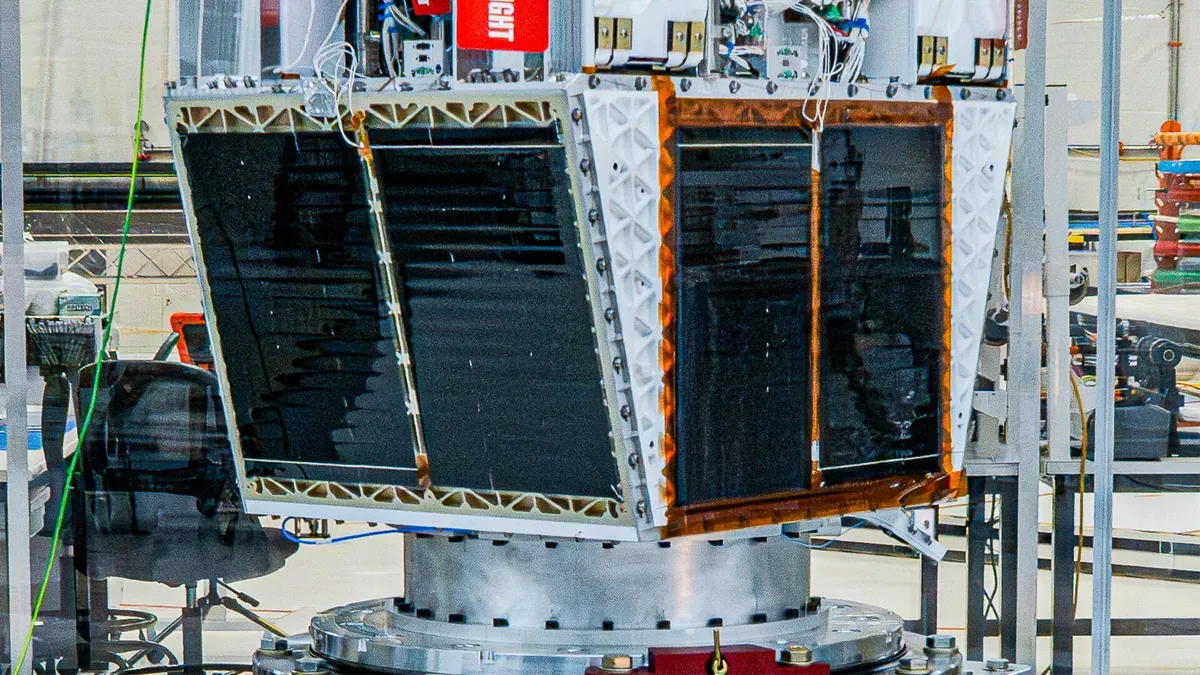
The Federal Communications Commission (FCC) on Thursday approved a groundbreaking test satellite, Eärendil-1, developed by the space tech company Reflect Orbital. The satellite, scheduled for launch on a SpaceX Falcon 9 later in 2026, is equipped with an 18-meter (60-foot) mirror designed to reflect sunlight onto Earth. While the company aims to provide nighttime solar power, the decision has drawn sharp criticism from astronomers and environmental advocates worried about potential light pollution and its impact on scientific observation.
Eärendil-1, weighing 142 kilograms (313 pounds), is designed to reflect a focused beam of sunlight onto a 3-mile circle on Earth's surface, effectively creating artificial daylight where there is none. Reflect Orbital proposes this technology to supplement solar power generation, particularly during peak demand hours around sunset. The company argues that this could reduce reliance on fossil fuels by providing a consistent energy source, even after dark. If the initial demonstration proves successful, Reflect Orbital envisions deploying a constellation of 50,000 such satellites, potentially illuminating vast areas of the planet on demand.
Astronomers Raise Alarms Over Celestial Light Pollution
The approval of Eärendil-1 has ignited widespread opposition from the scientific community. Over 1,800 public comments were submitted during the proposal phase, with a significant majority voicing concerns. Organizations like the American Astronomical Society (AAS) and DarkSky International have filed formal complaints, citing potential ecological, cultural, and regulatory consequences of illuminating Earth from orbit. "The concept of illuminating Earth from orbit represents a new category of artificial light at night with global ecological, cultural and regulatory consequences," stated DarkSky International in an open letter. "Based on the current scientific evidence, we do not see a viable pathway for this technology to align with responsible lighting principles or with our mission to protect natural darkness."
Astronomers are particularly worried about the interference with sensitive telescopes. Even a single satellite passing overhead could overwhelm observatories with reflected sunlight, disrupting crucial data collection. "The light from the satellites will also scatter in the atmosphere and raise the brightness of the whole sky," explained Olivier Hainaut, an astronomer at the European Southern Observatory and author of a 2026 study on satellite constellations. This atmospheric scattering, similar to why the sky appears blue during the day, could significantly increase general light pollution, hindering star gazing even in areas not directly illuminated by the satellites. The AAS noted in its complaint that an individual Eärendil-1 satellite could be "at least 2 to 4 times that of the full moon" in optical brightness.
Reflect Orbital acknowledges the lack of a regulatory framework for such space-based services and has expressed openness to regulation and collaboration with scientists. The company intends to study the impact of the test satellite before deploying more and aims to avoid directing its mirrors at observatories. However, experts like Hainaut remain cautious, questioning the protection offered to smaller university-scale observatories, amateur astronomers, and casual skywatchers.
Despite professional opposition to a full constellation, Hainaut expressed cautious optimism for the prototype. "While I am professionally opposed to the deployment of the full constellation, I'm actually OK with the prototype," Hainaut said. "It will give us (and everybody) a chance to measure the thing, to quantify how bright it is, and for Reflect Orbital to showcase their capabilities (for their business) and mitigation measures they envision (for everybody else)." This trial period will be critical in assessing the real-world impact of sun-reflecting satellite technology and informing future decisions about its deployment.