
Deep Ocean Reveals Vast 'Whale Graveyard' with 5.3 Million-Year-Old Fossils
Scientists discovered an enormous whale graveyard in the Diamantina Fracture Zone of the Indian Ocean, containing nearly 500 whale remains, some dating back over 5 million years. This site offers an unprecedented look into whale evolution and deep-sea ecosystems.

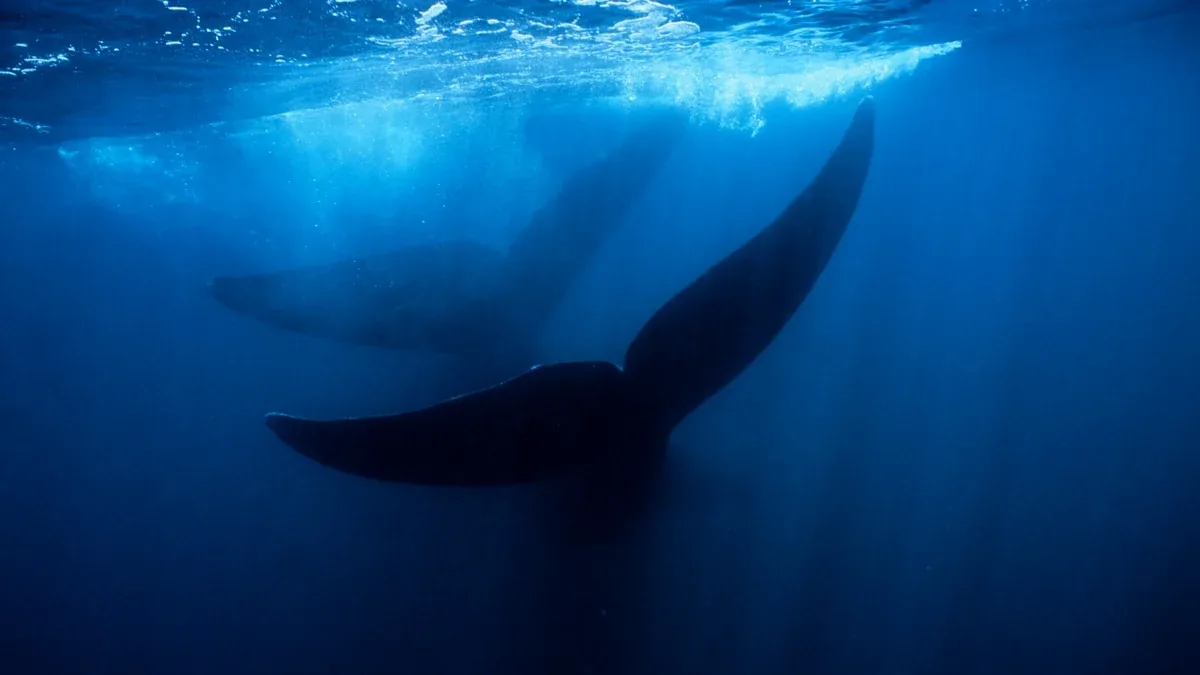
An astonishing discovery in the frigid, crushing depths of the Indian Ocean's Diamantina Fracture Zone has revealed an ancient 'whale graveyard,' a vast necropolis containing the fossilized remains of nearly 500 whales. Spanning approximately 1,200 kilometers (745 miles) along the seafloor, at depths reaching over 7,000 meters, this unprecedented find includes fossils dated as far back as 5.3 million years ago, predating the emergence of modern humans. This extraordinary site represents the largest, deepest, and oldest accumulation of whale remains ever discovered, potentially serving as a continuous fossil archive for millions of years.
The research team, led by deep-sea scientist Xiaotong Peng of the Chinese Academy of Sciences, published their findings in a study that highlights how this discovery could fundamentally alter our understanding of deep-sea ecosystems and the evolutionary history of cetaceans. The extreme environment of the abyssal plain—characterized by absolute darkness below 1,000 meters, immense pressure, and near-freezing temperatures—is typically inhospitable to life, with food being a scarce commodity. In such conditions, whale carcasses, known as whale falls, become a rare but significant source of sustenance, transforming barren stretches of the ocean floor into temporary, thriving ecosystems. Even the bones themselves are consumed by specialized organisms like Osedax worms, leaving little trace over time.
Deep-Sea Exploration Uncovers Ancient Remains
The discovery was made during the Global Hadal Exploration Programme (GHEP), a project dedicated to exploring the planet's deepest oceanic regions. In February 2023, researchers aboard the crewed submersible Fendouzhe first encountered a whale fall in the Diamantina Fracture Zone. Over the subsequent weeks, 32 additional dives were conducted, leading to the identification and documentation of 485 whale-fall sites. Among these, 476 were fossilized whale remains, and five were identified as currently active, living whale-fall ecosystems. The oldest specimen collected, a skull, was dated to 5.26 million years ago.
A key factor in the remarkable preservation of these fossils appears to be the species of whales found. The majority of the remains belonged to beaked whales, a group of elusive deep-sea cetaceans known for their dense skulls. This density allows the bones to resist decomposition for extended periods, facilitating the accumulation of minerals and halting further degradation. The researchers theorize that the Diamantina Fracture Zone might act as a natural accumulation point for whale carcasses, possibly due to specific behaviors or ecological niches occupied by beaked whales. These whales are known to forage at extreme depths, sometimes exceeding 3,000 meters, and the V-shaped topography of the fracture zone could potentially funnel and concentrate sinking carcasses onto the seafloor.
The active whale falls at the site support a diverse community of organisms, including microbial mats, Osedax worms, brittle stars, and bivalve mollusks. These communities often exhibit symbiotic relationships with chemosynthetic microbes, similar to those found around hydrothermal vents, where life is fueled by chemical energy rather than sunlight. This observation suggests that whale fall ecosystems can flourish at depths previously considered too extreme, potentially serving as crucial habitats for specialized organisms.
The significance of this discovery extends beyond understanding current deep-sea life. The vast array of preserved remains offers an unparalleled window into the evolutionary history of beaked whales over millions of years. The researchers have already identified at least one extinct species previously unknown to science and suspect that further analysis will reveal more evolutionary insights. Paleontologist Stephen J. Godfrey of the Calvert Marine Museum, in an accompanying editorial, likened the site to a growing fossil bed, or 'Wachsend-Lagerstätte,' comparable in scientific importance to groundbreaking discoveries like the living coelacanth or the first hydrothermal vents. He described the find as a unique discovery that reshapes our view of life in the deep ocean, akin to the opening scenes of an epic film, expressing hope for future discoveries in this remarkable deep ocean archive.