
Hyundai Boulder SUV Patent Signals EV Design Direction
Hyundai's newly surfaced Boulder SUV patent reveals forward-thinking electric vehicle architecture, positioning the automaker to compete in the rapidly evolving luxury off-road segment.

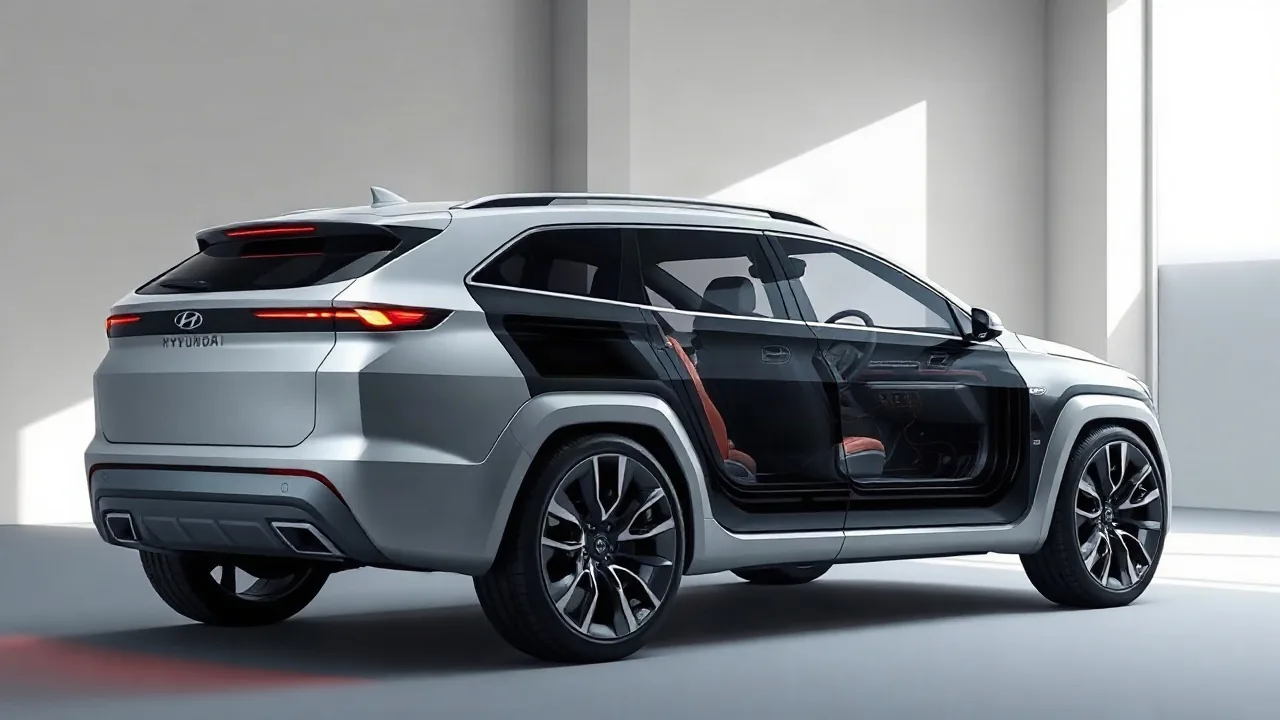
Hyundai Motor Company filed a patent for the Boulder SUV concept, marking a significant step in the automaker's strategy to define the next generation of electric vehicle design. The filing, which emerged publicly in 2026, outlines distinctive styling cues and structural innovations that suggest how the South Korean manufacturer intends to differentiate its EV lineup in an increasingly crowded market.
The Boulder SUV patent incorporates several proprietary features that address both aesthetics and functional engineering. Rather than simply applying electric drivetrains to existing body styles, Hyundai's designers have rethought proportions, window geometry, and interior packaging to leverage the space-efficiency advantages inherent to battery-electric powertrains.
"Electric vehicles allow us to reimagine how consumers interact with personal transportation," said a Hyundai design strategist familiar with the concept, speaking on the condition of anonymity due to company policy. "The Boulder project demonstrates our commitment to creating vehicles that feel purpose-built for electrified mobility, not simply converted from gasoline blueprints."
Design Philosophy and Patent Details
The patent documentation reveals that Hyundai focused on expanding interior volume while maintaining a compact footprint. This approach mirrors industry trends, as competing manufacturers have discovered that EV design benefits from flat floors and distributed battery pack architecture that traditional internal combustion engines cannot match.
Key design elements outlined in the filing include:
- Recessed door handles and flush window frames to reduce drag coefficient
- Modular roof panel system allowing removable or convertible upper structure
- Integrated lighting patterns coordinated with digital user interface displays
- Reinforced lower frame geometry optimized for battery pack mounting and crash safety
The patent also addresses automotive patent claims around thermal management systems, detailing how heat generated by electric motors and power electronics will be routed away from passenger compartments more efficiently than current Hyundai EV models manage the task.
Hyundai has not released an official timeline for production. However, the patent's level of technical specificity suggests the Boulder SUV could reach consumer markets within three to five years, assuming no major engineering obstacles emerge during the development phase.
Market Position and Competitive Landscape
Hyundai's Boulder project arrives as the company attempts to strengthen its foothold in the premium electric vehicle segment. The Ioniq 5 and Ioniq 6 have achieved modest success in North America, but the company lacks a true competitor to vehicles like the Tesla Model X and the upcoming BMW iX M50.
By 2026, consumer appetite for electric SUVs has intensified. Data from Cox Automotive indicates that battery-powered sport utility vehicles now represent 18 percent of total US EV sales, up from 12 percent just two years earlier. This shift underscores why manufacturers are investing heavily in SUVs rather than sedans.
Hyundai's parent company, Hyundai Motor Group, has allocated approximately 61 billion dollars to electrification and autonomous driving technologies through 2030. The Boulder SUV patent sits at the intersection of both initiatives, as the design philosophy accommodates future autonomous driving hardware integration without requiring extensive structural rework.
Rivals including Volkswagen, General Motors, and Ford have all filed comparable design patents in recent months. The competitive race to establish visual and functional differentiation in the EV market has become as critical as battery chemistry or charging speed.
Why This Patent Matters Now
The Boulder patent's emergence reflects a maturing electric vehicle ecosystem. Early EV buyers prioritized range and charging infrastructure; current consumers increasingly weigh design language and driving experience alongside practical metrics. Hyundai's investment in proprietary car technology suggests the company believes design innovation remains a competitive advantage even as battery and motor technologies converge across manufacturers.
Hyundai also faces pressure from Chinese EV makers including BYD and NIO, which have captured significant market share in Asia and are now targeting North American consumers. The Boulder SUV patent indicates Hyundai intends to defend its position through distinctive industrial design rather than price competition alone.
The patent also hints at Hyundai's thinking around future of cars development. By designing a vehicle optimized for electric powertrains from the ground up, rather than adapting legacy platforms, Hyundai avoids the weight penalties and complexity that plague many first-generation EV conversions.
Thermal efficiency, structural rigidity, and crash safety all receive specialized treatment in the Boulder design. These factors collectively determine real-world driving range, acceleration performance, and insurance costs. Hyundai's engineering approach, as revealed in the patent, prioritizes durability and total cost of ownership alongside showroom appeal.
The Boulder SUV patent signals that Hyundai remains committed to competing at the design and technology frontier of the automotive industry. While the vehicle itself may not reach dealerships until 2028 or 2029, the intellectual property filed today establishes Hyundai's vision for what electric off-road luxury should offer consumers seeking alternatives to traditional gas-powered sports utility vehicles.