
JWST Reveals Sand Clouds on Exoplanet WASP-94A b, Correcting 100-Fold Atmosphere Bias
The James Webb Space Telescope has mapped the weather on WASP-94A b, revealing mornings filled with vaporized rock clouds and correcting a decade-long bias in exoplanet atmosphere analysis.

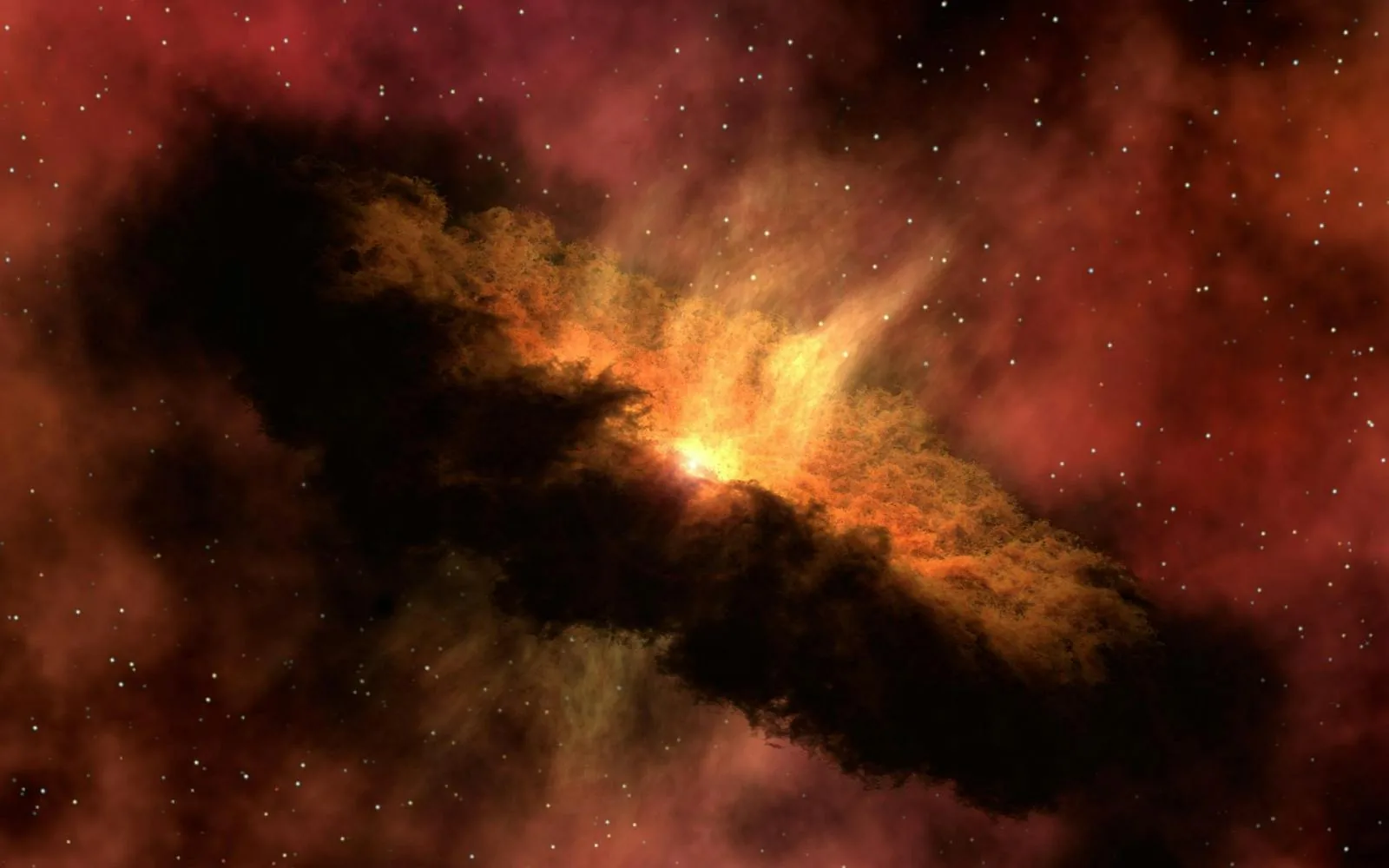
The James Webb Space Telescope (JWST) has provided an unprecedented glimpse into the weather patterns of WASP-94A b, a planet located approximately 690 light-years away. This hot gas giant, orbiting a star in a binary system, exhibits a peculiar forecast: mornings shrouded in clouds of vaporized rock, followed by clear evenings, with powerful winds circulating sand-like particles before they evaporate under intense heat. These findings, detailed in the May 21 issue of the journal Science, have not only painted a vivid picture of alien weather but also exposed a significant methodological flaw in how scientists have analyzed exoplanet atmospheres for over a decade.
Using an advanced technique known as limb-resolved spectroscopy, a research team spearheaded by Sagnick Mukherjee from Johns Hopkins University successfully differentiated the atmospheric conditions on the morning side from those on the evening side of the tidally locked planet. WASP-94A b, though possessing less than half the mass of Jupiter, is more than 70 percent wider and experiences scorching average temperatures exceeding 1,500 Kelvin. Due to its tidally locked nature, one hemisphere perpetually faces its star, while the other is locked in eternal darkness. This arrangement creates a dramatic temperature gradient, with the evening limb being substantially hotter than the morning limb.
This stark temperature difference leads to vastly different atmospheric behaviors on each side, akin to stitching together two distinct planets. On the planet's morning side, JWST's sensitive instruments detected thick clouds composed not of water vapor, but of vaporized magnesium silicate – essentially, microscopic grains of sand. As atmospheric parcels of air rotated around to the evening side, these clouds dissipated, leaving the skies clear.
Atmospheric Circulation and the 'Sandstorm' Cycle
The circulation of these unique atmospheric features is driven by a phenomenon called equatorial super-rotation. Researchers believe that potent winds along the day-night terminator, the boundary between perpetual day and night, lift magnesium silicate high into the atmosphere above the frigid night side. Here, it condenses to form clouds. These clouds are then carried by winds towards the dayside, where they descend, re-vaporize in the extreme heat, and dissipate before reaching the evening limb. According to the research team, this cycle resembles a continuous, sky-bound sandstorm, with vaporized rock circulating between hemispheres in a closed loop.
The study aimed to understand the dynamism of exoplanet atmospheres – whether they are static or in constant motion, and the role of winds and clouds. The observations of WASP-94A b provide a clear answer: the weather on this distant world is highly dynamic and in perpetual flux. This revelation offers crucial insights into the complex atmospheric processes occurring on planets beyond our solar system.
However, the implications of this research extend far beyond the specific weather patterns of WASP-94A b. The study highlights a critical bias that has permeated exoplanet atmosphere analysis for more than ten years. Traditionally, astronomers have estimated the chemical composition of these atmospheres by averaging the light filtered through the entire planet during a transit. This method treated each exoplanet as a uniform, homogenous sphere, an assumption that proved misleading for WASP-94A b.
When this averaging technique was applied to WASP-94A b, it suggested an oxygen content approximately 100 times higher than that of our Sun. However, by resolving the morning and evening limbs separately using JWST's capabilities, the team discovered the actual oxygen enrichment was only three to five times solar. This corrected value aligns much better with predictions from current planet-formation models for gas giants. Sagnick Mukherjee noted that this discrepancy significantly alters the understanding of the planet's composition. Such a vast overestimate would have classified WASP-94A b into an exotic category, whereas the corrected, lower enrichment value places it among more ordinary gas giants.
The significance of this correction is profound. The ratios of oxygen and carbon are key indicators astronomers use to infer where and how gas giants formed within their parent protoplanetary disks. A hundred-fold miscalculation could lead to fundamentally incorrect conclusions about planetary evolution. This makes the advanced spectroscopy capabilities of the JWST invaluable.
Tidally locked worlds are a common type of exoplanet observed by current instruments, often found in close proximity to their stars, making them easier to detect and study. If the averaging bias observed on WASP-94A b is widespread, then numerous previously published atmospheric composition estimates for hot Jupiters may require re-evaluation. The research team stressed the urgent need for the field to develop more robust methods to account for this observational bias. Their work is already paving the way, with follow-up JWST observations of eight other hot Jupiters revealing similar morning-evening cloud cycles on at least two planets: WASP-17b and WASP-39b. These planets were previously studied with the Hubble Space Telescope, which lacked the resolution to distinguish limb data.
The JWST's ability to resolve atmospheric differences across a planet's face is a revolutionary leap. Where earlier instruments provided a single, averaged snapshot, JWST offers what is akin to a stereo image, providing two distinct channels of information about circulation, chemistry, and cloud physics. This enhanced resolution is a recurring theme with JWST, which has recently been used to map bare rock on a distant super-Earth and to provide new perspectives on early-universe galaxy formation, consistently revealing details that challenge prior assumptions based on averaged data.
Mukherjee's team plans to expand their limb-resolved approach to a broader range of exoplanets, including one with a highly eccentric orbit. The extreme temperature variations on that planet could drive weather systems unlike any currently documented. For now, WASP-94A b serves as a crucial test case, a world where sand-like clouds paint the morning sky and winds dynamically reshape atmospheric chemistry. It's a powerful reminder that exoplanets, often perceived as mere points of filtered starlight, may harbor complex, dual atmospheres upon closer inspection.