
NASA Details 2025 Space Station Science Breakthroughs for Moon, Mars Missions
NASA's 2025 annual highlights reveal over 750 space station investigations advancing human spaceflight and Earth-based innovations. Key results include robotic surgery advancements and new radiation shielding materials.

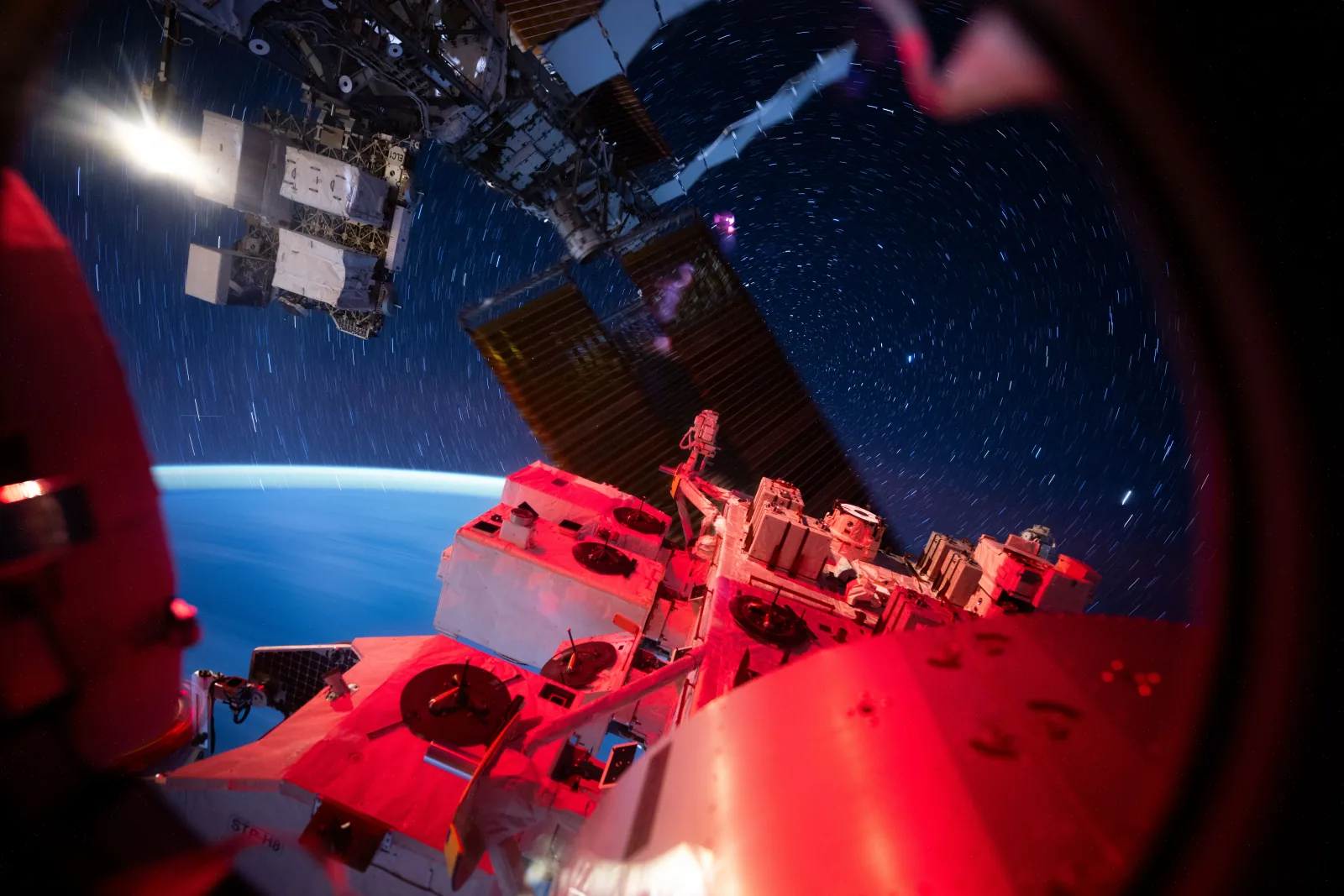
NASA unveiled its 2025 Annual Highlights of Results on May 22, 2026, showcasing a year of significant scientific achievements aboard the International Space Station (ISS). Researchers conducted over 750 investigations that deepened the understanding of life in space, fostered innovations for Earth, and supported NASA's ongoing exploration goals for the Moon and Mars. The findings span advancements in surgical capabilities in microgravity, novel biomaterials for tissue regeneration, and enhanced radiation protection for astronauts.
One pivotal study evaluated a miniature robotic system's ability to perform surgical tasks in the unique environment of microgravity. Using rubber bands to simulate surgical procedures, researchers observed the impact of communication delays from Earth and tested the precision of robotic arms during remote operations. The results indicated that while time lags extended procedure durations, robotic accuracy remained largely unaffected. This research holds promise for enabling precise surgical interventions in space, potentially on future lunar bases or during Mars missions, and also offers a compact solution for remote medical procedures on Earth.
Advancing Medical and Material Science in Orbit
The ISS continues to serve as a crucial laboratory for developing technologies essential for long-duration space travel and beneficial to life on our planet. A significant biomaterials investigation, dubbed the Magnetic 3D Bioprinter, utilized magnetic levitation to precisely construct complex tissue structures in microgravity with minimal material waste. Scientists were able to position calcium crystals into scaffolds designed to stimulate new bone growth. Samples created in space demonstrated superior structural organization and a remarkable capacity for bone tissue regeneration. Given that astronauts often experience bone loss and increased fracture risks during extended missions, this technology could eventually allow for the on-demand fabrication of medical treatments for skeletal injuries far from Earth.
In parallel, NASA explored the effects of prolonged exposure to the harsh vacuum of space on materials critical for exploration. Researchers subjected polymers, thermal protection systems, spacesuit components, and radiation-shielding materials to the space environment for six months via the International Space Station Experiment-13-NASA (MISSE-13-NASA) investigation. Notably, several biomaterials infused with melanin, a natural pigment offering UV protection, showed exceptional resistance to radiation damage, particularly those infused with fungal melanin. These biologically derived materials present a sustainable and lightweight option for radiation shielding on future deep-space missions, with potential terrestrial applications in medical protection, UV defense, and creating radiation-resistant structures.
Powering these ambitious missions requires equally robust energy solutions. The Japan Aerospace Exploration Agency (JAXA) investigated the stable performance of all-solid-state lithium-ion batteries in space, enduring extreme temperature fluctuations and vacuum conditions. These batteries offer potential advantages over conventional ones, including a wider operating temperature range, enhanced chemical stability, and increased resistance to ignition. After 434 days in space, a battery pack assembled from these components showed stable electrical behavior, no degradation, and only a minimal 2% capacity loss. These findings suggest these batteries could provide safer and more reliable power systems for lunar and Martian exploration, as well as for demanding environments on Earth.
Long-duration spaceflight also impacts astronauts' return to Earth, particularly their cognitive and motor skills. NASA's Manual Control investigation studied how long missions affect piloting abilities. Five experienced astronauts performed simulated aircraft landings before and after their ISS stays. The study revealed degraded performance post-mission, characterized by higher touchdown speeds and navigational errors, though most pilots improved with a second attempt the same day. This highlights the need for countermeasures to maintain critical piloting skills after space travel.
Beyond human factors, the ISS monitors atmospheric and space phenomena. The European Space Agency's Atmosphere-Space Interactions Monitor (ASIM) is studying electrical events above severe thunderstorms, such as sprites, blue jets, and elves. By combining visual observations with ground-based radio measurements, researchers confirmed that powerful electrical bursts above thunderstorms can generate 'elves,' and found a correlation between the brightness of blue flashes and electrical current. This work improves the modeling of energy transfer between the upper atmosphere and near-space, potentially enhancing severe weather prediction and our understanding of the upper atmosphere's critical role in satellite operations and communications.
With over two decades of operation, the ISS has facilitated more than 4,000 experiments from over 110 nations, leading to over 5,000 scientific publications. The cumulative impact of ISS research is evident, with citations exceeding 100,000 in scientific journals, underscoring its enduring value to science and exploration.