
Space ETF Guide: How to Invest in Aerospace Companies
Space ETFs have surged in popularity as investors seek exposure to the booming aerospace and satellite sectors. Here's what you need to know to evaluate these funds.

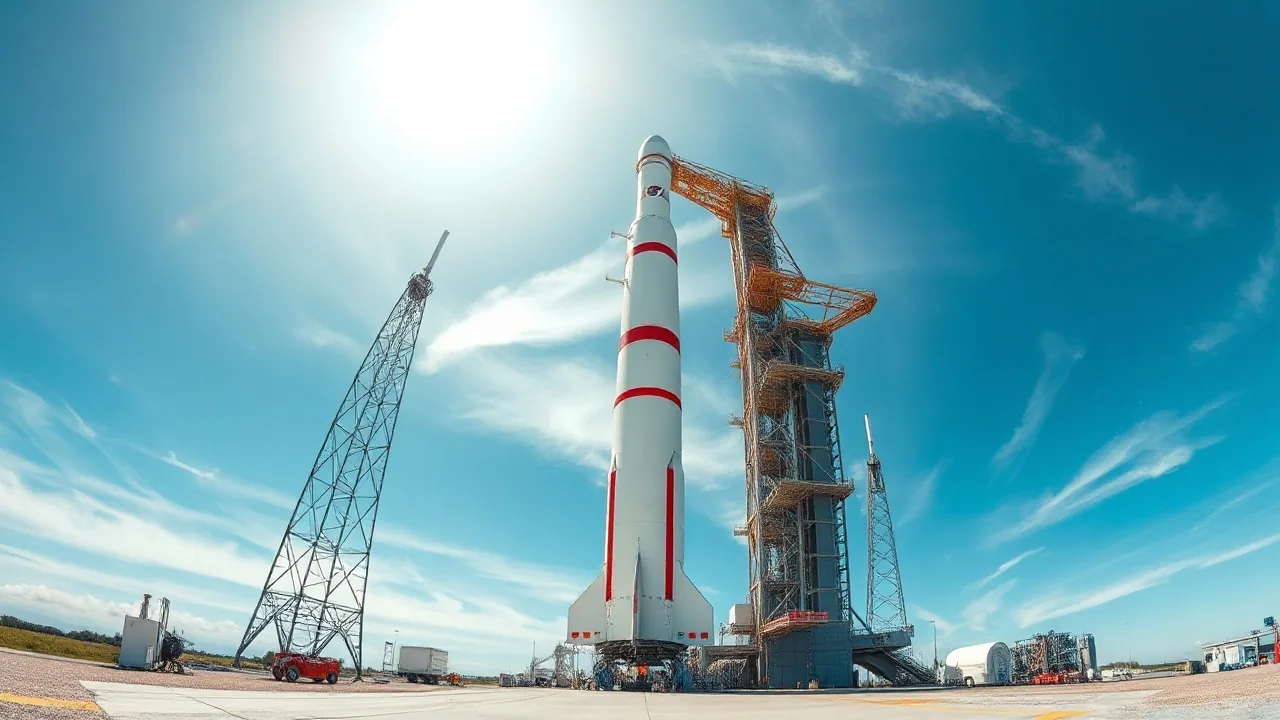
As SpaceX's Starship completed its fifth integrated flight test in May 2026 and Blue Origin expanded its New Shepard operations, mainstream investors have taken notice of the space economy's explosive growth. Space ETFs have become a gateway for retail portfolios to capture gains from this sector without picking individual stocks like SpaceX or Axiom Space.
The space industry is no longer the domain of government agencies alone. Commercial enterprises now dominate launch services, satellite communications, space tourism, and in-orbit manufacturing. This shift has created a new asset class: space ETFs that bundle aerospace companies, satellite operators, and related vendors into a single fund.
A typical space ETF tracks companies involved in rocket manufacturing, satellite deployment, ground support systems, and space-based services. These funds have attracted billions in assets over the past 18 months, reflecting investor appetite for exposure to an industry forecast to reach $1.8 trillion by 2035, according to Morgan Stanley's aerospace research division.
What You'll Find Inside Space ETF Holdings
Most space-focused ETFs hold a mix of pure-play aerospace firms and broader defense contractors with significant space divisions. The largest allocations typically include:
- Rocket and launch vehicle manufacturers like Axiom Space and Relativity Space
- Satellite communications providers including Viasat and Iridium Communications
- Defense and aerospace incumbents with space operations, such as Lockheed Martin and Northrop Grumman
- Ground support and infrastructure vendors
- Space technology and electronics suppliers
Different ETFs weight these holdings differently. Some emphasize pure commercial space plays, while others include established defense contractors where space is one division among many. The choice depends on your conviction about whether pure-play aerospace companies or hybrid defense-plus-space firms offer better returns.
"The heterogeneity of space ETF construction is actually an advantage for investors," says Jennifer Roberts, senior analyst at Aerospace Investment Research Group. "You can choose between aggressive growth funds heavy on startups and unproven companies, or more conservative funds anchored by Lockheed and Boeing's established space divisions."
The NASA Effect and Government Contracts
Government spending remains a massive tailwind for space companies. NASA's Artemis program, which targets a crewed lunar landing by 2027, continues to drive contractor demand. The Space Force's procurement of launch services from commercial carriers ensures sustained government revenue for firms like United Launch Alliance and SpaceX.
NASA awarded $3.4 billion in space technology development contracts in fiscal 2025, and appropriations for 2026 show no signs of contraction. Many space ETFs benefit indirectly from this spending through holdings in contractors and suppliers.
However, government dependency carries risk. Shifting political priorities, budget cuts, or delays in landmark programs like Artemis can ripple through the sector. ETF investors gain diversification across this risk because most funds hold companies with exposure to multiple revenue streams: government, commercial satellite, and emerging services like space tourism.
A critical distinction exists between companies receiving significant government contracts and those relying primarily on commercial revenue. ETF prospectuses should disclose the revenue breakdown for major holdings.
Evaluating Performance and Fees
Performance metrics for space ETFs vary significantly based on their inception dates and market conditions. Funds launched between 2020 and 2022 captured the initial boom in commercial space enthusiasm, delivering triple-digit returns. More recent launches have experienced volatility tied to broader tech sector sentiment and aerospace supply chain challenges.
Expense ratios for space ETFs typically range from 0.55% to 0.75% annually, higher than broad market index funds but competitive with other thematic ETFs. Investors should compare:
- Total expense ratio (the percentage you pay annually)
- Average daily trading volume (liquidity matters for entry and exit costs)
- Number of holdings and concentration risk
- Rebalancing frequency and methodology
A fund holding 35 aerospace names is less concentrated than one holding 12, but concentration can also amplify gains if your thesis about specific subsectors proves correct. Most space ETFs hold 20 to 50 stocks, offering reasonable diversification.
Tax efficiency deserves mention as well. Investing in an ETF wrapper rather than individual stocks eliminates the temptation to chase momentum by trading frequently, which can trigger capital gains taxes. The fund's internal management also handles redemptions tax-efficiently compared to mutual funds.
Sector Headwinds and Realistic Expectations
The space economy is growing, but growth is not linear. Supply chain disruptions in aerospace manufacturing have persisted through 2026, delaying satellite launches and pushing some constellation deployments into 2027. Launch costs have fallen dramatically thanks to SpaceX's reusable Falcon 9, but margins remain thin for launch service providers.
Satellite internet providers face margin compression as Starlink dominance increases. Companies like Viasat and OneWeb must differentiate on service quality or coverage to compete. This dynamic is reflected in ETF holdings, where satellite operators represent a smaller allocation than launch providers or infrastructure companies.
Space exploration remains capital-intensive and failure-prone. Hardware, launch, and operational losses occur regularly. Space ETF holders must accept volatility as a permanent feature of the investment thesis, not a temporary aberration.
Before allocating capital to a space ETF, clarify your investment horizon. Investors with 10-year or longer timelines can weather short-term setbacks. Those needing capital within five years face timing risk, especially if aerospace earnings disappoint or government spending declines unexpectedly.
Aerospace innovation will continue, but returns depend on execution by portfolio companies, government support, and broader market appetite for risk. A space ETF is a leveraged bet on all three factors, not a guaranteed path to wealth.