
Lunar Catapults: SpaceX's Mass Driver Tech Could Be Weaponized, Report Warns
A new report highlights the dual nature of lunar mass drivers, electromagnetic catapults like those proposed by SpaceX, warning they could be used as potent first-strike weapons systems, not just for peaceful space launches.

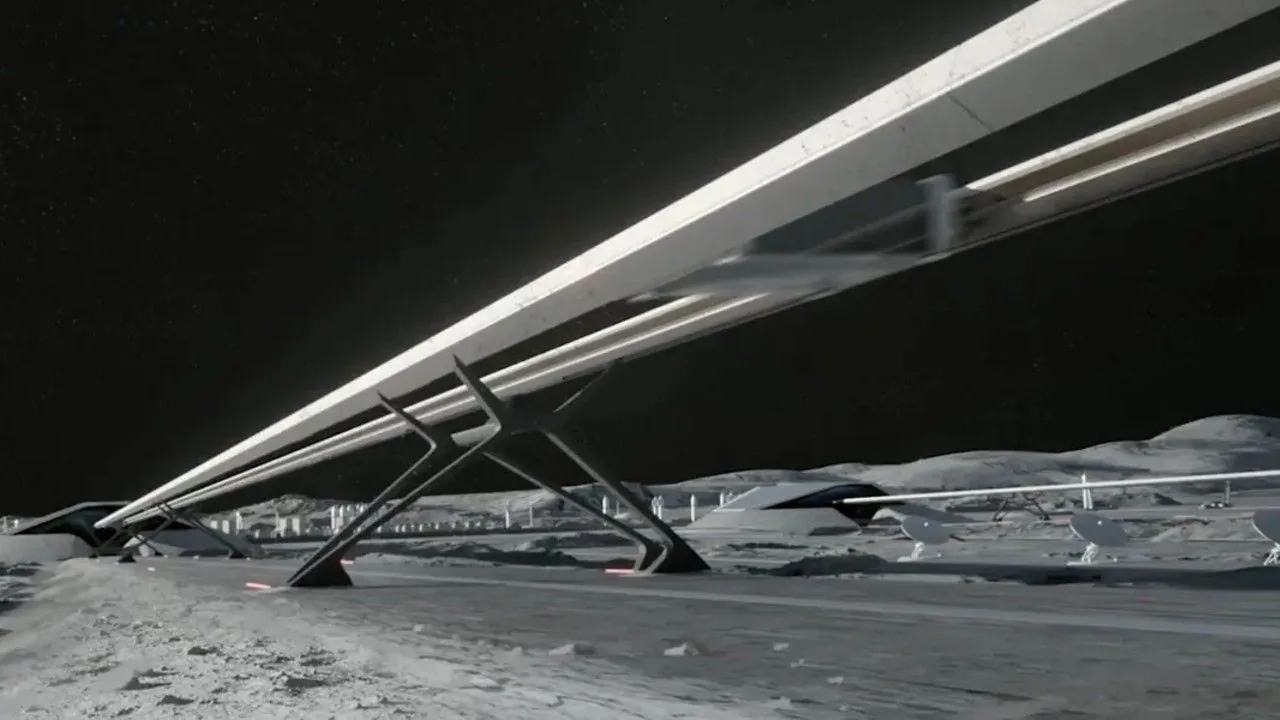
A new analysis by the American Foreign Policy Council (AFPC) warns that electromagnetic catapults, known as mass drivers, proposed for use on the Moon by companies like SpaceX, could pose significant strategic and security risks. These devices, capable of launching payloads into space without traditional rocket fuel, could also function as formidable weapons platforms, according to the report authored by space power and policy analyst Andre Sonntag.
The core of the concern lies in the inherently dual-use nature of mass drivers. While envisioned for civilian applications such as launching satellites for AI data centers or mining lunar resources for off-world construction, their immense power and launch capabilities also lend themselves to military purposes. "This duality places mass drivers in a uniquely sensitive strategic position," the report states. "While mass drivers can bootstrap an off-world economy, they carry an equally potent and unsettling military capability: the ability to operate as an unassailable, undetectable first-strike platform." The AFPC report emphasizes that the United States has a shrinking window to influence the strategic landscape of the lunar frontier, and the development of these technologies will be crucial for spacefaring nations seeking to control cislunar space.
The concept of accelerating objects on the Moon dates back to the 1970s and the work of physicist Gerard O'Neill. Mass drivers, based on coilgun technology, could theoretically launch chunks of lunar ore into space, serving as building materials for future space colonies or solar power satellites. Early prototypes, developed with support from the Space Studies Institute, demonstrated that even a relatively short, 520-foot mass driver could eject material from the lunar surface.
Dual-Use Dilemma: From Construction to Conflict
Sonntag's report posits that the launch capability of lunar mass drivers could make them "an unparalleled source of space power." He urges the United States to proactively develop this technology to avoid competitors gaining a strategic advantage. However, significant technological hurdles remain. "No mass driver architecture is currently mature enough for an immediately scalable, industrial application," Sonntag told Space.com. "The primary issue, regardless of architecture, is that with regards to scaling." Current prototypes can only handle small payloads, and considerable logistical and technical challenges must be overcome before larger spacecraft can be launched.
Despite these challenges, forward-thinking companies are already exploring the possibilities. SpaceX CEO Elon Musk has articulated a vision for a lunar factory capable of producing thousands of AI data center satellites annually, necessitating a colossal catapult on the Moon. While specifics of SpaceX's concept remain undisclosed, Sonntag notes that the company possesses the resources to develop such systems. Other entities, including Auriga Space and Electromagnetic Launch Inc., are also developing mass driver technologies, though they are smaller operations that would benefit from increased investment. Sonntag estimates that a commercially viable system could be ready by the mid-2030s with sufficient funding.
The strategic implications are profound. A mass driver on the Moon could operate beyond the reach of terrestrial early warning systems, complicating detection and response to potential attacks. Weaponized payloads could include Kinetic Energy Impactors (KEI) for direct strikes, Satellite and Anti-Satellite (SAT/ASAT) systems, or even Nuclear Reentry Vehicles (RV). Such a platform could also be used to rapidly deploy space-based missile defense systems, echoing concepts like the U.S. "Golden Dome" initiative.
While the United Nations Outer Space Treaty prohibits military installations on celestial bodies and the deployment of nuclear weapons in space, enforcing these regulations on dual-use technologies presents a significant challenge. "As mass drivers are mixed use and would be primarily for civilian applications, this would heavily obfuscate the exact purpose of any system as to whether it is a military installation," the report observes. Furthermore, China is reportedly investing heavily in mass driver technology as a cornerstone of its lunar industrialization plans. Chinese researchers have proposed magnetic launchers for launching payloads and returning resources to Earth, potentially operating at a fraction of the cost of conventional rockets. Integrated with China's International Lunar Research Station, this capability could establish a robust logistics chain between the Moon and Earth.
In response to these developments, the AFPC report strongly recommends that the U.S. pursue an aggressive strategy through its Artemis Program to establish a permanent presence at key lunar locations. Such a presence, the report argues, would grant the U.S. de facto control over strategic areas and help shape the rules governing the cislunar frontier before other nations can establish their own norms.