
SpaceX Deploys 27 Starlink Satellites from Vandenberg
SpaceX successfully launched 27 Starlink internet satellites aboard a Falcon 9 rocket from Vandenberg Space Force Base on Monday evening. The booster successfully landed minutes after liftoff.

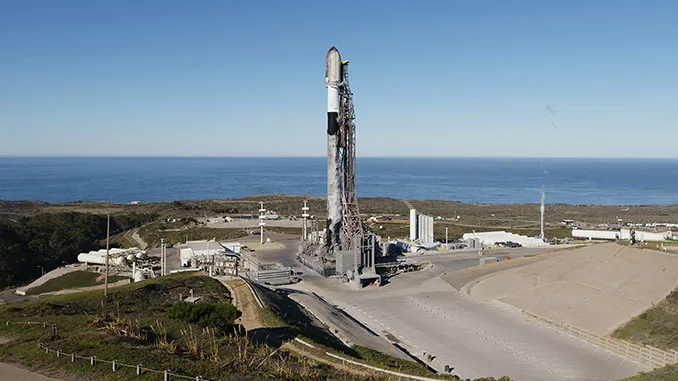
SpaceX launched 27 Starlink V2 Mini satellites into low Earth orbit on Monday evening from Vandenberg Space Force Base. The mission, designated Starlink 15-14, marks another expansion of the company’s growing constellation, which now comprises over 10,700 spacecraft. Liftoff occurred at 6:28:17 p.m. PDT (9:28:17 p.m. EDT) from Space Launch Complex 4 East.
The Falcon 9 rocket's first stage booster, identified by its tail number B1093, executed its 15th flight for the mission. This particular booster has a notable history, having previously supported launches including Transporter-16, two missions for the Space Development Agency, and 11 prior Starlink deployments. Approximately eight minutes after departing the launchpad, B1093 executed a successful landing on the autonomous droneship 'Of Course I Still Love You,' which was stationed in the Pacific Ocean.
Booster Landing Continues SpaceX's Record Pace
This landing marked the 210th successful recovery of a booster by the 'Of Course I Still Love You' vessel and contributed to SpaceX's overall record of 637 booster landings to date. This consistent success in booster recovery is a cornerstone of SpaceX's strategy to reduce launch costs and increase flight cadence.
The Starlink constellation aims to provide high-speed, low-latency broadband internet services globally, particularly in underserved and rural areas. SpaceX, led by CEO Elon Musk, has been rapidly deploying satellites to flesh out its network, which has become a significant revenue generator for the company. The company continues to refine its launch and landing procedures, enabling it to achieve unprecedented launch frequencies.
Monday's launch was the latest in a series of high-cadence deployments for the Starlink program. SpaceX has consistently ramped up its launch schedule throughout 2026, deploying hundreds of satellites in just the first half of the year. This ongoing expansion is crucial for enhancing the capacity and coverage of the global internet network.
The Falcon 9 rocket, a workhorse for SpaceX, is designed for reliability and reusability. Its dual-engine configuration and upper stage capabilities allow it to deliver substantial payloads to various orbits. The successful landing of the B1093 booster once again demonstrated the rocket's robust engineering and the company's operational excellence in booster recovery, a key factor in its space launch business model.