
Lunar Eclipse: Moon, Venus & Spica Light Up August Night Sky
Stargazers can witness a spectacular celestial display this week as the Moon passes Venus, Spica, and Antares. A deep partial lunar eclipse is also on the horizon for August 27-28.

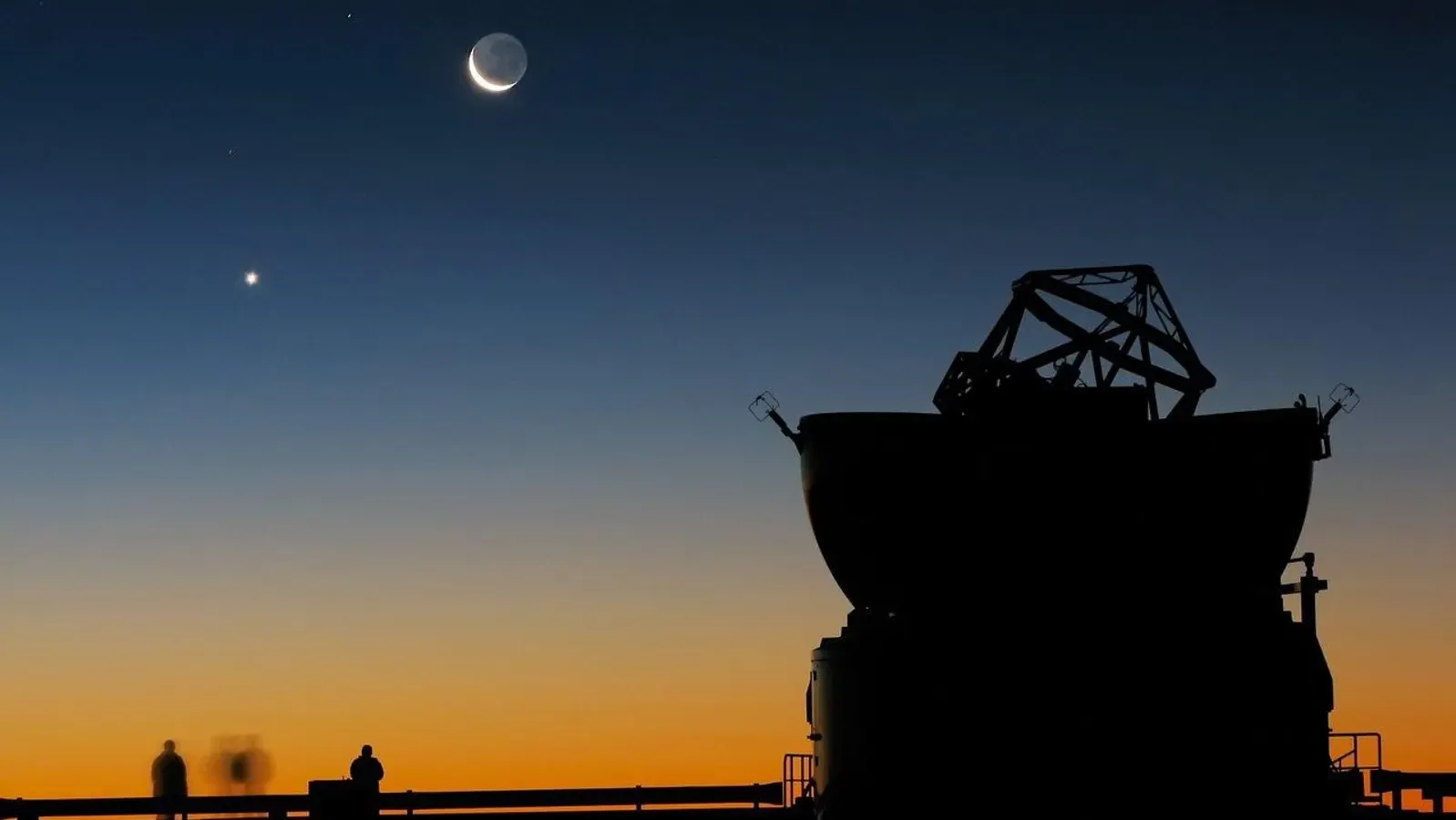
North American skywatchers have a celestial treat awaiting them this week, August 17-23, as the waxing moon embarks on a journey past bright planets and stars. Following the recent Perseid meteor shower, attention shifts to planetary conjunctions and an upcoming deep partial lunar eclipse that promises to be the most impressive visible globally until the end of 2028.
The moon's passage will bring it close to Venus, the brilliant evening star, and Spica, the brightest star in the constellation Virgo. It will also approach Antares, the prominent red star in Scorpius, often called the "anti-Mars" due to its color and brightness. While occasional meteors from the Perseids may still be visible in the hours after midnight, the true spectacle lies in the arching band of the Milky Way. Visible overhead from northeast to southwest, this galactic river of light, composed of billions of stars, is best observed in the early part of the week before the moon's illumination grows.
Prepare for a Deep Partial Lunar Eclipse
The highlight of the late August sky is the full moon on August 27-28, which will undergo a profound partial lunar eclipse. During this event, an estimated 96% of the lunar disk will traverse Earth's dark central shadow, known as the umbra. This dramatic celestial alignment will render the moon a deep copper and red hue as sunlight filters through Earth's atmosphere, closely mimicking the appearance of a total lunar eclipse, or "blood moon," though technically not reaching totality. The eclipse is forecast to be the most significant lunar event visible worldwide until a total lunar eclipse occurs on December 31, 2028.
The eclipse will be observable across both North and South America, as well as Europe and Africa. However, the Americas will offer the prime viewing positions, with the entire event unfolding in dark skies during nighttime hours. The total duration, including the fainter penumbral and the more pronounced partial phases, is slated to last approximately 5 hours and 38 minutes. The partial phase alone will extend for about 3 hours and 27 minutes. These timings are approximate for mid-northern latitudes, and observers are advised to consult local resources for precise schedules specific to their location.
This week's celestial events provide an excellent opportunity for both casual observers and dedicated astronomy enthusiasts. As the moon waxes, its increasing brightness will eventually illuminate the night sky, offering a different kind of beauty after the fading meteor shower. The conjunctions with Venus and Spica offer moments of close celestial proximity, while the approaching lunar eclipse presents a rare chance to witness a significant portion of the moon disappear into shadow, painting the night with fiery colors.