
Mars Curiosity Rover Captures Stunning Mountain Sunrise
NASA's Curiosity rover has sent back a spectacular image of a Martian mountain bathed in the light of dawn. The photo highlights geological features billions of years old.

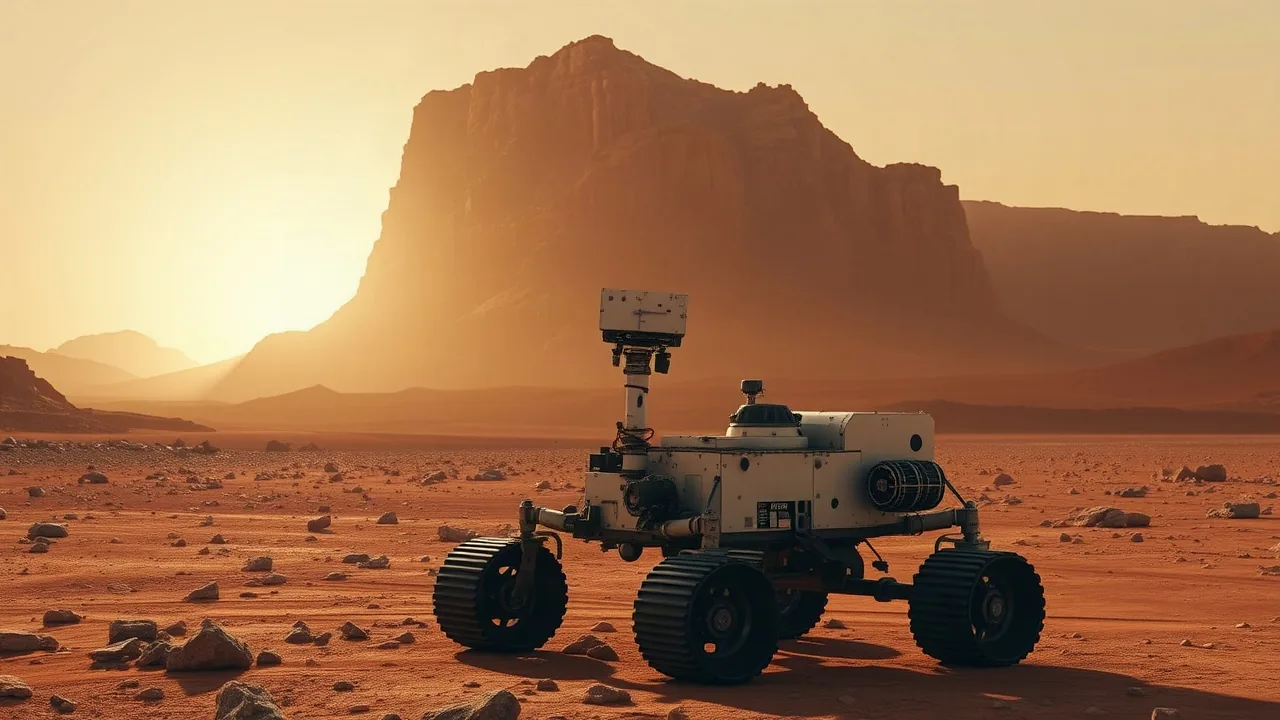
NASA's Mars Science Laboratory rover, Curiosity, has captured a breathtaking image of a mountain on the Red Planet as the sun rises, painting the ancient landscape in soft, ethereal light. The photograph, taken on October 3, 2026, showcases the rugged beauty of Mars and offers a glimpse into its geological past. This latest transmission from the Curiosity rover highlights the ongoing mission's success in exploring the Gale Crater.
The image features a towering mountain, illuminated by the low-angle sunlight of dawn. The long shadows stretch across the dusty terrain, emphasizing the vastness and desolation of the Martian environment. The striking composition, reminiscent of terrestrial mountain photography, underscores the advanced capabilities of the rover's imaging systems. This particular view was captured as part of the rover's ongoing exploration of the Vera Rubin Ridge, a geological formation within Gale Crater known for its rich mineralogy.
A Glimpse into Martian History
The landscape captured by Curiosity is estimated to be billions of years old, offering scientists invaluable data about the planet's formation and evolution. The detailed textures and rock formations visible in the image provide clues about ancient Martian climates and the potential for past water activity. The mission's primary objective is to assess whether Mars ever had an environment capable of supporting microbial life. Data from instruments like the Mars Hand Lens Imager (MAHLI) and the Mast Camera (Mastcam) allow for detailed examination of the rocks and soil.
Since landing in Gale Crater in August 2012, Curiosity has traversed over a kilometer, meticulously analyzing Martian geology. Its findings have continually reshaped our understanding of the Red Planet, revealing evidence of ancient lakes and rivers. The rover's instruments are designed to study rock composition, atmospheric conditions, and radiation levels, contributing comprehensive data to NASA's planetary science research. This sunrise image is not just aesthetically pleasing but also scientifically significant, providing context for the geological strata the rover is currently investigating.
The successful capture of such a detailed and evocative image is a testament to the engineering and operational expertise behind the Curiosity mission. The rover continues to operate well beyond its original mission design, demonstrating the robustness of NASA's interplanetary technology. Each new image and data set transmitted from Mars adds another piece to the complex puzzle of planetary science, furthering humanity's quest to understand our solar system and our place within it. The ongoing exploration promises further revelations about this intriguing world.