
Beaver moon 2026: When and how to watch November supermoon
November's full supermoon peaks this week, offering stargazers a brilliant view of the first in a series of three consecutive supermoons.

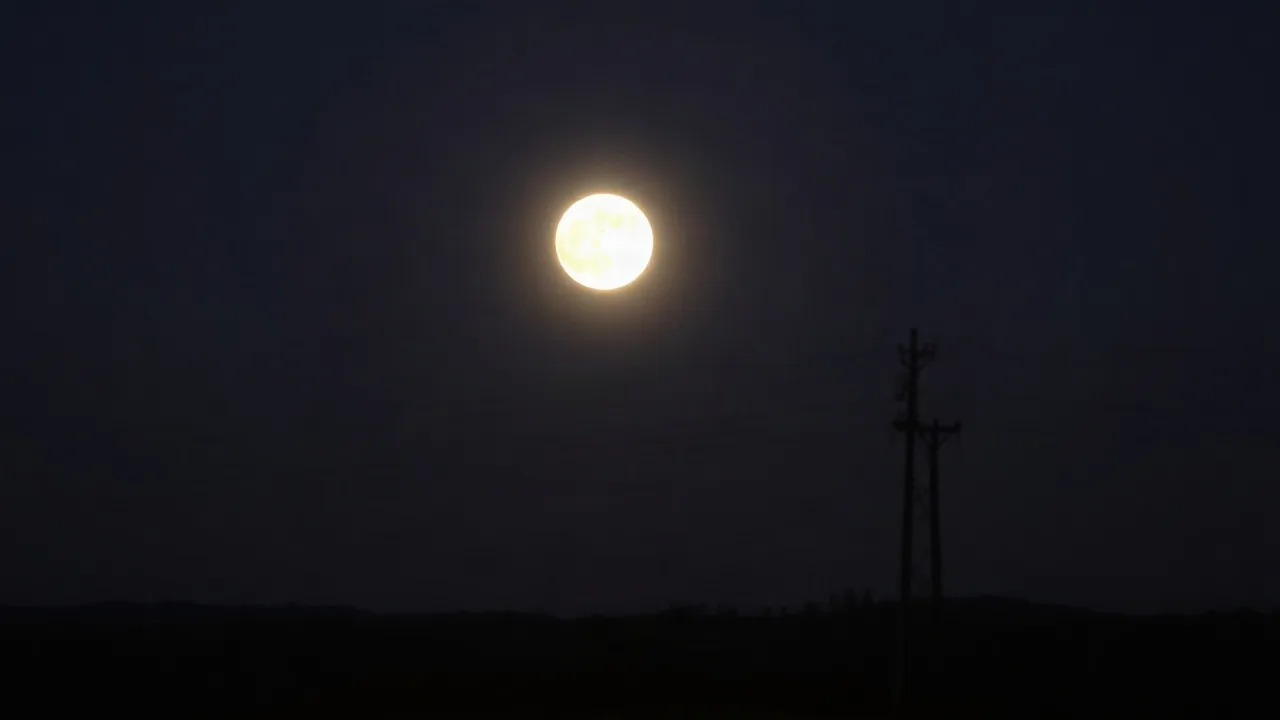
Stargazers have a chance to look to the skies this week as November’s full supermoon lights up the evening. According to EarthSky, the full moon will hit peak illumination at 9:54 a.m. ET.
Although the exact peak takes place during daylight hours in the United States, the lunar orb will continue to look full tonight, Tuesday, and Wednesday evening, according to Noah Petro, chief of NASA’s Planetary Geology, Geophysics and Geochemistry Lab at Goddard Space Flight Center in Maryland.
This November full moon is traditionally called the beaver moon, named after the time of year when dam-building mammals get ready for winter. The celestial event kicks off the first of three consecutive supermoons.
Understanding the Supermoon Orbit
“The moon’s orbit is a little bit elliptical; it’s not a perfect circle. So sometimes the moon is slightly closer to the Earth, and when that happens, it’ll appear larger in the sky as a result,” said Kevin Lewis, vice chair and professor of Earth and planetary sciences at Johns Hopkins University in Baltimore.
Petro noted that the November full moon will look about 17% larger and 30% brighter than the smallest full moon of the year. “Folks who pay regular attention to full moons will notice the difference,” he added.
Supermoons happen consecutively because the moon takes approximately 27.5 days to reach its closest point to Earth and about 29.5 days to finish a full phase cycle. Lewis explained that these similar time frames enable the full moon to line up with its closest approach to Earth across multiple months in a row.