
Planet X2 Discovered in Simulations Suggests Second World Beyond Neptune
Astronomers running long-term simulations have found orbital evidence suggesting a second Earth-like world, dubbed Planet X2, could be hiding beyond Neptune.

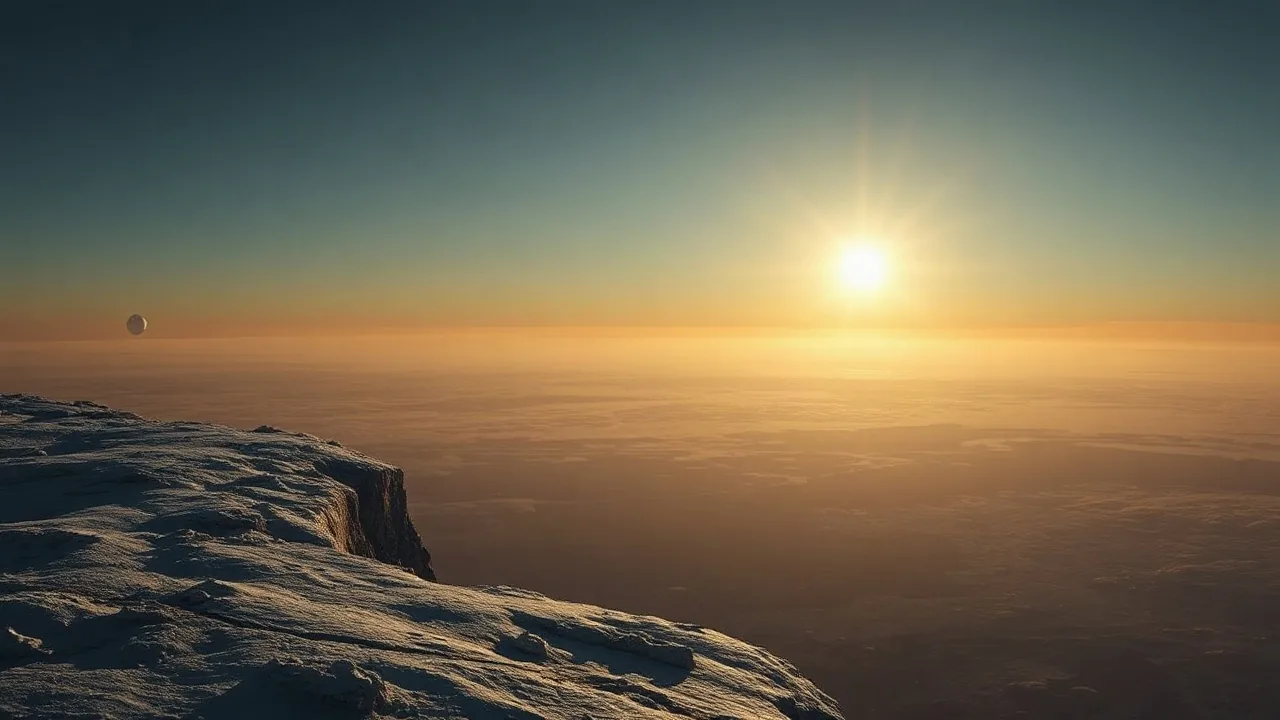
Astronomers studying the frozen outer expanses of the Solar System have uncovered orbital anomalies that point toward the potential existence of a second hidden world beyond Neptune. While astronomers have long debated the theoretical Planet Nine, new computer simulations suggest that an additional Earth-sized or super-Earth object could be orbiting in the remote margins of the Kuiper Belt.
Out beyond Neptune, the Solar System transitions into a vast, cold abyss where sunlight becomes drastically weaker. While conventional models attribute the behavior of most outer Solar System objects to the gravitational pull of known giant planets, certain persistent orbital anomalies continue to puzzle researchers. These irregularities include objects whose orbits are tilted at extreme angles, as well as bodies whose closest approaches to the Sun lie far beyond Pluto.
Simulating the Outer Solar System
To investigate these strange configurations, a team of researchers including Patryk Sofia Lykawka of the University of Southern Queensland and Kindai University, Pedro Bernardinelli of the University of Washington, and Jonti Horner of the University of Southern Queensland ran detailed computer simulations. Spanning 4.5 billion years, the models traced how the outer Solar System evolved as giant planets migrated into their current positions.
“It's a bit like the footprints in the snow,” Jonti Horner said, describing how unusual orbital paths betray the presence of an unseen body. “It's telling you that somebody's been there that you didn't expect.”
When the team incorporated an additional distant planet into their models, the simulations successfully generated populations of objects on highly tilted and detached orbits that closely mirrored observed anomalies. The closest match points to a planet roughly 1 to 2 times the mass of Earth, possessing a semimajor axis between 350 and 500 astronomical units and never approaching closer than 200 astronomical units to the Sun.
“If this planet exists, it could change how we understand the history of our Solar System and how its most distant objects came to follow such unusual orbits,” Patryk Sofia Lykawka noted in a statement.
Because the Planet X2 hypothesis and the Planet Nine hypothesis account for distinct orbital patterns, researchers suggest that both worlds could theoretically coexist in the distant outer reaches, or that only one might exist. Next-generation facilities like the Vera C. Rubin Observatory in Chile are expected to discover vast numbers of new trans-Neptunian objects, offering researchers the expanded dataset needed to test these planetary models further.