
Mars Rover Finds Intriguing Honeycomb Texture on Red Planet Surface
NASA's Curiosity rover has captured images of a peculiar honeycomb-like pattern on the Martian surface. The texture, composed of nearly identical polygonal shapes, has intrigued scientists who are seeking to understand its origin.

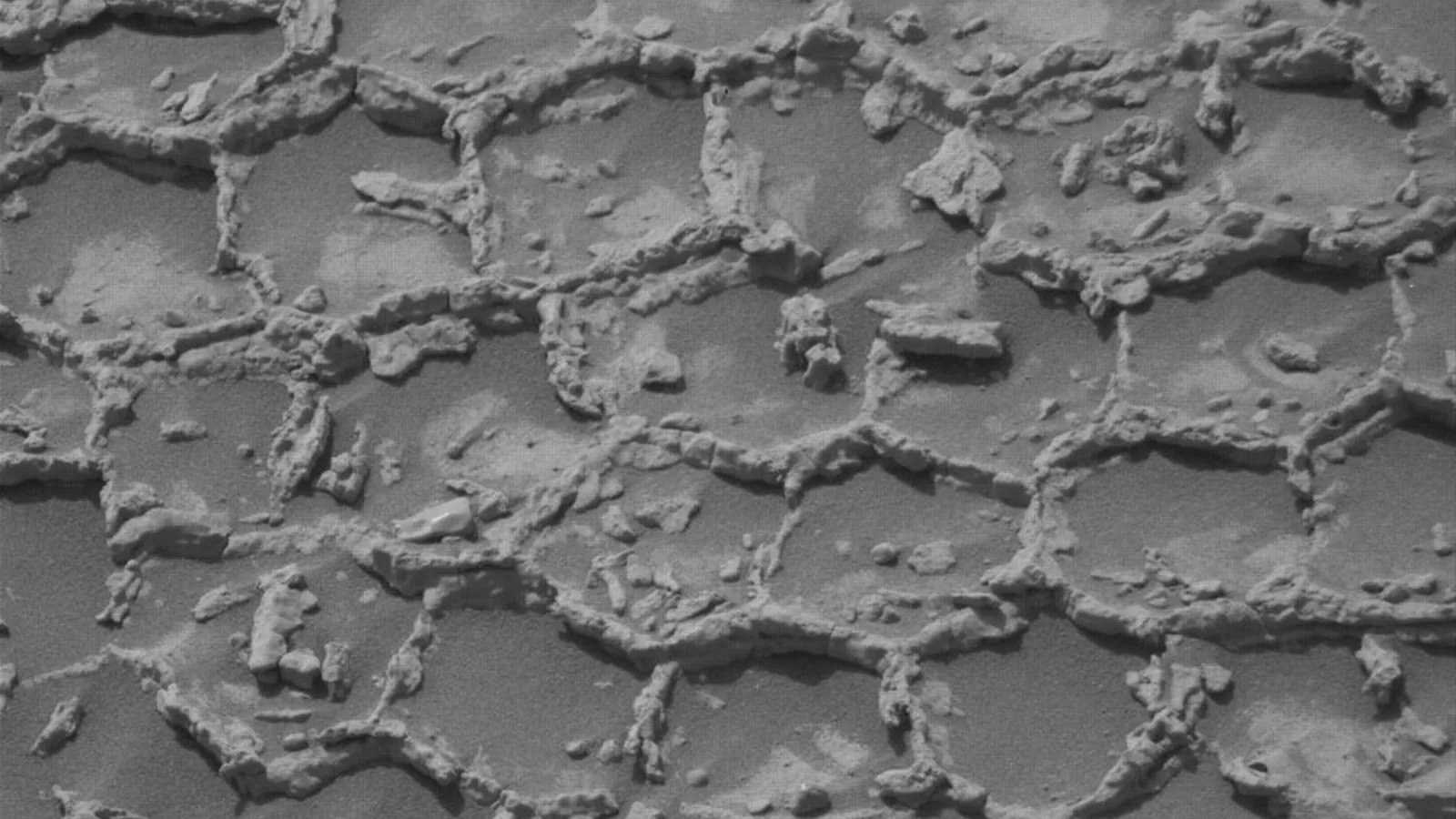
NASA's Curiosity rover has captured striking images of a peculiar honeycomb-like texture on the surface of Mars, adding another geological mystery to the Red Planet's enigmatic landscape. The discovery was made in an area initially observed from Mars orbit, but the rover's close-up inspection revealed a pattern of nearly identical polygonal shapes, resembling a natural Martian mosaic.
The rover team expressed surprise at the find when Curiosity arrived at the site. The honeycomb structure is accompanied by numerous dark rocks scattered across the area. Scientists are contemplating various explanations for these dark pebbles, including whether they originated from higher rock strata, were ejected from Gale Crater during ancient impacts, or are even meteorites from beyond Mars.
Previous discoveries of similar dark stones on Mars have revealed minerals like nickel, which are common in meteorites but rare in Martian rocks. This raises the question of whether these newly found pebbles are related to similar extraterrestrial impacts.
Geological Puzzles on the Red Planet
The precise origin of the honeycomb texture remains unknown, fueling ongoing scientific investigation. This discovery highlights the complex geological history of Mars and the continuous surprises the planet offers. For nearly 14 years, the Curiosity rover has been instrumental in exploring Martian terrain, and this latest observation underscores its vital role in unraveling the planet's secrets.
Researchers are keen to conduct further studies on both the honeycomb formations and the surrounding dark rocks. Understanding these features could provide crucial insights into past geological processes, potential water activity, and the broader history of planetary evolution in our solar system. The complexity of Mars's surface continues to challenge and inspire scientists, pushing the boundaries of our knowledge about extraterrestrial environments.