
Milky Way's Core Holds Sugar Molecules Crucial for Life
Astronomers have detected the natural sugar erythrulose in a dust cloud near the Milky Way's center. This discovery suggests simple sugars, vital for life's origins, are common in interstellar space and could have seeded early Earth.

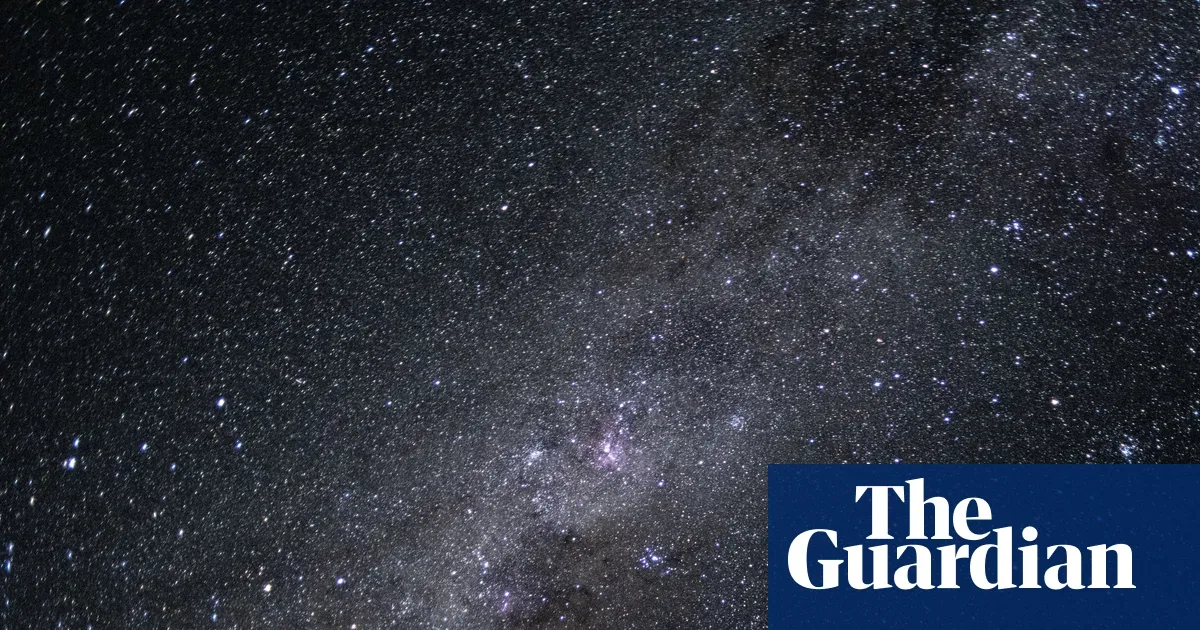
Astronomers have detected a natural sugar, known for its presence in raspberries and self-tanning lotions, within a vast cloud of dust and gas situated near the heart of the Milky Way. The finding, announced July 13, 2026, does not point to extraterrestrial civilizations but demonstrates that compounds essential for life can indeed form in the frigid conditions of interstellar space. This simple sugar, called erythrulose, appears to be synthesized on tiny interstellar dust grains, subsequently raining down on nearby celestial bodies or arriving via comets that impact planets.
"This is the very first sugar to be detected in interstellar space and it is important because it tells us that these sugars are more common than we previously thought," stated Dr. Izaskun Jiménez-Serra of Spain’s Centre for Astrobiology. "It opens the possibility for life to develop on other worlds in a similar fashion to what it did on Earth." Scientists have long grappled with understanding the abundance of simple sugars on early Earth, as laboratory simulations indicate they would not have readily formed on the nascent planet. Prior detections of sugars in ancient meteorites and on the asteroid Bennu had hinted at an extraterrestrial origin, but direct confirmation in the interstellar medium had remained elusive until now.
Jiménez-Serra and her research team utilized two Spanish radio telescopes to scrutinize a dust cloud designated G+0.693-0.027, located close to the galactic center. Initial observations for simpler, three-carbon sugars yielded no results. However, the team then identified the spectral signature of erythrulose, a four-carbon sugar. "To my surprise, I saw the signals," Jiménez-Serra remarked.
Complex Molecules from Cosmic Dust
The research, published in Nature Astronomy, details how erythrulose can form through the interaction of glycolaldehyde and ethylene glycol—organic compounds prevalent in various cosmic regions—on microscopic dust grains. These chemical reactions occur even at temperatures as low as -250 degrees Celsius (-418 degrees Fahrenheit). Beyond providing an energy source for potential life, simple sugars like erythrulose can also react to form ribonucleotides. These are considered the fundamental building blocks of RNA, which is believed to have been the earliest form of genetic material. DNA later evolved as a more stable carrier of genetic information, with RNA serving as the intermediary between genes and the proteins synthesized from them.
The scientists estimate that millions of tons of erythrulose may have been delivered to Earth during a period of intense asteroid and comet bombardment known as the Late Heavy Bombardment. "To have suffered this kind of rain of organics, I think that seems to have been a key step," Jiménez-Serra explained. "That material could have contributed to prebiotic soups where the first biomolecules were synthesised."
Erythrulose is present in small quantities in red raspberries. In a more unexpected application, it is also a key ingredient in artificial tanning lotions. In these products, the sugar reacts with amino acids in dead skin cells, producing brown polymers called melanoidins through the Maillard reaction—the same process responsible for the browning of steak during cooking. Professor Yoshihiro Furukawa from Tohoku University in Japan, who previously identified sugars in the Bennu asteroid, commented on the significance of the new findings. "We have been waiting for an actual detection like this," Furukawa said. "Sugars formed in the interstellar medium can reach Earth and other planets via cometary dust … This supply may have helped facilitate the emergence of life, if planetary environments were able to build life from such molecules, although that process itself remains unclear." The discovery underscores the potential for complex organic chemistry to occur throughout the cosmos, laying the groundwork for life beyond our own planet.