
Nancy Grace Roman Space Telescope: NASA's 2026 Mission Overview
NASA's Nancy Grace Roman Space Telescope begins its landmark mission in 2026, equipped with advanced technology to map dark matter and search for habitable exoplanets. This space telescope marks a major leap in observational astronomy.

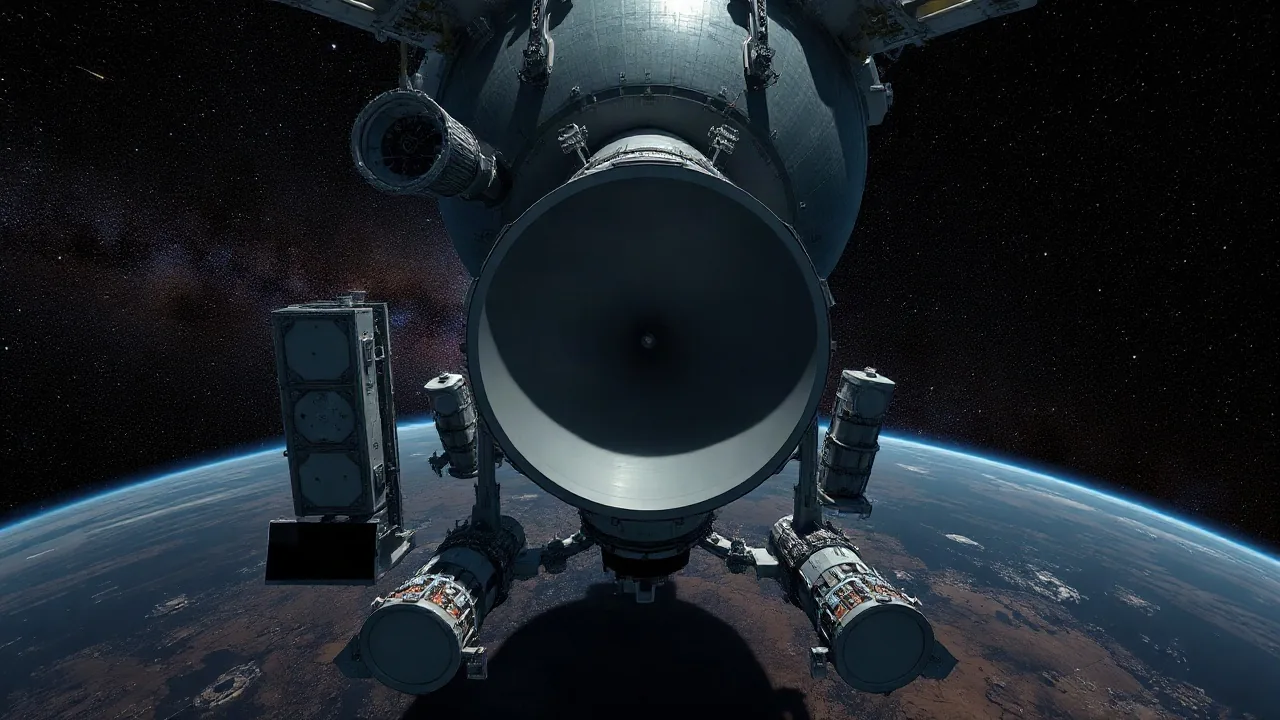
NASA's Nancy Grace Roman Space Telescope, named after the pioneering astrophysicist who revolutionized space-based astronomy, officially commenced its science operations in summer 2026 after months of calibration and testing. The observatory represents a watershed moment for astrophysics, carrying instruments specifically designed to answer questions about dark energy, dark matter, and the prevalence of life-bearing worlds beyond Earth.
The mission extends an ambitious legacy. Roman joins the James Webb Space Telescope as one of NASA's premier observatories, but with a fundamentally different scientific focus. Where Webb peers deep into the infrared cosmos to study the earliest galaxies, Roman surveys wider fields at optical wavelengths, capturing unprecedented views of our cosmic neighborhood.
"The Roman Space Telescope is going to revolutionize how we understand the universe's large-scale structure," said Dr. Dominic Benford, Roman's Program Scientist at NASA Goddard Space Flight Center in August 2026. "We'll map billions of galaxies and trace the invisible scaffolding of dark matter that holds them all together."
Core Scientific Objectives and Instruments
Roman carries two primary instruments: the Wide Field Instrument (WFI) and the Coronagraph Instrument. The WFI is optimized for wide-field imaging and spectroscopy, allowing astronomers to conduct surveys of extraordinary breadth. The telescope's 2.4-meter primary mirror and advanced detectors deliver resolution rivaling the Hubble Space Telescope across a field of view that is 100 times larger.
The NASA mission prioritizes four major investigation areas through 2026 and beyond:
- Mapping dark matter distribution across cosmic structures to test theories of gravity and the universe's composition
- Measuring the properties of dark energy and constraining cosmological models
- Cataloging millions of exoplanets and characterizing potentially habitable worlds
- Studying stellar populations, supernovae, and transient phenomena across billions of light-years
The Coronagraph Instrument, meanwhile, blocks out starlight to directly image faint objects orbiting nearby stars. This capability addresses a critical gap in exoplanet science: most known exoplanets are detected indirectly through methods like transit photometry. Roman's coronagraph can photograph young, hot planets directly, revealing their atmospheric composition and potential habitability markers.
Technology and Operational Capacity
Roman's engineering represents the cutting edge of space technology. The observatory operates at the Sun-Earth L2 Lagrange point, approximately 1 million miles from Earth, where gravitational equilibrium minimizes fuel consumption. This position provides thermal stability and an unobstructed view of the cosmos.
The telescope carries approximately 300 gigabytes of data storage and can transmit roughly 100 gigabits of data daily to ground stations. Processing this volume requires sophisticated algorithms and distributed computing resources. NASA partnered with multiple astronomy centers to build data pipelines capable of handling the deluge of observations.
The mission carries a nominal operating life of approximately 5.5 years, with fuel reserves potentially extending operations well into 2032. Current trajectory analysis suggests Roman could remain functional and scientifically productive for seven years or more under favorable conditions.
Key technical specifications include:
- Primary mirror diameter: 2.4 meters
- Operating wavelengths: 0.44 to 2.0 micrometers (visible to near-infrared)
- Field of view: 0.28 square degrees (16 times wider than Hubble's typical surveys)
- Angular resolution: approximately 0.11 arcseconds at green wavelengths
- Total mission cost: approximately 2.4 billion dollars
Early Results and Scientific Community Response
Within weeks of commencing science observations in August 2026, Roman's first data deliveries generated excitement across the astronomical community. Preliminary imagery of nearby galaxies and star clusters demonstrated the instrument's capability to resolve individual stellar populations with unprecedented clarity.
The space telescope is executing its initial survey program targeting nearby galactic clusters. Early observations are already revealing details about stellar kinematics, chemical composition gradients, and the prevalence of variable stars previously hidden in survey noise.
Astronomers worldwide submitted over 1,100 proposals for observation time in Roman's first competitive cycle. The oversubscription ratio, approximately 8:1, underscores the instrument's demand among the research community. Accepted programs span institutions from NASA centers to international observatories and university departments.
The mission operates under an international collaboration framework. Canadian agencies contributed the Fine Guidance Sensor, while European partners supplied specialized optical components. This collaborative approach mirrors modern trends in major scientific infrastructure development.
Roman's 2026 launch and early operational success represent a validation of NASA's portfolio strategy. The agency is now positioned to address fundamental cosmological questions for the remainder of this decade, complementing ground-based surveys and other orbital assets in building a comprehensive understanding of our evolving universe.