
New York Exhibit Features Rare Tyrannosaur Relative Fossil Ahead of Auction
A remarkably preserved fossil of a Nanotyrannus, a relative of the Tyrannosaurus rex, is on display in New York. The specimen will be auctioned later this year, offering a unique chance to own a piece of prehistoric history.

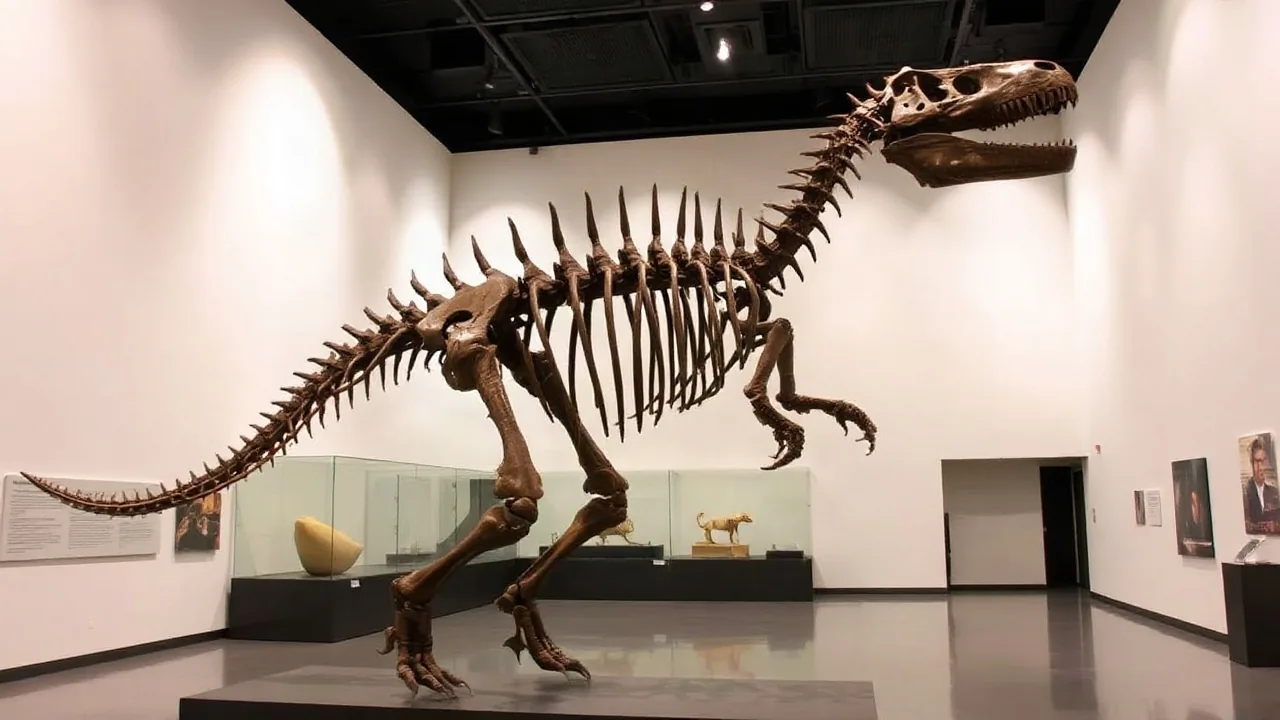
A stunningly complete fossil of a Nanotyrannus, a carnivorous dinosaur closely related to the famed Tyrannosaurus rex, has been unveiled at a New York City gallery. The specimen, believed to be from the late Cretaceous period, offers a rare glimpse into a formidable predator that roamed North America millions of years ago. It will be presented for public viewing before its sale at auction later in 2026, marking a significant event for paleontological collectors and enthusiasts.
The Nanotyrannus, though smaller than its colossal cousin T. rex, was an agile and formidable hunter. This particular fossil is notable for its exceptional preservation, with nearly all of its bones intact. Paleontologists estimate the creature measured approximately 17 feet long, a considerable size that highlights its predatory prowess in ancient ecosystems.
A Glimpse into Prehistoric Life
The discovery and preparation of such a complete dinosaur skeleton is an exceedingly rare event. "Finding a specimen like this, with such high completeness, is like finding a needle in a haystack," stated Dr. Aris Thorne, a paleontologist consulted on the fossil's preparation, though he is not affiliated with the auction house. "It provides invaluable data for understanding dinosaur anatomy, evolution, and the environments they inhabited." The fossil offers insights into the biomechanics and hunting strategies of tyrannosauroids, the group of theropod dinosaurs that includes both T. rex and Nanotyrannus.
This specimen's journey from excavation to public display and eventual auction underscores the growing commercialization of significant paleontological finds. While such auctions can fund further research and conservation efforts, they also raise questions about the accessibility of scientific heritage. The Nanotyrannus fossil represents a tangible link to a lost world, and its sale is expected to draw intense interest from wealthy individuals and institutions worldwide.
The late Cretaceous period, which ended approximately 66 million years ago with the extinction event that wiped out the non-avian dinosaurs, was a time of great biodiversity. Dinosaurs like the Nanotyrannus and the more famous Tyrannosaurus rex were apex predators in their respective environments. The detailed study of their fossilized remains continues to reveal fascinating details about their lives, from their diets and growth patterns to their social behaviors.
The auction house handling the sale has not disclosed the estimated price, but similar high-profile dinosaur fossil auctions in recent years have fetched millions of dollars. This Nanotyrannus fossil represents not only a scientific marvel but also a potentially lucrative investment for its future owner. The public exhibition in New York provides a final opportunity for researchers and dinosaur aficionados to examine the specimen before it potentially disappears into a private collection.