
NASA's Roman Space Telescope Launches Sunday After Budget Battles
NASA's Nancy Grace Roman Space Telescope is set to launch Sunday from Florida, aiming to explore exoplanets and cosmic mysteries. The ambitious mission survived significant budget cuts proposed by the previous administration.

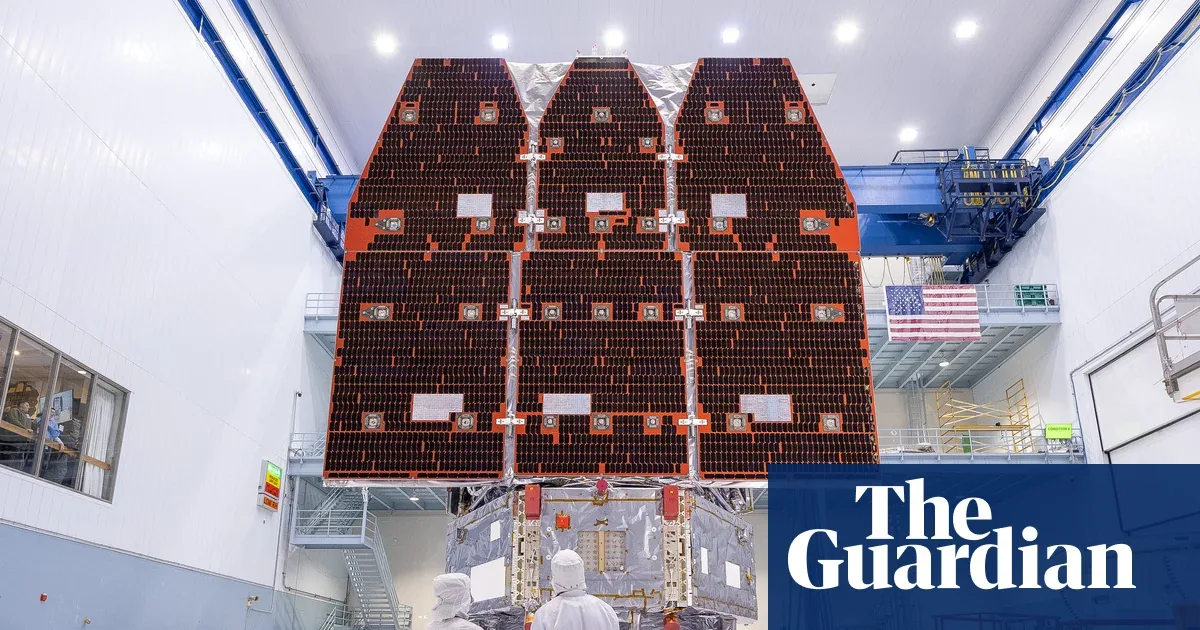
The Nancy Grace Roman Space Telescope, a $4.3 billion mission, is scheduled to lift off from Florida early Sunday morning as NASA embarks on its next endeavor to unravel the universe's secrets. The telescope successfully navigated two rounds of proposed budget cuts from the White House and is set to begin its million-mile journey into deep space from the Kennedy Space Center at 7:26 a.m. ET, weather permitting. The mission is poised to join the ranks of legendary observatories like the Hubble and James Webb space telescopes.
Named after NASA's first chief of astronomy, the Roman telescope represents a significant leap in observational power, boasting a 300-megapixel infrared camera that offers the same sharpness as Hubble but with a field of view 100 times larger. This enhanced capability allows it to capture vast swathes of the sky, with individual images covering an area about 1.5 times the size of a full moon. A specialized coronagraph instrument will also enable detailed imaging of planets by blocking out starlight, potentially revealing worlds unlike the young, hot gas giants primarily observed to date.
Expanding the Frontiers of Astronomical Discovery
Roman's destination is Lagrange point 2 (L2), a stable gravitational point approximately one million miles from Earth, where it will share an orbital neighborhood with the James Webb Space Telescope. While not a direct replacement for Hubble or Webb, Roman is designed to complement and advance their discoveries. Its expansive panoramas will identify intriguing targets that Hubble can then investigate using its broader spectrum capabilities, and Webb can scrutinize with its superior resolution. Roman itself can provide crucial contextual information around celestial objects observed by its predecessors.
The initial images from the Roman telescope are anticipated in early 2027, following months of calibration and testing. NASA plans to make all data publicly available immediately, offering an unprecedented resource for professional astronomers, researchers, and amateur enthusiasts alike. The telescope's mission scope is vast, potentially covering everything from objects in our outer solar system to distant galaxies and the fundamental nature of the universe itself.
Julie McEnery, NASA's senior project scientist for the Roman mission, explained that the concept for the telescope emerged from a desire to understand the universe's accelerating expansion, a phenomenon first noted in the late 20th century. "One of the motivations for Roman was the discovery that our universe is not just expanding, but that expansion is accelerating," McEnery stated. "It’s like if you were to throw a ball in the air, and instead of the ball coming back down, it just keeps shooting away. There’s something really fundamental that we don’t understand about the nature of our universe itself, and Roman is purpose-built to address and provide the data that we need to address these questions."
The mission's survival is a testament to its scientific importance, having faced substantial opposition. A 2025 White House proposal that threatened deep cuts to NASA's science budget, including the termination of the Roman project, was rejected by Congress. Despite this, budget proposals for subsequent years continued to target NASA's funding, with significant reductions sought for science divisions. Nevertheless, Congress ultimately allocated $24.4 billion for NASA in fiscal year 2026, a figure that preserved the agency's key scientific initiatives, including the Roman telescope.
The Nancy Grace Roman Space Telescope is expected to provide critical data for exploring topics such as dark matter, dark energy, and the formation of planets outside our solar system. Its large field of view and infrared capabilities are designed to scan immense regions of the sky, significantly advancing astronomers' understanding of the cosmos.