
NASA Rover's Hematite Crystals Unlock Secrets of Ancient Martian Climate
NASA's Curiosity rover has identified hematite crystal structures on Mars that act as a "mineralogical marker," revealing crucial details about the planet's ancient wet and warm climate, potentially indicating longer habitable periods.

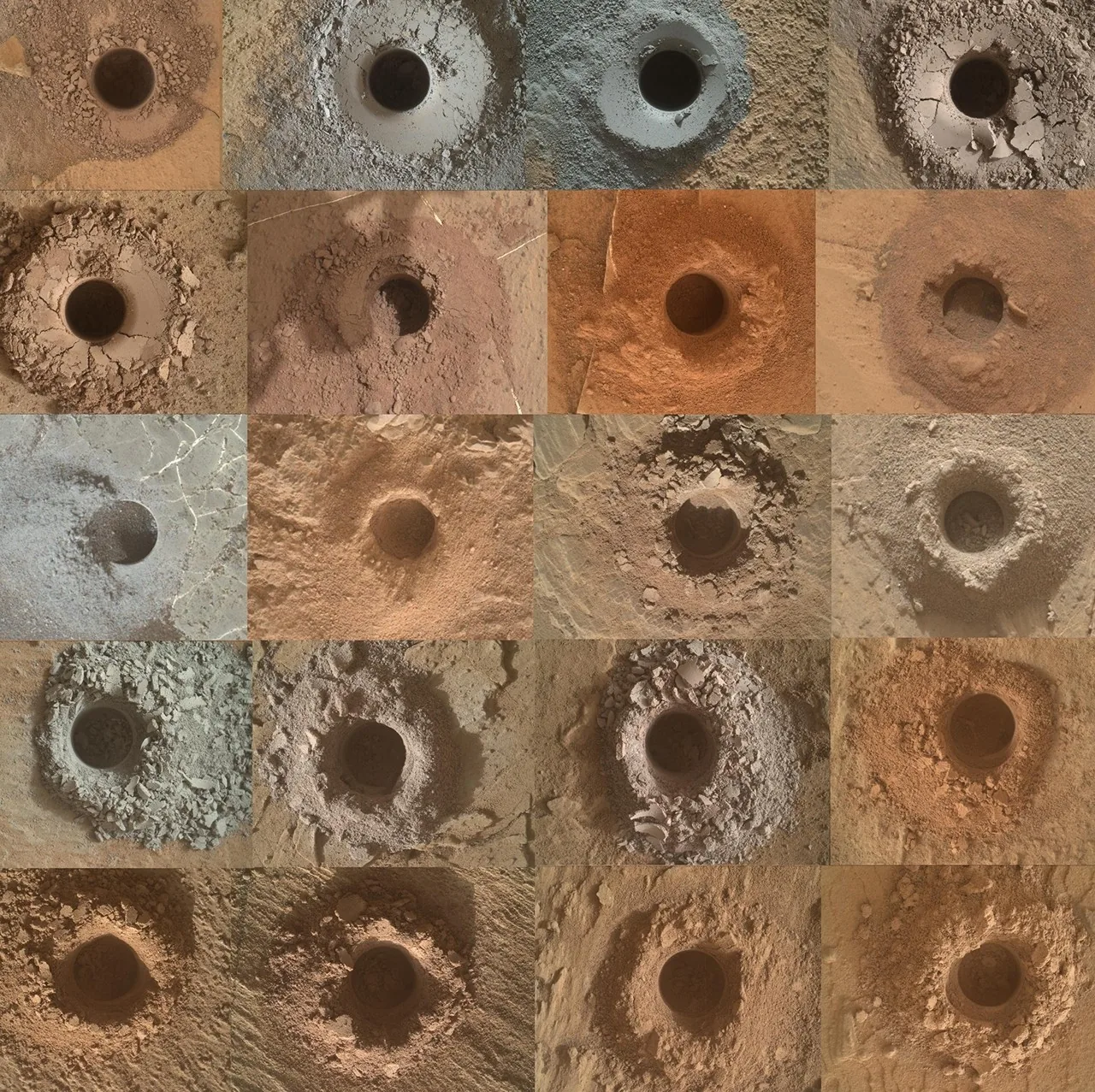
NASA scientists have discovered a new way to decipher the climate history of Mars by examining the tiny crystals within a common mineral. Data from the agency's Curiosity rover, published Thursday in the journal Science, reveals that the size and structure of individual hematite crystals can serve as a precise marker for environmental changes on the Red Planet, including the duration of liquid water. Researchers analyzed 20 samples collected by Curiosity from various elevations within Gale Crater, a massive impact basin whose layered walls offer a geological timeline of Mars' past.
The study focused on hematite, an iron oxide mineral known to form in the presence of water, and its co-occurring mineral, goethite. By analyzing data from Curiosity's Chemistry and Minerology (CheMin) instrument, the team observed distinct differences in hematite crystallite sizes at different altitudes. Crucially, goethite was found in samples from higher elevations but was absent in those from lower elevations. This disparity suggests that warm groundwater persisted for potentially millions of years in the deeper sections of Gale Crater, creating conditions that may have been habitable for extended periods.
Ancient Aquifers and Habitable Conditions
"What we found was that warm and wet conditions were present for extended periods in buried rocks, despite Mars’ climate becoming colder," stated Tanya Peretyazhko, a planetary scientist at NASA’s Johnson Space Center and co-first author of the study. "It means that deep in those rocks, those warmer conditions could have made for habitable conditions for much longer periods of time, provided that other essential factors were present." This finding challenges previous assumptions about the rapid drying of Mars, suggesting that pockets of warmth and water endured much longer than anticipated.
Iron oxides, like hematite, are recognized indicators of past water activity. However, this new research elevates hematite's utility by demonstrating that its crystallite characteristics—size and structure—are directly influenced by temperature and water conditions during formation. The scientists noted that hematite crystallites from higher elevations measured less than 10 nanometers, while those from lower elevations were significantly larger, sometimes reaching up to 65 nanometers. These larger crystals in lower elevations are attributed to a process called Ostwald ripening, where smaller crystals dissolve and contribute to the growth of larger ones over time in stable, warm environments. Conversely, the smaller crystallites at higher elevations indicate colder conditions with less persistent water.
The presence of goethite in higher-elevation samples and its absence in lower-elevation samples further supports the theory of evolving conditions. Under warmer temperatures and neutral to slightly alkaline water pH, goethite can transform into hematite. The study's co-lead author, Peretyazhko, explained, "This can tell you that the top layers were colder and didn’t have enough water, or the water presence was relatively short-lived, so the crystallites didn’t have sufficient time and conditions to grow in size. But the lower layers had longstanding warm water that allowed those crystallites to grow." This detailed mineralogical analysis offers a more nuanced understanding of Mars' transition from a potentially wetter, warmer world to the cold, arid planet observed today.
A significant aspect of this study is its reliance on direct sample analysis rather than solely on remote sensing or theoretical modeling. Curiosity's robotic arm collected powdered rock samples, delivering them to the CheMin instrument for detailed examination. "With CheMin’s X-ray diffraction patterns, we can look at the hematite crystal’s size and dimensions, information that that can’t be gathered from satellite analysis of the Martian surface," commented Tom Bristow, principal investigator of the CheMin instrument at NASA’s Ames Research Center. Ashwin Vasavada, Curiosity’s project scientist at NASA’s Jet Propulsion Laboratory, emphasized CheMin's precision, stating, "It doesn’t just tell you there is hematite. One can use the data to extract the size and shape of the hematite crystallites and the presence of other related minerals, all of which were necessary to produce this result." The findings from Curiosity rover provide invaluable insights into the geological and climatic evolution of Mars, paving the way for future missions seeking signs of past life.