
NASA's Satellite Rescue Craft LINK Suffers Glitches
NASA's LINK spacecraft, sent to extend the life of the Swift observatory, is experiencing critical issues with its attitude control system shortly after launch.

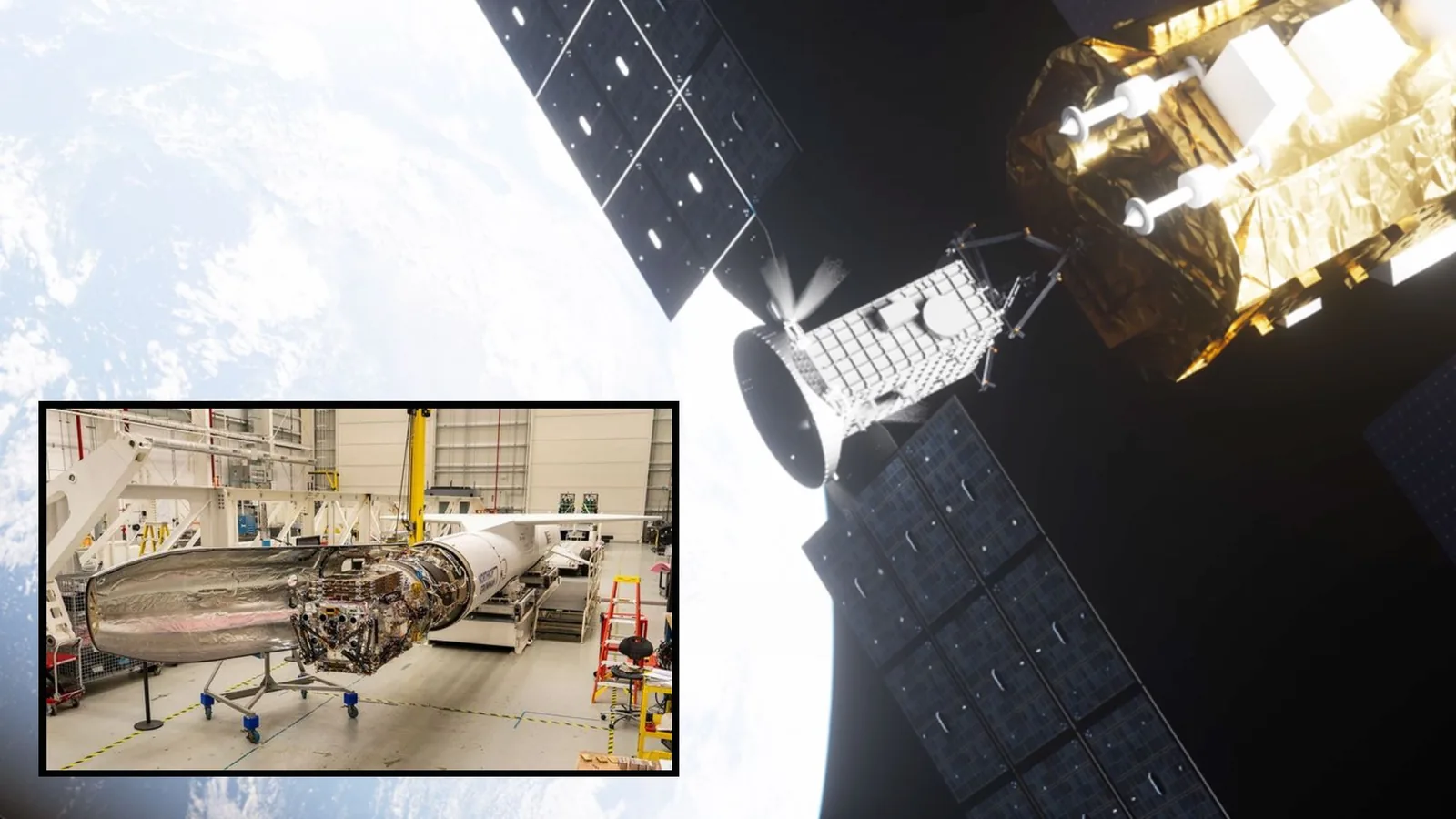
NASA's ambitious mission to extend the operational life of its Swift observatory has encountered unexpected difficulties, with the specialized LINK servicing spacecraft experiencing significant malfunctions just weeks after its July 3 launch. The LINK craft, built by Arizona-based Katalyst Space Technologies, was deployed on the final flight of Northrop Grumman's air-launched Pegasus XL rocket with the objective of rendezvousing with the Swift observatory in low Earth orbit.
The primary goal of the LINK mission was to analyze the Swift observatory's condition and subsequently use its robotic arms and thrusters to boost the aging satellite to a higher orbit, thereby prolonging its scientific operations. Swift, officially known as the Neil Gehrels Swift Observatory, has been a highly successful platform for detecting gamma-ray bursts since its launch in 2004. However, its orbit has been gradually decaying over years, and the observatory lacks the onboard capability to correct this orbital degradation.
Problems with the LINK spacecraft emerged on Tuesday, July 28, when NASA reported issues with its attitude control system. "Katalyst's LINK servicing spacecraft experienced issues with attitude control, causing the spacecraft to spin and resulting in sporadic communications," NASA stated in an update. Despite these critical glitches, the space agency confirmed that the rest of the spacecraft's systems remain functional and in good condition.
Control System Malfunctions Hamper Rescue Effort
Preliminary analysis indicates that two of LINK's three reaction wheels, crucial components for maintaining orientation and stability in space, are not operating correctly. Additionally, the spacecraft has experienced "some loss of functionality" in its cold gas thruster system. This mechanical issue bears an ironic resemblance to a past problem faced by the Swift observatory itself in 2022, when one of its own reaction wheels malfunctioned, prompting NASA to place it in safe mode. The Swift Boost mission, in contrast to Swift's original $250 million cost, was a comparatively more affordable $30 million endeavor.
Mission controllers are now exploring the possibility of using the LINK spacecraft's electric propulsion system to counteract the uncontrolled spinning and regain stable control. The success of this maneuver will be paramount in determining whether the mission can proceed with its original objectives. If control can be re-established, NASA and Katalyst Space Technologies will face the challenge of assessing the spacecraft's readiness and capability to undertake the complex task of docking with and maneuvering the Swift observatory.
The Swift observatory has been instrumental in astrophysics, detecting and observing transient celestial events like gamma-ray bursts, supernovae, and active galactic nuclei. Its contributions have significantly advanced our understanding of the universe's most energetic phenomena. The potential loss of this valuable scientific asset due to orbital decay underscores the critical need for such servicing missions. The development of technologies capable of extending the lifespan of operational satellites is becoming increasingly vital as space becomes more congested and the cost of launching new missions continues to rise.
The LINK mission represents a significant step in the evolution of space asset management and the utilization of robotic servicing technologies. While this initial setback is concerning, the ingenuity and perseverance of space agencies like NASA and private companies like Katalyst Space Technologies are often tested by such challenges. The outcome of this rescue attempt, whether successful or not, will provide valuable data and lessons for future endeavors in orbital servicing and satellite maintenance.