
NASA and SpaceX: How Private Aerospace Drives Space Innovation
NASA now funds commercial spaceflight providers like SpaceX and Blue Origin rather than building all systems itself. This shift has accelerated innovation and lowered costs for deep-space exploration.

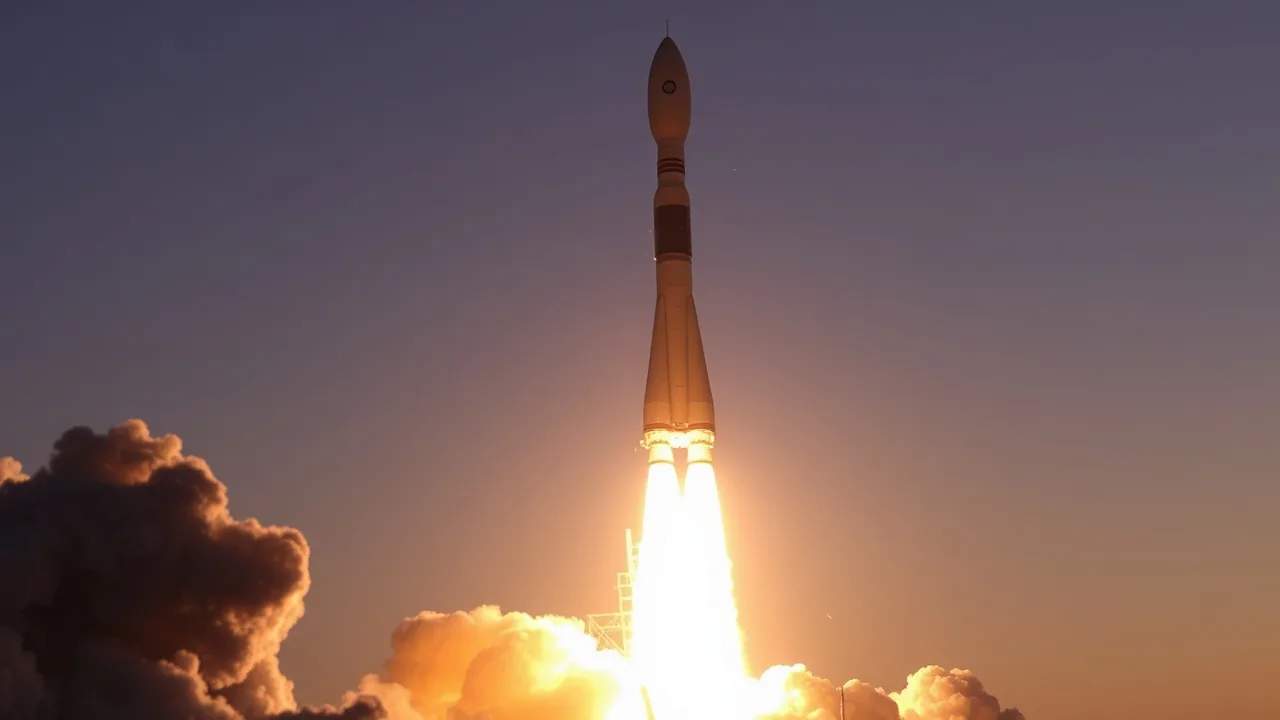
SpaceX launched its 23rd resupply mission to the International Space Station on November 14, 2024, marking another routine delivery that would have been unthinkable a decade ago. That Dragon cargo capsule, riding a reusable Falcon 9 rocket, represents a fundamental restructuring of how American spaceflight works: NASA no longer owns the launcher or the vehicle. It buys a service from a private contractor.
The relationship between NASA and SpaceX versus NASA has evolved from skepticism and competition into active partnership. Where once space exploration meant NASA alone designing, building, and flying its own hardware, today the agency functions more as an architect and customer. This shift has reshaped the entire landscape of human spaceflight and robotic missions.
That evolution did not happen overnight. When SpaceX began pursuing government contracts in the early 2000s, aerospace incumbents and some NASA officials questioned whether a startup could deliver. "SpaceX was the underdog nobody believed in," recalls a former NASA administrator's public comments from that era. Today, SpaceX operates the only commercial spacecraft carrying US astronauts to orbit.
From Government Monopoly to Market Competition
Before 2010, NASA designed and built its own spacecraft and rockets. The Space Shuttle program consumed decades and over $200 billion (adjusted for inflation) before retiring in 2011. Replacement vehicles took another five years to develop through traditional contracting.
Congress and NASA leadership made a deliberate choice: instead of NASA building a crew capsule, the agency would fund private aerospace companies to design and operate them. This "commercial crew program" awarded contracts to SpaceX and Boeing starting in 2011. SpaceX's Crew Dragon first flew astronauts to the ISS in 2020; Boeing's Starliner followed in 2024 after significant delays.
Blue Origin, founded by Amazon's Jeff Bezos, has pursued suborbital tourism through its New Shepard vehicle while developing the New Glenn heavy-lift rocket for future government contracts. All three companies (SpaceX, Boeing, and Blue Origin) now compete for NASA contracts across multiple programs.
The financial impact has been measurable. A SpaceX Falcon 9 launch costs roughly $60 million in recent pricing. A comparable NASA-managed Space Shuttle mission cost around $1.7 billion in adjusted dollars. This cost reduction has enabled more frequent missions and higher launch cadence across the US space industrial base.
Collaboration Driving Real Missions
NASA's decision to purchase services rather than build hardware has freed internal resources for deep-space science. The Artemis program aims to land humans on the Moon again by 2026. SpaceX's Starship vehicle may eventually serve as the lunar lander for that mission. NASA is also funding SpaceX to develop a robotic arm for Starship and contracting the company to dispose of the International Space Station when its operational life ends around 2030.
Beyond crew transport, space missions now span cargo delivery, national security launches, and deep-space exploration. The US Space Force purchases Atlas V and Falcon 9 launches from United Launch Alliance and SpaceX respectively. NASA contracts for science payload launches on commercial rockets. This diversification strengthens the entire US launch cadre.
Scientific payloads have benefited directly. The James Webb Space Telescope, built over two decades by a consortium of government, university, and contractor teams, launched on an Ariane 5 in 2021. Future NASA missions will ride on commercial rockets, reducing per-mission development costs. The Lunar Gateway station, part of Artemis, will be serviced by both government and commercial vehicles.
"The commercial space industry has fundamentally changed what's possible," said Phil McAlister, NASA's director of commercial spaceflight development, in recent congressional testimony. "We can now focus our internal capabilities on high-risk, high-reward science and exploration rather than operational spaceflight."
Competition and Innovation Accelerating
Competition among SpaceX, Blue Origin, United Launch Alliance, and emerging providers like Relativity Space and Axiom Space has pushed rapid development cycles. SpaceX redesigned its Falcon 9 rocket multiple times since its first successful ISS resupply mission in 2012. The company recovered and reflew boosters, eventually achieving routine booster landing and reuse. Blue Origin is building its New Glenn heavy-lift rocket partly using NASA funding through national security contracts.
The collaboration model extends beyond launch vehicles. Axiom Space is building commercial modules that attach to the ISS and will later detach as a free-standing commercial space station. NASA funds these modules through contracts while maintaining scientific research access. This approach reduces government capital expenditure while sustaining an ongoing human presence in low Earth orbit.
International partnerships have also deepened. European and Japanese companies launch on US rockets. Russian cosmonaut flights on Crew Dragon proved that commercial crew vehicles could operate reliably and safely, validating the entire commercial crew program approach.
The competitive environment has also exposed weaknesses and driven accountability. When Boeing's Starliner encountered technical issues during development, the problem received intense public and congressional scrutiny. Multiple uncrewed test flights stretched the program timeline, but ultimately the vehicle proved its design. Competition ensures that failures do not simply disappear into internal NASA reviews; they become public performance metrics.
Looking forward, the relationship between NASA and private aerospace will likely deepen. As lunar and Mars missions grow more complex, NASA will rely even more heavily on Blue Origin, SpaceX, and other providers to handle transportation and logistics. NASA's role will focus on mission architecture, payload integration, and scientific leadership rather than vehicle operations. That division of labor has already proven far more efficient and innovative than the old model where a single government agency owned every function.