
Future Mobility Systems Transform Urban Transport Networks
Electric vehicles and autonomous technology are fundamentally reshaping how cities move people and goods. Major U.S. metropolitan areas are redesigning infrastructure to accommodate these emerging systems.

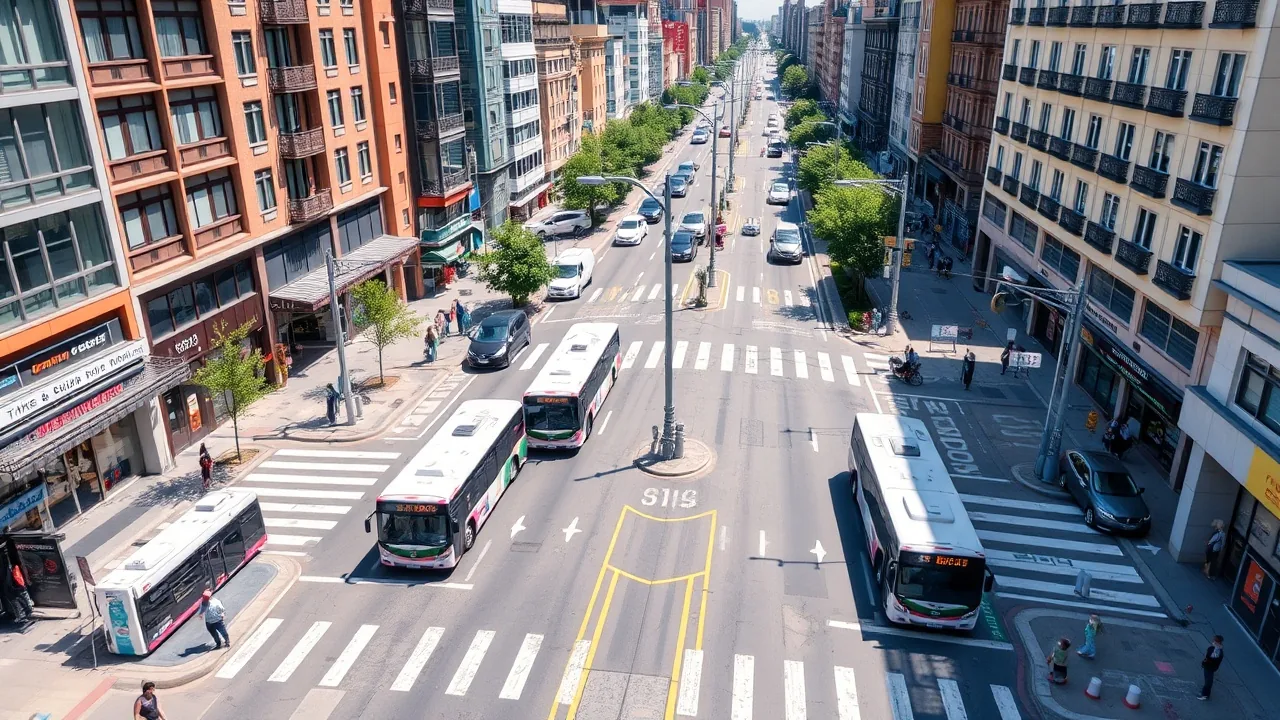
Denver completed installation of 200 EV charging stations across its downtown corridor last month, marking the largest single-phase rollout in the city's climate action plan. The project signals how aggressively American cities are now retrofitting their streets and parking systems to support electric vehicles and autonomous transit modes.
Planners and engineers across the nation face a compressed timeline. City infrastructure built for gasoline combustion engines and human-driven cars must now accommodate battery-powered fleets, autonomous systems that require new road markings and sensor networks, and smart cities platforms that coordinate vehicle movement in real time.
"We are not simply adding charging stations," said Dr. Maria Chen, director of transportation innovation at the Urban Land Institute. "We are reimagining how curbs, intersections, and right-of-way are allocated. The fundamental layout of streets designed 60 years ago no longer matches how people and cargo move through cities today."
The Immediate Infrastructure Challenge
Cities face three urgent demands that did not exist five years ago. First, the power grid must be upgraded to handle millions of simultaneous charging events. Second, transportation networks need sensor infrastructure, fiber optic cables, and 5G connectivity to support vehicle-to-infrastructure communication. Third, street geometry itself must change.
Los Angeles has already repurposed 12,000 parking spaces to accommodate autonomous shuttle zones, micro-mobility hubs, and EV charging. San Francisco reduced traditional parking by 8 percent in 2023 alone, converting street space into dedicated lanes for autonomous systems testing. Phoenix is experimenting with permeable pavement that drains water while embedding power cables for inductive charging roads.
The financial commitment is substantial. Seattle budgeted $2.1 billion over ten years for smart traffic management and EV infrastructure. Boston allocated $500 million specifically for autonomous vehicle testing zones and associated city infrastructure upgrades. These are not peripheral projects but central to municipal capital plans.
Real-Time Coordination and Network Effects
The emergence of future mobility systems depends on live data sharing between vehicles, traffic signals, energy grids, and city operations centers. Denver's new charging corridor integrates directly with the city's traffic management system, allowing EVs to route themselves toward available chargers based on real-time pricing and availability.
Autonomous shuttle services now operating in Austin, Miami, and Las Vegas generate constant streams of positional and performance data. This information feeds back into city planning, revealing bottlenecks and inefficiencies that human planners previously missed. Miami's autonomous bus pilot has already informed three subsequent street redesigns in the Wynwood corridor.
The coordination challenge extends to energy management. When thousands of vehicles charge simultaneously, demand spikes can strain power distribution. Smart charging platforms now stagger vehicle charging based on grid load forecasting. Some utilities in California and Texas offer time-of-use pricing that discourages peak charging, reducing infrastructure strain by up to 18 percent.
Communication between agencies remains a bottleneck. Most cities still operate parking permits, transit planning, and EV infrastructure through separate databases. Integrated platforms that unify these systems are being piloted in:.
- Minneapolis - unified mobility account platform launched January 2024
- Columbus - integrated permit and charging management system operational since March 2024
- Portland - open-data transportation hub connecting six municipal departments
Long-Term Urban Design Implications
The shift to autonomous and electric mobility may eliminate as much as 30 percent of urban parking demand within 15 years, according to analysis by the Brookings Institution. This frees hundreds of millions of square feet for housing, retail, parks, and water retention systems.
New York City is already planning conversion of 4,000 parking lots into green space and affordable housing. Chicago has earmarked parking revenue declines by redesigning curb access to prioritize loading zones for autonomous delivery and micro-mobility. Washington D.C. removed 2,000 parking meters in its downtown core, directing space toward pedestrian plazas and outdoor dining.
Street design itself is being reconceived. Narrower lanes become possible when autonomous systems eliminate human driver error margins. Several pilot projects in Portland and Boulder are testing 9-foot lanes versus the traditional 12-foot minimum, reclaiming 3 feet of width per lane for bike paths or stormwater infrastructure.
The timeline for these transformations is accelerating. Most major metropolitan areas have committed to 50 percent EV adoption in their vehicle fleets by 2030. Autonomous systems, while still in pilot phases, will become operationally significant in dedicated corridors by 2026-2027. Cities cannot afford to wait; infrastructure decisions made in 2024 will lock in patterns for the next 30 years.
The transition is neither automatic nor guaranteed to succeed. Coordination failures between city agencies, power utilities, and private mobility operators could create congestion and energy instability. However, the direction is clear. Future mobility is not a concept for distant decades. It is reshaping curbs, intersections, power grids, and street hierarchies across America right now.