
Future Mobility: How US Cities Reshape Transit Infrastructure
Major US metropolitan areas are overhauling transportation networks to integrate autonomous vehicles, electric transit, and smart city systems. The shift is reshaping urban planning priorities.

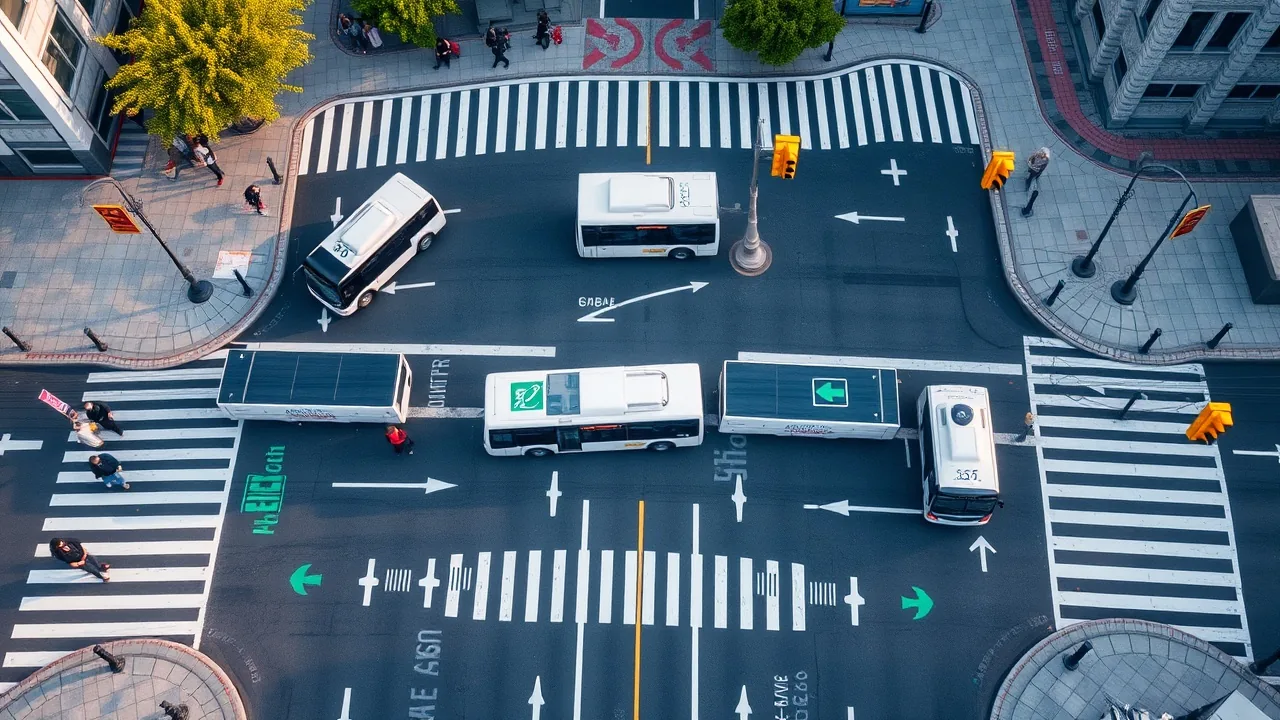
Los Angeles and Mexico City officials announced a joint transit corridor study this week, signaling how cross-border mobility challenges are forcing cities to rethink infrastructure from the ground up. The partnership highlights a broader trend: as self-driving cars move closer to mainstream deployment and electric vehicles accelerate adoption, urban planners face unprecedented pressure to redesign streets, parking, and traffic management systems.
The scope of change is substantial. Cities across the United States are no longer waiting for autonomous vehicle manufacturers to solve the last-mile problem. Instead, municipal governments are proactively integrating smart cities infrastructure, real-time traffic management, and dedicated lanes for autonomous transit into their five- and ten-year strategic plans.
"We're seeing a fundamental shift in how cities approach transportation planning," said Dr. Maria Castillo, director of urban mobility at the American Public Transportation Association. "Ten years ago, we talked about autonomous vehicles as science fiction. Now, the conversation is about zoning laws, liability frameworks, and how to manage the transition without abandoning existing transit infrastructure."
The Autonomous Vehicle Integration Challenge
Deploying self-driving cars at scale requires more than just vehicle technology. Cities must establish communication protocols between vehicles and traffic infrastructure, create dedicated travel lanes, and update building codes to accommodate new types of transit hubs.
Phoenix, Denver, and San Francisco have launched pilot programs testing autonomous vehicle operations in mixed traffic. Results from 2024 trials show that vehicles equipped with vehicle-to-infrastructure (V2I) communication reduce travel times by 12-18 percent compared to traditional traffic patterns. However, these gains depend on coordinated city-wide systems, not isolated vehicle capabilities.
Several major metropolitan areas are investing heavily in this coordination layer:
- Los Angeles is building a centralized traffic management center to monitor autonomous vehicles, buses, and pedestrians in real time
- Chicago has approved $340 million for smart traffic signals that respond to vehicle and transit demand
- Austin is creating dedicated autonomous vehicle lanes on three major corridors by 2026
- Seattle is integrating autonomous delivery robots with public sidewalk permits and real-time tracking
The financial commitment reflects confidence, but also urgency. Cities that fail to prepare infrastructure now risk becoming congested bottlenecks as autonomous vehicle adoption accelerates. Conversely, cities that invest in smart infrastructure and coordination systems position themselves as attractive hubs for autonomous vehicle service providers and tech companies.
Electric Transit and Decarbonization Goals
Urban transport electrification is no longer optional in major US markets. California, New York, and Massachusetts have mandated that public transit buses be 100 percent electric by 2035. Private sector adoption is following suit, with ride-hailing and delivery fleets adding thousands of electric vehicles monthly.
The infrastructure challenge is immense. Charging stations must be distributed across neighborhoods, parking facilities, and fleet depots. Grid operators are upgrading electrical capacity in urban areas to handle concentrated demand. Battery manufacturing and recycling facilities are emerging as new industrial priorities.
City planners are integrating transport innovation with housing and commercial development. Mixed-use districts now include charging infrastructure as baseline utility, similar to water and sewage. Dallas, Houston, and Miami are redesigning street-level parking into green spaces and charging plazas.
The economic calculus has shifted decisively. Electric buses now have a lower total cost of ownership than diesel equivalents, factoring in fuel, maintenance, and grid electricity rates. Transit agencies report that operating costs drop 30-40 percent over a vehicle's lifecycle when switching to electric fleets.
City Planning in the Autonomous Era
Traditional urban planning assumes fixed infrastructure: roads, parking lots, and transit terminals occupy permanent space. Autonomous vehicles and distributed mobility services blur these boundaries. A street that once required four lanes for private vehicles may need only two lanes plus a dedicated autonomous vehicle zone.
This creates both opportunity and complexity. Cities like Minneapolis and Portland are repurposing street space liberated by reduced car ownership into parks, markets, and pedestrian zones. However, the transition is uneven. Neighborhoods with existing transit infrastructure adapt faster than car-dependent suburbs, widening equity gaps.
Urban planners increasingly focus on city planning frameworks that prevent displacement. As neighborhoods become more accessible via autonomous transit, real estate values rise, pushing out long-time residents. Policy makers are implementing affordable housing requirements and transit-oriented development standards to manage growth.
The federal government is supporting these efforts. The Infrastructure Investment and Jobs Act allocated $39 billion to public transit modernization, with explicit preference for projects integrating autonomous systems and electric vehicles. States that coordinate regional planning receive larger grants, incentivizing cross-border initiatives like the LA-Mexico City corridor.
By 2030, the transportation landscape in major US cities will be visibly different. Fewer parking lots, more charging stations, autonomous vehicle fleets operating on predictable routes, and electric buses serving as backbone transit infrastructure. The cities that begin planning and building this transition now will capture efficiency gains, reduce emissions, and attract the talent and investment that follow innovation hubs. Those that delay face congestion, higher costs, and competitive disadvantage in the emerging mobility economy.