
Voyager 1 Responds After NASA Fixes Mysterious Interstellar Communication Glitch
NASA has resolved a brief communication outage with the Voyager 1 spacecraft, which experienced an unexplained issue while operating in interstellar space. Engineers successfully restored contact after implementing a workaround.

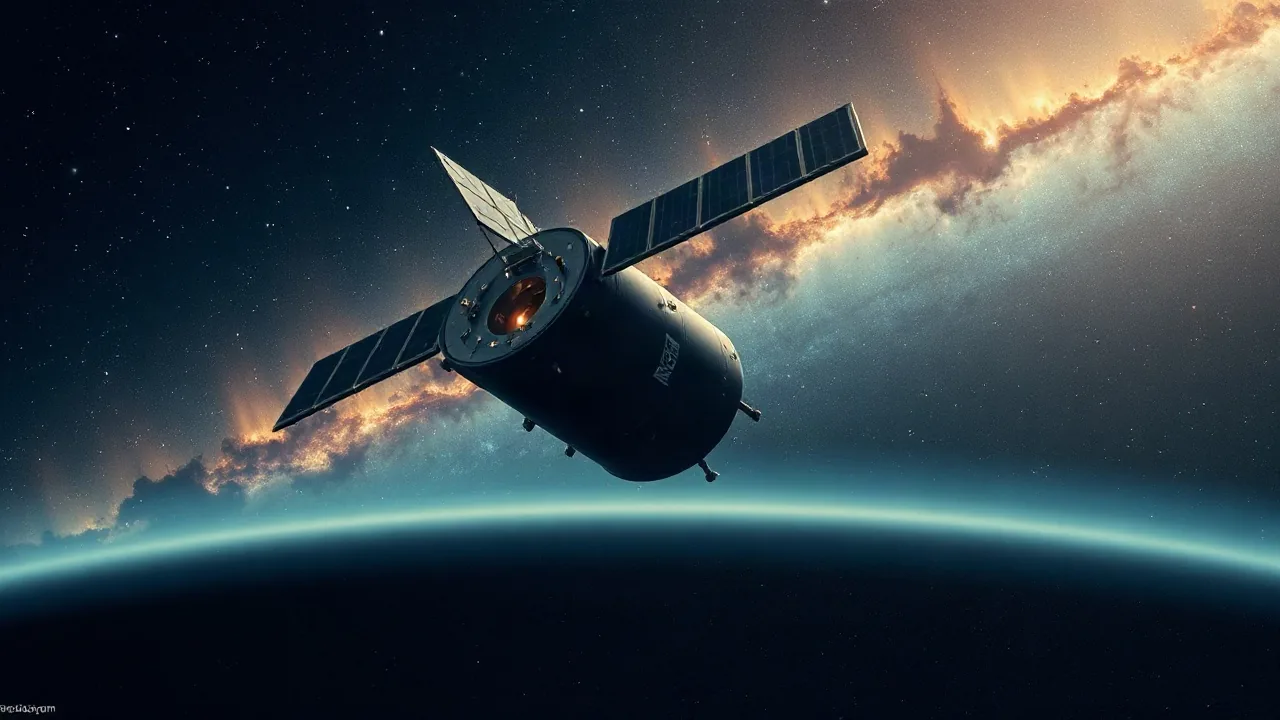
NASA's iconic Voyager 1 spacecraft has re-established contact with Earth after experiencing a mysterious, brief communication blackout that left scientists puzzled. The deep-space probe, currently traversing interstellar space, ceased sending back data on November 3, 2026, prompting immediate investigation by mission controllers at NASA's Jet Propulsion Laboratory (JPL) in Southern California.
The unprecedented silence was broken just two days later, on November 5, 2026, when the Voyager 1 team managed to receive a faint, but discernible, signal from the spacecraft. While the exact cause of the communication disruption remains under investigation, preliminary analysis suggests a potential issue within the spacecraft's engineering and data subsystems. NASA stated that the issue did not appear to be related to the onboard scientific instruments.
The temporary loss of communication is a stark reminder of the immense challenges involved in operating a spacecraft more than 15 billion miles from Earth. Launched in 1977, Voyager 1 has far surpassed its original mission objectives and its expected lifespan. Its continued operation in the harsh environment of interstellar space is a testament to the robust engineering and the dedicated efforts of the NASA teams who have kept it functional for nearly five decades.
A Glimpse Into the Unknown
The Voyager 1 mission's primary goal was to study the outer planets of our solar system. However, in August 2012, it became the first human-made object to enter interstellar space, the region beyond the Sun's influence. Since then, it has been collecting invaluable data about the density, temperature, and magnetic fields of this uncharted territory. This data provides scientists with unprecedented insights into the conditions and composition of the space between stars.
The recent communication issue, though resolved, highlights the fragility of such long-distance communication. The signals from Voyager 1 take over 22 hours to reach Earth, traveling at the speed of light. Any anomaly, no matter how small, can have significant consequences for data collection and spacecraft command. Mission engineers at JPL are meticulously analyzing the telemetry data from the period of the outage to pinpoint the exact cause. This careful examination is crucial for preventing future occurrences and ensuring the continued success of the mission.
The team has implemented a workaround to bypass the suspected faulty component, allowing the spacecraft to resume sending back scientific data. "This is a new and unexpected anomaly for Voyager. We are still trying to understand the cause of the anomaly," said Suzanne Dodd, project manager for the Voyager missions at JPL. "But the spacecraft is sending us good data, and we are happy to have it back online."
The Voyager 1's journey into interstellar space continues, and with it, humanity's reach into the cosmos. Despite the occasional technical hiccup, the mission remains a cornerstone of our understanding of the universe beyond our solar system. The ongoing efforts to maintain its functionality underscore the remarkable human ingenuity and perseverance dedicated to exploring the final frontier.