
New Planet Found Near Young Star After 11 Years
Astronomers have directly imaged a faint, cold gas giant planet orbiting the young star Beta Pictoris. The elusive world was detected independently by two teams using different telescopes after a decade of observation.

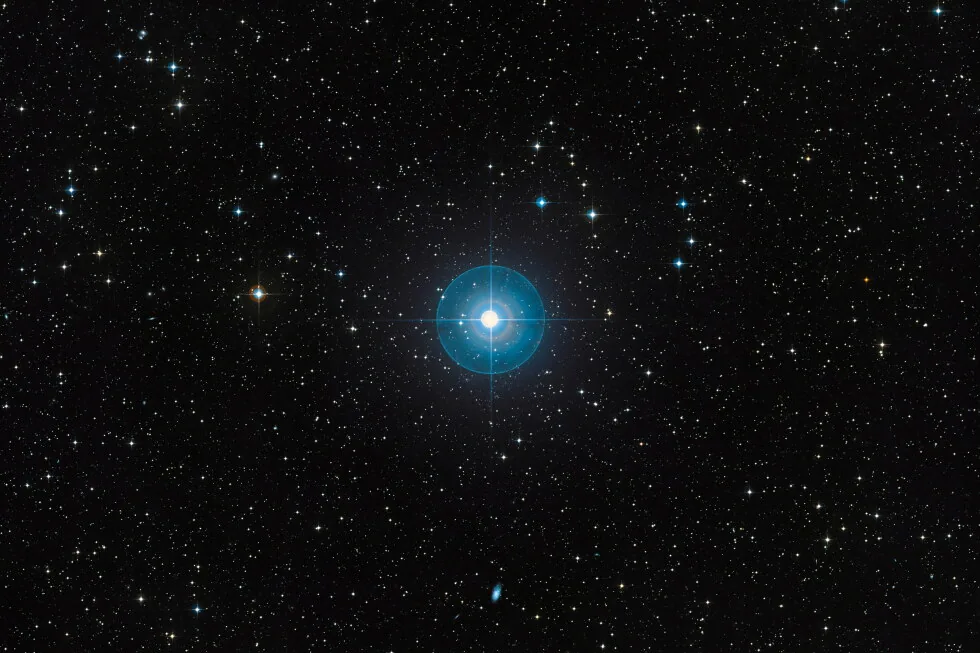
Astronomers have announced the discovery of a faint, elusive planet orbiting the young star Beta Pictoris, a celestial body that had remained hidden for more than a decade. In a remarkable coincidence, two separate research groups detected the cold gas giant planet just days apart late last year, each employing distinct telescopes. Scientists revealed on Wednesday that this marks the dimmest planet ever directly imaged from Earth.
A collaborative team of Scottish and German researchers first spotted the new planet around Beta Pictoris using the European Southern Observatory’s Very Large Telescope in Chile. Subsequently, they meticulously analyzed archival data to confirm its orbital path. The planet had eluded detection within this data for years, its faint signal overshadowed by its considerably brighter host star and two previously identified companion planets. "It was very much playing hide-and-seek for 11 years," stated Markus Bonse of the European Southern Observatory, who co-led the initial research team.
Meanwhile, a separate California-led team utilized NASA’s cutting-edge Webb Space Telescope to make their discovery. Just two observations with the Webb telescope, the most powerful ever launched into space, were sufficient for this group. Both teams independently reported their findings in the latest issue of the Astrophysical Journal Letters.
A Serendipitous Discovery Amidst Existing Research
The discovery proved to be serendipitous for both groups. Each team was initially focused on studying one of Beta Pictoris's already known planets when they independently identified a less massive, significantly fainter planet lurking further out in the system. To ensure unbiased results, the teams deliberately withheld their work from one another during the discovery process.
The newly identified planet is described as being slightly larger than Jupiter and completes one orbit around its star in 91 Earth years, a duration slightly longer than that of Uranus around our sun. Beta Pictoris is part of a star system that is a mere 20 million years old, a cosmic infant compared to our own sun's 4.5 billion-year lifespan. Researchers suggest that this new planet likely resembles a much younger version of Jupiter. "The giant planets have formed, but smaller terrestrial planets could still be forming," explained Aidan Gibbs of the University of California San Diego, who led the second research team. "Beta Pictoris is probably our best look at a planetary system just after it has formed and is still in the process of stabilizing" from impacts by asteroids and comets.
Beta Pictoris is situated in the southern constellation Pictor, resembling an easel, and is located approximately 63 light-years from Earth. For perspective, one light-year is equivalent to nearly 6 trillion miles (more than 9 trillion kilometers). Direct imaging, a method where a planet is seen directly rather than inferred from its star's behavior, has been used to confirm fewer than 100 of the more than 6,000 known exoplanets, according to NASA. The majority of exoplanets are detected by observing the slight dimming of their host star as the planet transits across its face.
Ben Sutlieff of the University of Edinburgh expressed enthusiasm for the findings: "We’ve now built a picture of this planet, and we are very excited to see what more can be learned about it." The ability to directly image such a faint object around a young, bright star offers invaluable insights into planetary formation and the early evolution of star systems. This discovery demonstrates the increasing power of new astronomical tools like the Webb Space Telescope and the ESO's Very Large Telescope to uncover the universe's hidden wonders.