
New "King of Tylosaurs" Predator Fossil Discovered in Museum Collection
A fearsome new marine predator, dubbed Tylosaurus rex, has been identified from a fossil long housed in a museum. This "king of the tylosaurs" rivaled T. rex in size and predatory might.

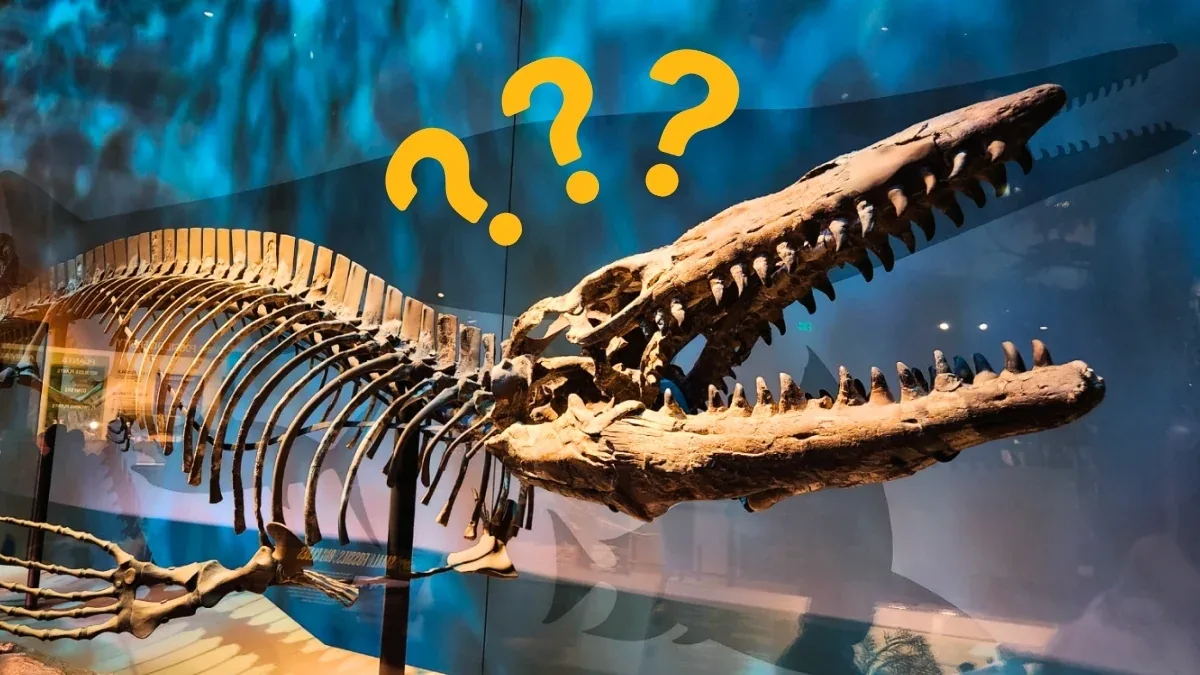
A previously unrecognized prehistoric predator, rivaling the fearsome Tyrannosaurus rex in its ecological niche, has been identified from a fossil languishing in a museum collection for decades. The newly described mosasaur, named Tylosaurus rex—or "king of the tylosaurs"—dominated the oceans approximately 80 million years ago during the Late Cretaceous period. Excitingly, researchers suggest that numerous other fossils previously attributed to a different mosasaur species may actually belong to this newly recognized giant.
Measuring up to an imposing 13.2 meters (43 feet) in length, Tylosaurus rex was a formidable creature. Evidence of violent intraspecies conflict on at least one specimen suggests that these marine reptiles were not only immense but also highly aggressive. "Besides being huge, roughly twice the length of the largest great white sharks, Tylosaurus rex (T. rex) appeared to be a much meaner animal than other mosasaurs," stated paleontologist Ron Tykoski, vice-president of science and curator of vertebrate paleontology at the Perot Museum. "Through our study and examination of well-preserved fossils collected throughout the north Texas region, we have evidence of violence within this species to a degree not previously seen in other Tylosaurus specimens."
Revisiting Museum Collections for Hidden Discoveries
During the latter half of the Cretaceous period, mosasaurs rose to become the apex predators of the world's oceans. These giant marine lizards, unlike any species alive today, could be imagined as a colossal hybrid of a saltwater crocodile, a komodo dragon, and an orca, with lengths potentially double that of modern killer whales. The rich fossil record of mosasaurs is partly due to their aquatic habitat, which is conducive to fossilization. When these animals died, their remains sank to the seabed, where burial in silt under low-oxygen conditions and with minimal disturbance from scavengers allowed for fossilization processes to occur.
Furthermore, geological history has played a role in accessibility. During the Cretaceous, North America was bisected by a shallow inland sea. As this sea receded, it left behind extensive fossil beds on dry land, providing easier access for paleontologists. This geographical circumstance has resulted in a substantial number of mosasaur fossils being housed in museums and private collections globally. American institutions alone preserve hundreds of tylosaur specimens, representing just one group within the broader mosasaur family.
The specific fossil that led to the description of T. rex was unearthed nearly 50 years ago, in 1979, in Texas. For decades, it resided in the collection of the Perot Museum of Nature and Science (formerly the Dallas Museum of Natural History), cataloged as a specimen of Tylosaurus proriger, and nicknamed the Heath Mosasaur. Paleontologist Amelia Zietlow of the American Museum of Natural History began to suspect something was amiss while examining the Heath Mosasaur as part of her doctoral research in comparative biology. She observed that the physical characteristics of the nearly complete skeleton did not align with the established descriptions of T. proriger. While prior research had sometimes attributed such discrepancies to ontogenetic changes—variations occurring as an animal matures—Zietlow found this explanation increasingly improbable.
Significant differences were particularly noted in the skull, jaw, and dentition. These distinctions indicate that the jaw and neck structures of T. rex were exceptionally powerful, facilitating its role as a fearsome predator. The teeth of this new species were finely serrated, a feature uncommon among mosasaurs, which would have granted its bite a potent ability to tear and shear flesh. Expanding her investigation, researchers re-examined other large mosasaurs previously classified as T. proriger. This broader survey identified a total of 12 specimens that could be confidently reclassified as T. rex. Among these reclassified individuals is the specimen known as the Black Knight, also housed at the Perot Museum. This fossil exhibits notable damage to its snout and jaw, which researchers interpret as evidence of T. rex's formidable bite—damage that could only have been inflicted by another member of its own species.
Several other well-known mosasaur fossils have now been reclassified under the T. rex designation. These include Bunker, discovered in 1911 and now displayed at the University of Kansas, and Sophie, exhibited at the Yale Peabody Museum. This reclassification provides clearer insights into the mosasaur family tree. Most definitive Tylosaurus proriger specimens originate from Kansas and date back approximately 84 million years. In contrast, the Tylosaurus rex finds are concentrated in Texas and are from about 4 million years later. The discovery underscores the potential for other ancient species to remain hidden within museum collections, overlooked due to long-held assumptions and familiarity.
"This discovery is not just about naming a new species," Zietlow remarked. "It highlights the need to revisit long-standing assumptions about mosasaur evolution and to modernize the tools we use to study these iconic marine reptiles." The findings suggest that the diversity and complexity of prehistoric marine life may still hold many secrets waiting to be uncovered through careful re-examination of existing paleontological evidence.