
October 2026 Celestial Events: Saturn's Brightest Appearance & More
October 2026 offers dazzling celestial views, highlighted by Saturn reaching its peak brightness. This month also features meteor showers and optimal viewing for visible planets.

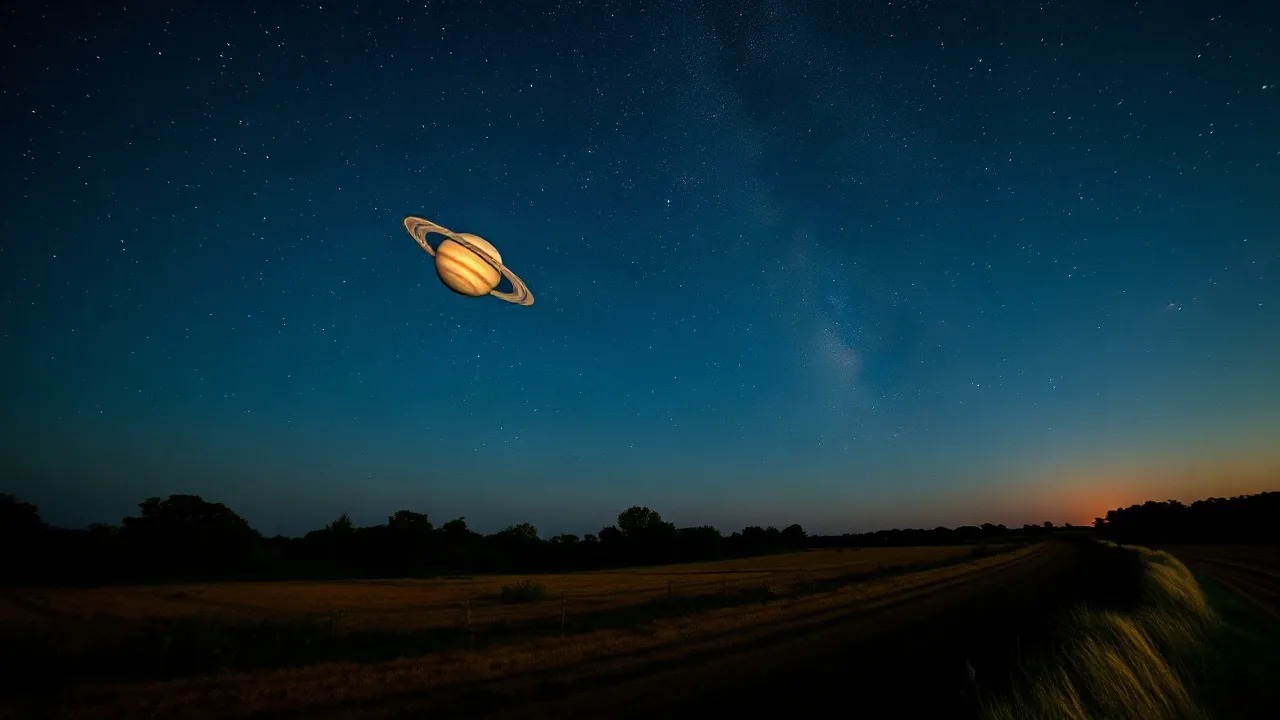
Stargazers in October 2026 will be treated to a celestial spectacle, with the planet Saturn appearing at its absolute brightest as it reaches opposition on October 4. This astronomical event offers an unparalleled opportunity to observe the ringed planet and its moons through telescopes. Beyond Saturn, the night sky promises a variety of other phenomena, including several notable meteor showers and excellent visibility for other planets in our solar system.
The highlight of the month is undoubtedly Saturn's opposition, an event occurring when Earth passes directly between the Sun and Saturn. This alignment makes the planet appear larger and brighter from our perspective on Earth. For viewers in the Northern Hemisphere, particularly those in areas like Kansas City, this is the prime time to spot Saturn with impressive detail. Telescopes as small as 4 inches in diameter can reveal Saturn's rings and its largest moon, Titan.
Navigating the Autumn Sky
As the leaves turn and the air grows crisp, the autumn night sky presents its own unique wonders. Following Saturn's opposition, stargazers can anticipate the Draconid meteor shower, typically peaking around October 8-9. While not as prolific as some other annual showers, the Draconids can produce a surprising number of shooting stars, especially in dark, rural locations. Later in the month, the Orionid meteor shower, originating from debris left by Halley's Comet, reaches its peak activity around October 21-22. This shower is known for its fast-moving meteors and can offer a spectacular show under clear, moonless skies.
Beyond these specific events, October 2026 provides excellent opportunities to observe other prominent celestial bodies. Jupiter and Mars will be visible throughout the month, rising earlier in the evening and offering clear views. The Andromeda Galaxy (M31), the closest major galaxy to our own Milky Way, will also be well-positioned for observation. For those equipped with binoculars or a small telescope, Andromeda offers a faint, elongated smudge of light that represents billions of stars.
The seasonal shift also brings constellations like Cassiopeia, the W-shaped queen, and the great square of Pegasus into prominence in the eastern sky after sunset. These familiar patterns serve as celestial signposts, guiding observers through the vastness of space. The diminished daylight hours of autumn are conducive to longer periods of stargazing, making it an ideal time for both amateur and experienced astronomers to explore the cosmos. To maximize viewing potential, experts recommend finding a location away from city lights and allowing your eyes to adjust to the darkness for at least 20 minutes.