
Rare Blue Micromoon Shines This Weekend: What to Expect
A rare blue micromoon will grace the night sky this weekend, appearing smaller and dimmer than an average full moon. This celestial event won't repeat until December 2028.

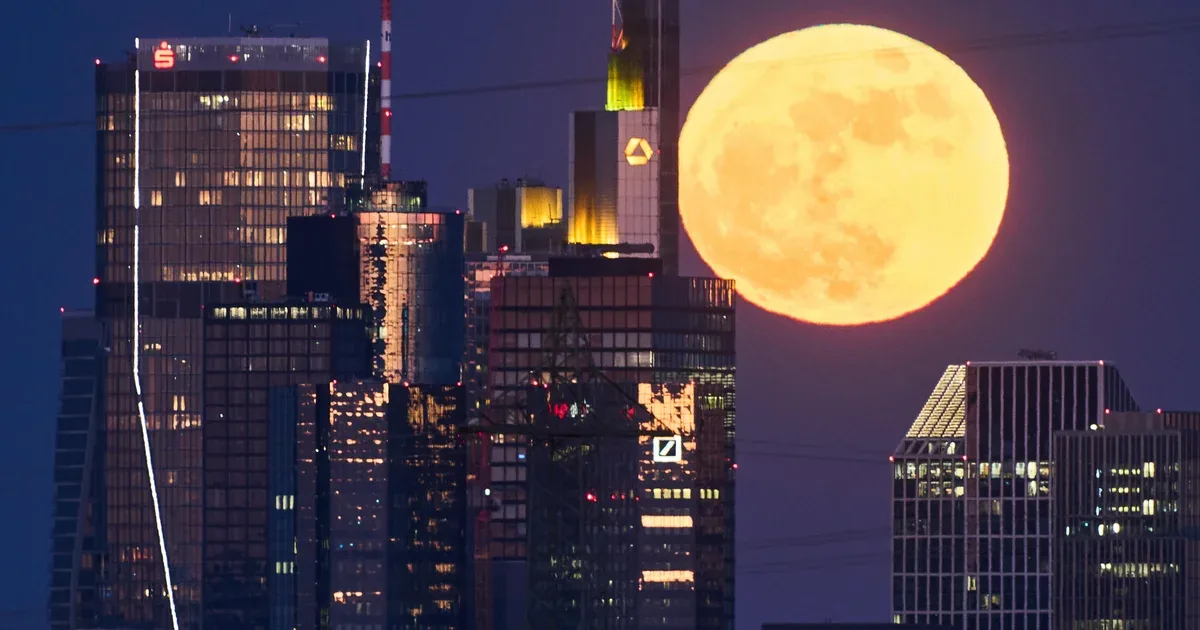
Skywatchers are in for a treat this weekend as a rare blue micromoon makes its appearance, an event that will not occur again until December 2028. This particular full moon is notable for being the farthest and thus smallest-looking full moon of the year. For those in the Northern Hemisphere, the blue micromoon will be visible alongside Antares, a prominent star within the constellation Scorpius.
The spectacle may be particularly captivating for observers south of the equator and across the Pacific Ocean. Astronomers note that the moon will appear to transit, or pass in front of, Antares, momentarily obscuring the bright star. A blue moon, by definition, is the second full moon to occur within a single calendar month. The current month's first full moon occurred on May 1, making this upcoming event the second full moon. While the term "blue moon" might suggest a colored hue, it simply denotes this uncommon monthly occurrence and does not indicate the moon's actual color.
Understanding Micromoons and Blue Moons
The moon's orbit around Earth is not a perfect circle, meaning its distance from us varies. On this occasion, the full moon will be approximately 252,360 miles from Earth, positioning it at its farthest point in its orbit for the year. This greater distance causes it to appear slightly smaller and dimmer compared to a supermoon, when the moon is at its closest orbital point. For comparison, the most recent supermoon was observed at a distance of just 225,130 miles.
Gianluca Masi of the Virtual Telescope Project told The Associated Press that the visual difference between this micromoon and an average full moon is subtle, with it appearing roughly 6% smaller and 10% dimmer. "The differences are subtle enough to likely go unnoticed by most observers," Masi stated. However, the Virtual Telescope Project plans to offer a live stream of the blue micromoon, captured by its robotic telescopes, for those eager to observe it.
Stargazers in the Southern Hemisphere are expected to have a more dramatic viewing experience. In locations such as Argentina, Chile, New Zealand, eastern Australia, and parts of Antarctica, the moon's passage will cause Antares, also known as the "heart of the scorpion," to disappear behind it. Antares is a red supergiant star located approximately 550 light-years away. In contrast, observers in other parts of the world will witness Antares remaining constantly visible alongside the full moon.
The phenomenon of a blue moon occurs roughly once every two to three years. The last blue moon was observed in 2023, and following this weekend's event, the next blue moon is not anticipated until December 31, 2028. This convergence of a blue moon with its micromoon phase makes this weekend's celestial display particularly noteworthy for both casual observers and dedicated astronomers alike.