
Rare Blue Micromoon Illuminates Weekend Sky
A rare Blue Moon, the second full moon in May, will grace the skies this weekend. It's also a micromoon, appearing slightly smaller due to its distance from Earth.

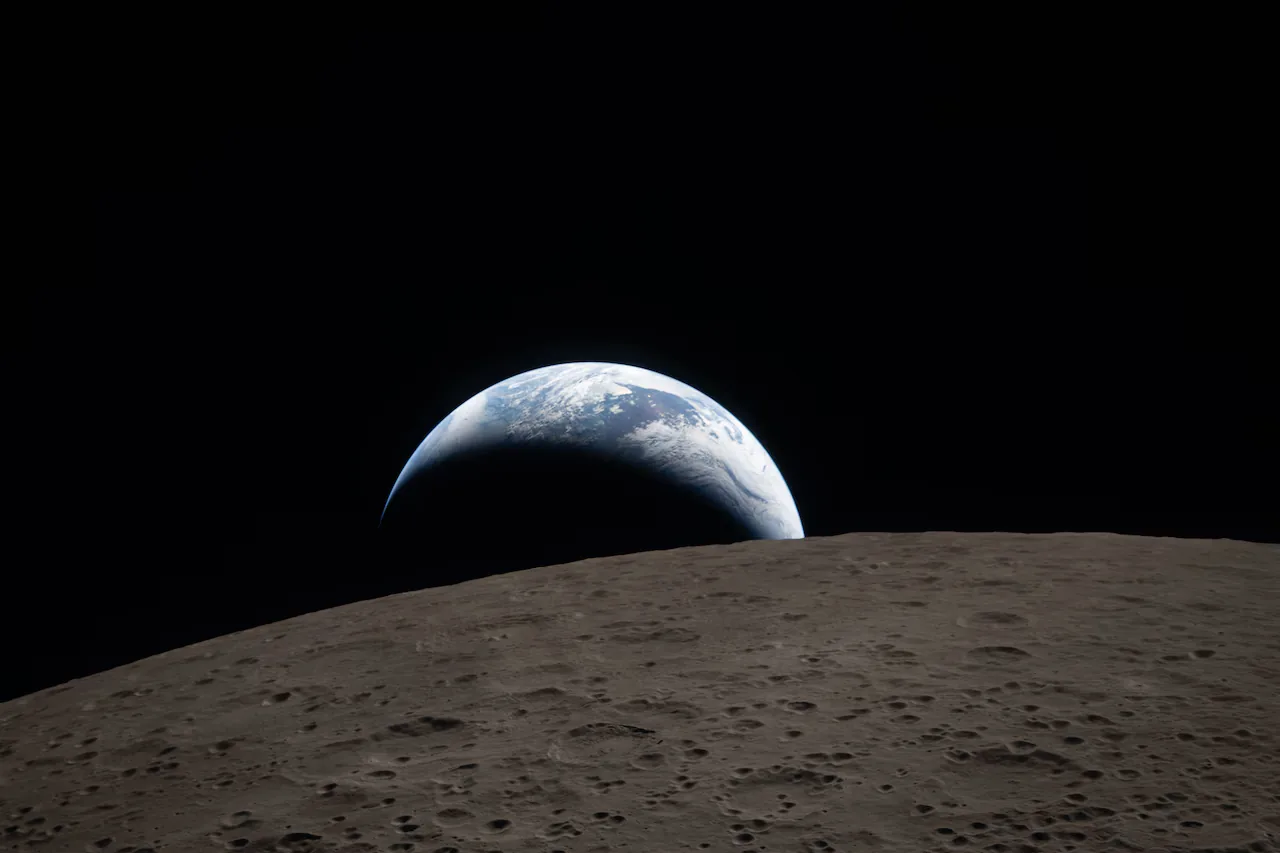
Stargazers are in for a treat this weekend as a rare Blue Moon is set to rise, marking the second full moon of May. While the moon will appear full as it ascends on Saturday evening, its peak illumination is expected around 4 a.m. on Sunday morning, offering skywatchers nearly two full nights to observe this celestial event. This particular full moon is also the second in a series of three micromoons occurring this spring and summer.
A Blue Moon traditionally refers to the second full moon within a single calendar month, a phenomenon that occurs approximately every 2.7 years. This May 2026 Blue Moon, however, is also designated as a micromoon. This means its orbit will bring it to its closest point to Earth, known as perigee, during its full phase. While it will be a full moon, the increased distance will make it appear slightly smaller than an average full moon, a common characteristic of a micromoon.
Understanding Lunar Illusions and Definitions
Despite its name, the Blue Moon this weekend will not actually display a blue hue. The term "Blue Moon" solely refers to its timing within the calendar month, not its color. Lunar colorations are typically influenced by atmospheric conditions such as dust or smoke particles scattering light. True blue-colored moons are exceptionally rare and usually a result of specific volcanic eruptions or large forest fires.
The upcoming lunar event is part of a larger astronomical pattern. The trio of micromoons began with the Pink Moon in April and will conclude with the Buck Moon in July. While the term "micromoon" might suggest a significant size reduction, the difference in apparent diameter from Earth for a supermoon versus a micromoon is usually only about 14 percent. Nevertheless, astronomers note that these variations provide a fascinating opportunity to observe the subtle dynamics of Earth's orbit around the Moon.
These lunar events offer more than just a pretty sight. They provide opportunities for scientific observation and public engagement with astronomy. The precise timing of the moon's phases and its distance from Earth are tracked by scientists, contributing to our understanding of orbital mechanics and gravitational forces. For many, the full moon serves as a natural calendar, a time for reflection, and a connection to the cosmos.
As the micromoon rises, it presents a chance for amateur astronomers and casual observers alike to appreciate the night sky. Unlike solar eclipses, which require protective eyewear, observing a full moon poses no danger to the eyes. Residents in areas with clear skies are encouraged to look towards the moon on both Saturday and Sunday nights. The upcoming Blue Moon is expected to be a significant event, drawing attention to the predictable yet ever-changing rhythms of our solar system.