
NASA's Roman Space Telescope Begins Commissioning After Successful Launch
NASA's Nancy Grace Roman Space Telescope has begun its commissioning phase after a successful launch and journey to its observation point. The spacecraft will now undergo rigorous testing before beginning its scientific mission.

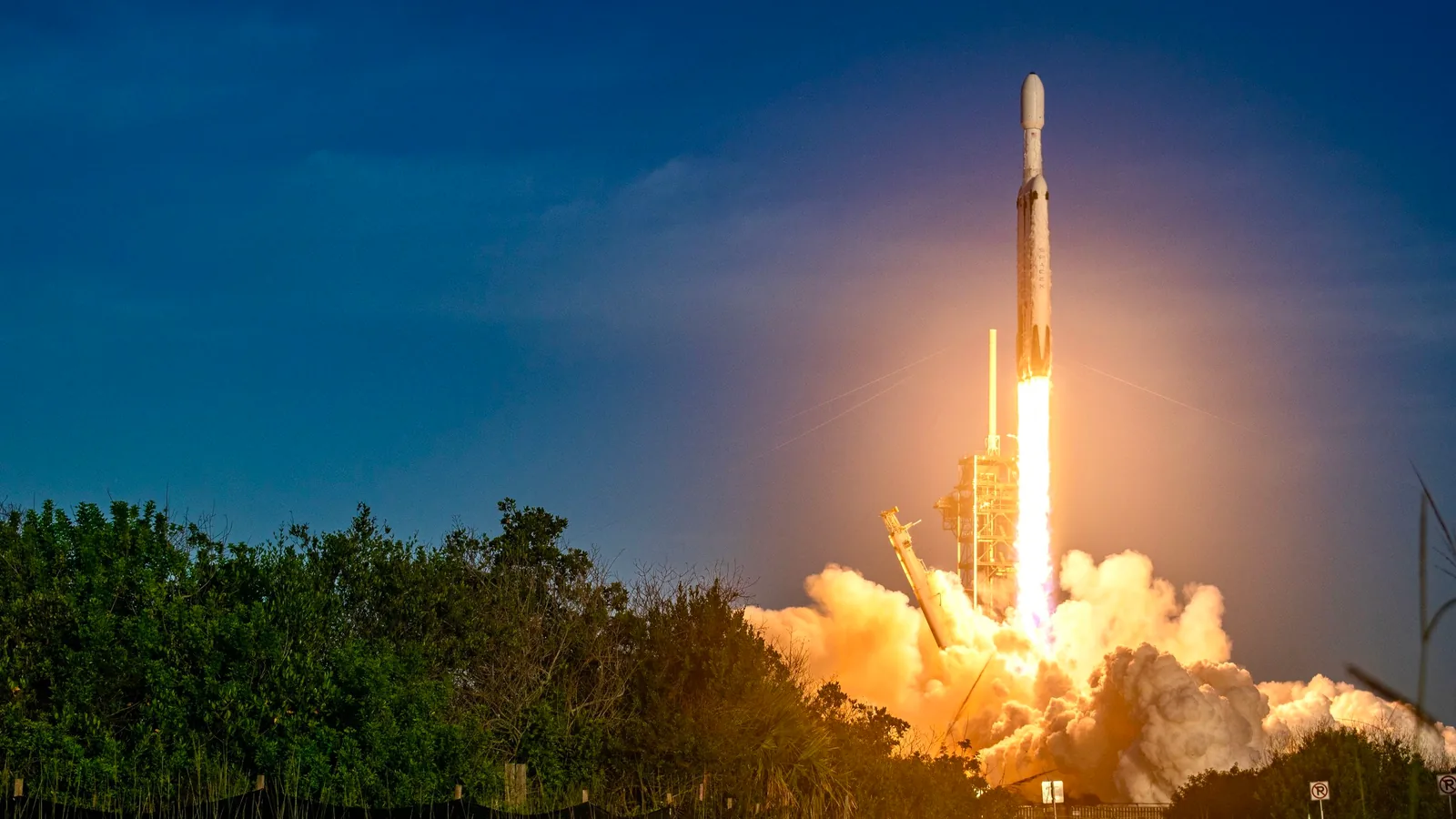
NASA's Nancy Grace Roman Space Telescope has officially commenced its critical commissioning process following a successful launch and journey to its designated orbit. The observatory, which lifted off on August 30, 2026, aboard a SpaceX Falcon Heavy rocket, is now poised to begin a series of extensive tests and calibrations.
The spacecraft has already completed several key milestones, including the deployment of its solar panels, high-gain antenna, and its large sunshade. Technicians initiated the power-on sequence for the telescope's Coronograph Instrument on Tuesday, September 1. This instrument will undergo several weeks of detailed examination and testing to ensure its readiness for capturing unprecedented astronomical data.
The journey to its observation point near the Sun-Earth Lagrange Point 2 (L2) involved a crucial 3.5-minute engine burn on August 31, fine-tuning its trajectory. This burn was the first of two planned maneuvers to position Roman at the gravitationally stable L2 point, located approximately 930,000 miles (1.5 million kilometers) from Earth. A second burn, if required, is scheduled for later in the week. The telescope is expected to achieve its final orbital insertion roughly 100 days post-launch, with periodic station-keeping burns anticipated every 28 days to maintain its position.
Testing and Calibration Phase
The commissioning phase is a vital period where mission teams meticulously check and calibrate all onboard systems. This includes verifying the functionality of the telescope's advanced instruments, such as the Coronograph and the Wide Field Instrument, which will be responsible for its primary scientific surveys. The goal is to ensure that Roman operates at peak performance before it begins its ambitious science operations, which are anticipated to commence in early 2027 with the release of its first images.
This extensive testing is crucial for a mission of Roman's scope and complexity. The telescope boasts a massive 300-million-pixel primary mirror, enabling it to conduct wide-field surveys of the universe. These surveys are expected to revolutionize our understanding of dark matter and dark energy, potentially discovering over 100,000 new exoplanets and shedding light on the evolution of galaxies.
The launch itself was hailed as a success by NASA and SpaceX. During the post-launch press conference, NASA Administrator Jared Isaacman praised the collaborative efforts of both teams. He highlighted Roman's potential to create a vast new atlas of the universe, deepening our comprehension of cosmic mysteries. Notably, the press conference saw an unexpected interjection when President Donald Trump called in to congratulate the teams on the successful launch, expressing his excitement for the mission's prospects.
The Nancy Grace Roman Space Telescope is named in honor of the first chief astronomer of NASA, Nancy Grace Roman, often referred to as the "Mother of Hubble," for her pioneering work that paved the way for space-based observatories like the Hubble Space Telescope. This new observatory is poised to build upon that legacy, using its powerful capabilities to explore some of the most profound questions in astrophysics.
The spacecraft's destination at Lagrange Point 2 offers a stable vantage point for astronomical observation, far from the interference of Earth's atmosphere and light. Once fully operational, Roman will conduct groundbreaking surveys, including those focused on finding habitable exoplanets and studying the cosmic expansion rate. The success of this commissioning phase is a critical step toward unlocking these scientific objectives.