
Saturn Reaches Peak Visibility This Week for Stargazers
Stargazers have a prime opportunity this week to observe Saturn in the night sky. The ringed planet is at its closest and brightest point of the year, making it visible even without telescopes.

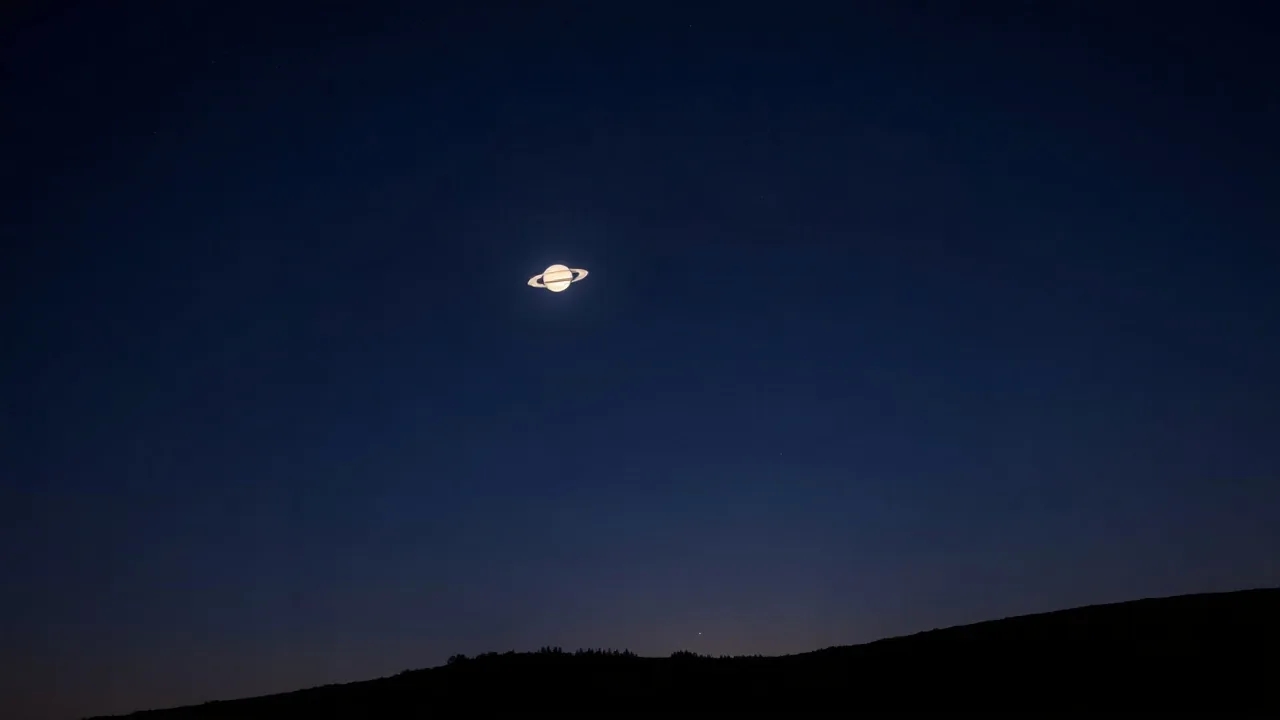
The planet Saturn will reach its annual point of opposition on October 3-4, 2026, offering skywatchers an exceptional view of the ringed gas giant. This celestial event, known as opposition, occurs when Earth passes directly between the Sun and Saturn, placing the planet at its closest and brightest point to our world for the entire year.
During opposition, Saturn appears at its most luminous in the night sky, and its prominent rings are particularly well-defined. While a telescope is recommended for a detailed view of the rings and moons, Saturn's brilliance will be noticeable even to the naked eye. Look for a bright, steady yellowish star-like object in the eastern sky after sunset.
Maximizing Your Viewing Experience
For the best possible viewing experience, experts recommend finding a location away from city lights and light pollution. Clear skies are essential, so checking the weather forecast for October 3rd and 4th is advisable. Amateur astronomers can use binoculars or small telescopes to enhance their view, potentially spotting Jupiter's moons or the subtle bands on Saturn's surface.
The opposition of Saturn is a significant astronomical event that occurs roughly once every year, though the exact date varies. In 2026, this peak viewing window coincides with other favorable skywatching conditions. The moon will be waning, providing darker skies conducive to observing fainter celestial objects.
Beyond Saturn, the astronomical calendar for October 2026 includes several other notable events. Three meteor showers, including the Orionids peaking around October 21st, are expected to grace the night sky. Additionally, conditions may be favorable for viewing the aurora borealis, or Northern Lights, in higher latitudes.
This annual alignment provides a fantastic opportunity for both amateur and experienced astronomers to witness the grandeur of Saturn. The ringed planet has captivated humanity for centuries, and its appearance at opposition serves as a reminder of the vastness and beauty of our solar system. It's a chance to connect with the cosmos and appreciate astronomical phenomena firsthand.