
Tiny Cosmic Event Recreates Big Bang Conditions for Research
Scientists have simulated conditions akin to the universe's earliest moments in a controlled experiment. This "littlest Big Bang" aims to shed light on fundamental cosmic origins and particle physics.

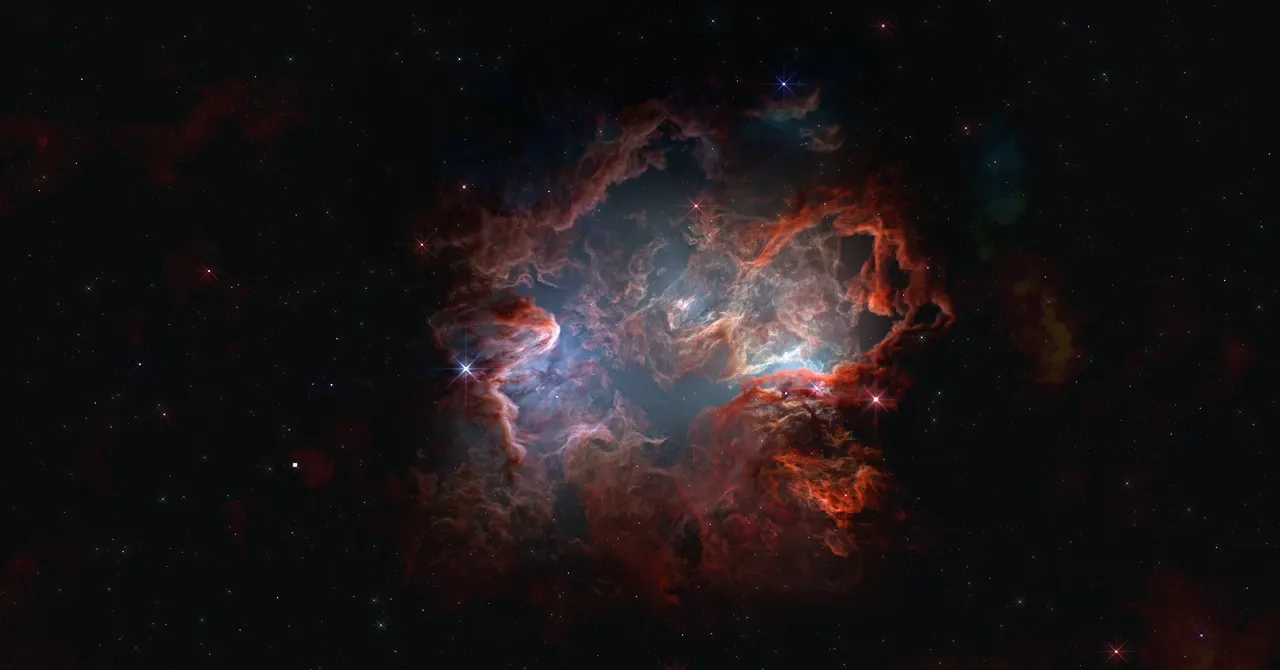
Researchers have successfully generated conditions mimicking the immediate aftermath of the universe's birth, a feat they are calling the "littlest Big Bang." This groundbreaking experiment, conducted at the Relativistic Heavy Ion Collider (RHIC) in Upton, New York, aims to unlock secrets about the fundamental forces and particles that shaped the cosmos in its infancy. By colliding gold ions at nearly the speed of light, scientists are recreating the super-hot, super-dense state of matter that existed mere microseconds after the Big Bang.
The goal of this ambitious research is to study the properties of quark-gluon plasma, a primordial soup of subatomic particles that existed before protons and neutrons could form. For decades, physicists have theorized about this state, but RHIC provides one of the few experimental facilities capable of creating and observing it. The data collected from these high-energy collisions offers unprecedented insights into quantum chromodynamics, the theory describing the strong force that binds quarks and gluons together.
Simulating the Primordial Universe
The significance of these experiments extends beyond theoretical physics. Understanding the quark-gluon plasma can help explain why matter as we know it exists today. Scientists theorize that a slight asymmetry in the early universe, where slightly more matter than antimatter survived annihilation, led to the cosmos we observe. Studying the plasma's behavior may reveal clues about this critical imbalance. "We are essentially looking at the universe in its crib," said Dr. Maria Elena Massarotti, a lead physicist on the STAR detector experiment at RHIC. "The extreme conditions allow us to probe fundamental questions about the origins of mass and the forces that govern reality."
This isn't the first time scientists have attempted to recreate cosmic conditions. Particle accelerators worldwide have been instrumental in particle physics research. However, the scale and precision of RHIC's operations, particularly its ability to precisely control collision energy and analyze outcomes with sophisticated detectors like STAR and PHENIX, set this research apart. The data streams generated are immense, requiring advanced computational analysis to discern meaningful patterns from the subatomic chaos.
The findings from RHIC have the potential to validate or refine existing cosmological models, including the Standard Model of particle physics. Anomalies or unexpected behaviors observed in the quark-gluon plasma could point towards new physics beyond our current understanding. This quest for knowledge is not just academic; it's a deep dive into the very fabric of existence, seeking answers to questions that have fascinated humanity for millennia.
Future experiments at RHIC are planned to further explore variations in collision energy and particle types, aiming to map out the phase diagram of strongly interacting matter with even greater detail. The insights gained from this "littlest Big Bang" are expected to complement observations from other major scientific instruments, such as the James Webb Space Telescope, which studies the universe in its later stages of development. By combining data from both ends of the cosmic timeline, scientists hope to construct a more complete picture of the universe's evolution.