
Deep-Sea Sulfide Rocks Ignite After Lab Exposure
Rocks rich in sulfide minerals, collected from the Pacific Ocean floor, unexpectedly ignited upon exposure to air in a laboratory setting, posing new challenges for deep-sea exploration.

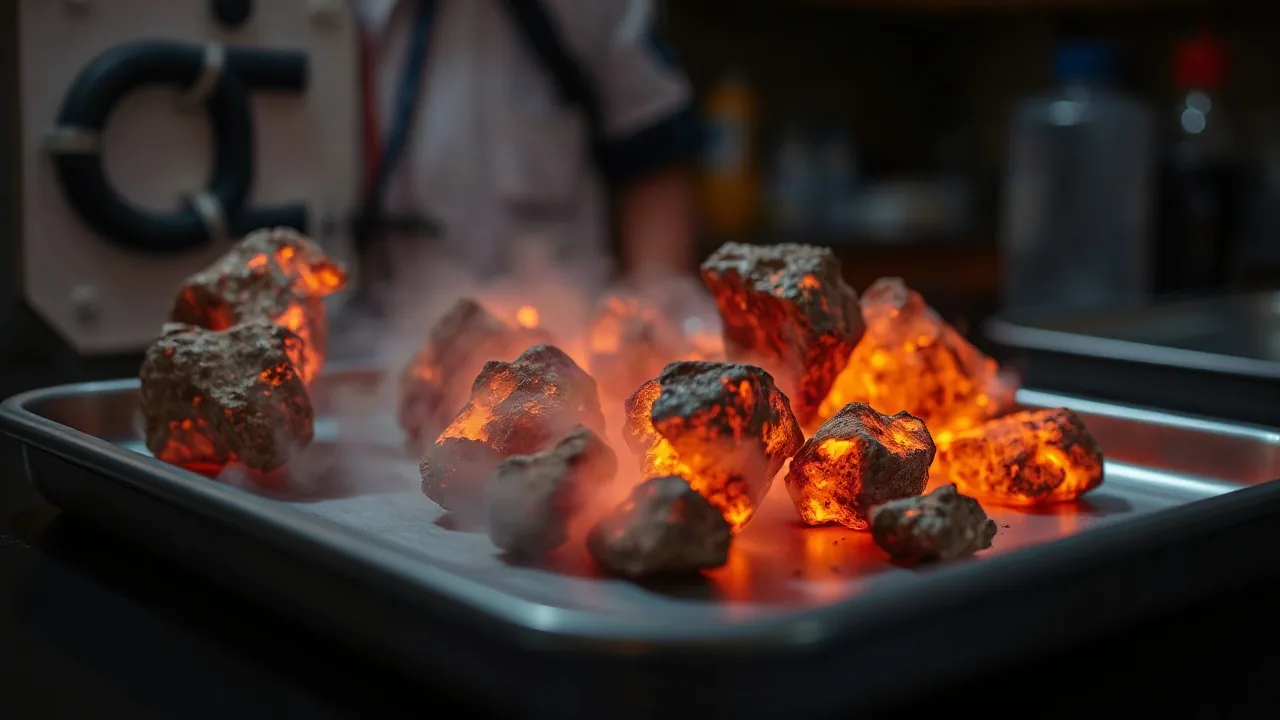
Scientists have encountered a surprising phenomenon when bringing samples of deep-sea rocks to the surface: spontaneous combustion. Rocks rich in sulfide minerals, retrieved from the ocean floor, began to heat up and ignite once exposed to the air in a laboratory environment. This unexpected event adds a new layer of complexity to the ongoing exploration and potential resource extraction from the planet's largely uncharted depths.
The incident occurred after researchers collected the mineral-laden rocks from the Pacific Ocean. These specific types of rocks, characterized by their high sulfide content, are known to be reactive. However, the degree to which they could spontaneously combust under atmospheric conditions was not fully anticipated. The process involves chemical reactions within the minerals that generate heat, and in the presence of oxygen, this heat can escalate to ignition.
Subsurface Minerals and Atmospheric Reactions
The combustion is believed to be a result of the minerals' inherent instability when transitioning from the high-pressure, low-oxygen environment of the deep sea to the ambient conditions on land. Sulfide minerals, such as pyrite (iron sulfide), can undergo oxidation when exposed to oxygen. This oxidation process releases energy in the form of heat. If the rate of heat generation exceeds the rate of heat dissipation, the temperature of the mineral sample can rise rapidly, leading to auto-ignition. This chemical reaction is a known hazard in some terrestrial mining operations, but its manifestation with deep-sea samples highlights unique challenges.
Researchers emphasize that this discovery underscores the need for careful handling and specialized protocols when dealing with materials recovered from extreme environments. The implications extend to the burgeoning field of deep-sea mining, where the collection and transport of vast quantities of mineral-rich nodules and rocks are central to operations. Understanding the potential hazards, such as spontaneous combustion, is crucial for ensuring the safety of personnel and equipment.
This phenomenon also raises questions about the geological processes occurring in the deep ocean. The conditions that lead to the formation and preservation of these reactive sulfide deposits are themselves a subject of scientific interest. The way these minerals behave when disturbed and brought into a different chemical environment provides a unique window into geological transformations. The unexpected fires serve as a stark reminder of the powerful and sometimes volatile chemical reactions occurring beneath the waves.
While the exact location and depth of the sample collection were not detailed in initial reports, the general area is known for hydrothermal vent activity, where such sulfide-rich mineral deposits are commonly found. These vents spew superheated, mineral-laden water from the Earth's crust, creating unique geological formations and supporting specialized ecosystems. The rocks brought to the surface likely originated from or near these active vent sites.
The scientific community is now considering how to mitigate these risks for future expeditions. This may involve developing new methods for sample containment, transporting samples in inert atmospheres, or implementing advanced monitoring systems to detect early signs of heating. The incident, while alarming, provides invaluable data that will inform the future of oceanic research and exploration, particularly as interest in deep-sea resources continues to grow.