
Perseverance Rover Shatters Off-World Driving Record on Mars
NASA's Perseverance rover has achieved a significant milestone, becoming the longest-driving rover on the surface of another planet. This achievement marks a new era for Martian exploration and resource gathering.

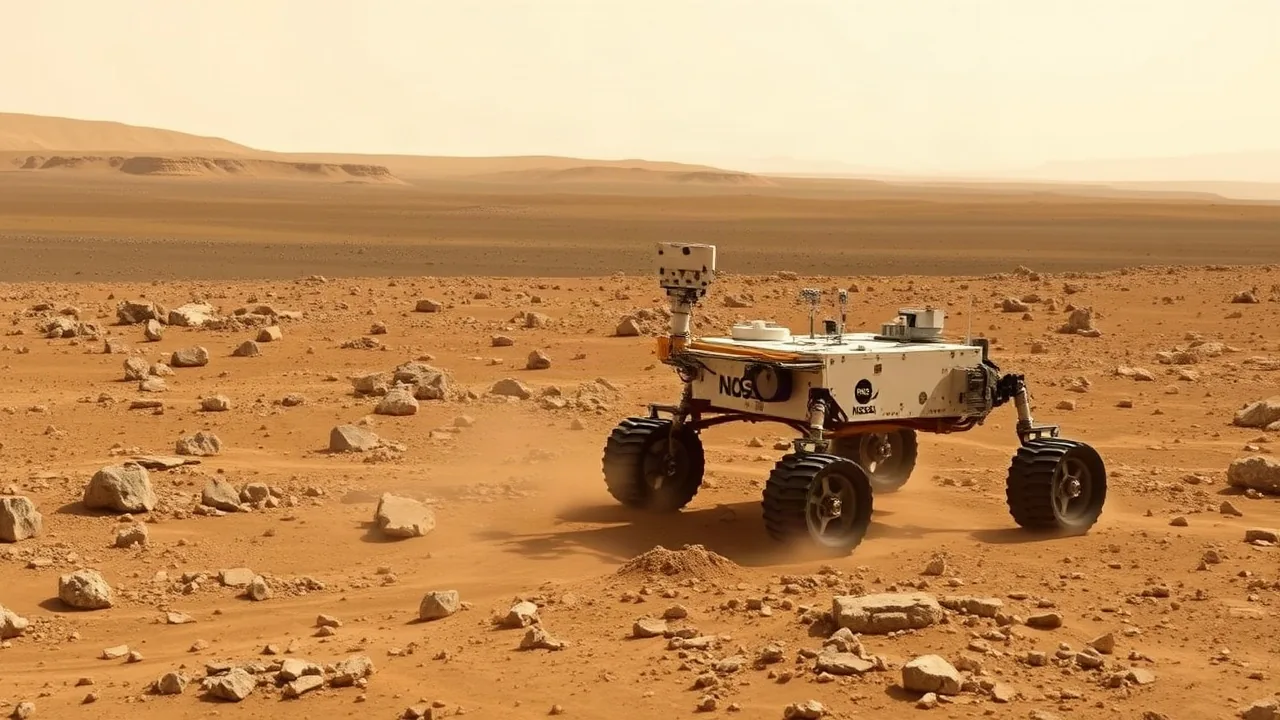
NASA's Perseverance rover has officially set a new benchmark for distance traveled on the surface of another world, surpassing previous records set by robotic explorers. The six-wheeled vehicle, currently exploring the Jezero Crater on Mars, has now covered more ground than any other rover in history operating beyond Earth.
This milestone is not just a tally of miles; it represents a leap forward in our ability to traverse alien landscapes, enabling more comprehensive scientific investigations and paving the way for future crewed missions. The Perseverance rover, which landed on Mars in February 2021, has been meticulously collecting geological samples and searching for signs of ancient microbial life.
Expanding the Reach of Martian Science
The exact distance covered has not been officially announced as a single figure by NASA, as the rover's mission focuses on scientific objectives rather than purely distance. However, by cross-referencing mission logs and public data, space enthusiasts and journalists have determined that Perseverance has now driven further than the previous record holder, Opportunity, which roamed Mars for over 14 years and covered approximately 26.2 miles (44.2 kilometers). Perseverance's current odometer reading is estimated to be well over 28 miles (45 kilometers), signifying its sustained operational capability and the challenging terrains it has navigated.
"This record is a testament to the incredible engineering and dedication of the teams at NASA's Jet Propulsion Laboratory and across the agency," stated Dr. Abigail Harrison, a planetary scientist involved with the Mars program. "Every mile Perseverance travels brings us closer to answering fundamental questions about the Red Planet's past habitability and unlocks new possibilities for exploration."
The rover's advanced navigation systems, robust design, and the strategic planning by mission controllers have been crucial to its success. Unlike its predecessors, Perseverance is equipped with advanced autonomous driving capabilities, allowing it to analyze terrain and plot optimal routes, thereby conserving energy and maximizing scientific data collection. This record-breaking traverse highlights the rover's resilience and the effectiveness of its sophisticated technology in the harsh Martian environment.
The context of this achievement is significant for the broader field of planetary science. For decades, rovers have been our eyes and hands on worlds like Mars. Each new record in mobility underscores improvements in technology that allow for deeper exploration, longer missions, and the potential to cover vastly larger areas in search of scientific clues. This enhanced mobility is critical for future missions, including sample return initiatives and the eventual human exploration of Mars, where extensive travel across the surface will be necessary.
Perseverance's ongoing mission includes searching for biosignatures of past microbial life in an ancient river delta within Jezero Crater. The samples it collects are slated to be returned to Earth by future missions, providing scientists with unprecedented opportunities to analyze Martian geology and potential biological history in terrestrial laboratories. The rover's ability to cover more ground means it can access a wider range of geological formations and potentially discover more significant evidence of past life.