
Ancient Shark Graveyard Discovered in Egyptian Desert
Paleontologists have unearthed a vast fossilized shark "graveyard" in Egypt's Western Desert. The discovery includes teeth from seven species dating back 100 million years, offering new insights into a prehistoric marine ecosystem.

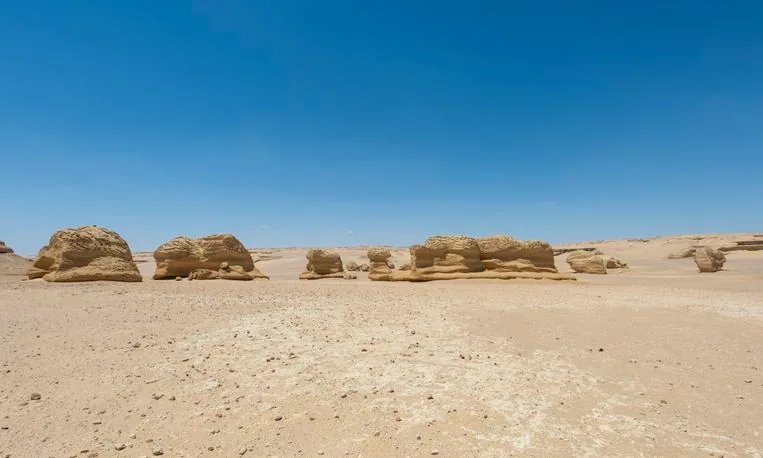
Paleontologists have unearthed what they are calling a "shark graveyard" in a remote stretch of Egypt's Western Desert, revealing evidence of a vibrant ancient sea that once covered the arid landscape. Between 2020 and 2022, a team of researchers working on the Abu-Tartur Plateau discovered 16 fossilized teeth belonging to seven distinct shark species. These remarkable finds date back to the Late Cretaceous period, approximately 100 million to 66 million years ago, a time when higher sea levels transformed what is now desert into a flourishing marine environment.
The discovery is particularly significant as some of the unearthed teeth represent species previously undocumented in Africa, and specifically in Egypt. Lead study author Tarek Yassin, from the Geology Department at Cairo University, stated that the findings provide "a glimpse into a much more diverse marine ecosystem than we previously knew existed in this part of North Africa." Among the identified species is an ancient relative of the modern goblin shark, underscoring the richness and complexity of the prehistoric ecosystem that once thrived in the region.
Uncovering a Lost Marine World
The Abu-Tartur Plateau, known for its phosphate-rich rock formations, has long been recognized as a promising site for paleontological research. The recent excavation efforts, detailed in the journal Cretaceous Research, have yielded extraordinary evidence of prehistoric marine life. The recovered teeth, some remarkably well-preserved, offer scientists crucial data points for understanding the biodiversity and geological history of ancient North Africa. This ancient marine ecosystem would have been a stark contrast to the sand dunes and arid conditions present today.
The implications of this find extend beyond simply identifying new species. It helps scientists reconstruct the paleogeography of the region, illustrating how drastically environments can change over millions of years. The presence of these diverse shark species suggests a stable and productive food web, supporting apex predators like sharks. Further investigations are planned for the plateau, with researchers optimistic that its geological makeup will yield even more marine fossils, potentially rewriting our understanding of Cretaceous-period marine environments in Africa. This ongoing work highlights the importance of continued exploration in uncovering Earth's deep past.