
SpaceX Ownership: How Elon Musk Controls the Aerospace Giant
SpaceX remains privately held under Elon Musk's majority control, with a complex shareholder structure that includes early venture investors and employee stock options. The company's ownership model sets it apart from traditional aerospace contractors.

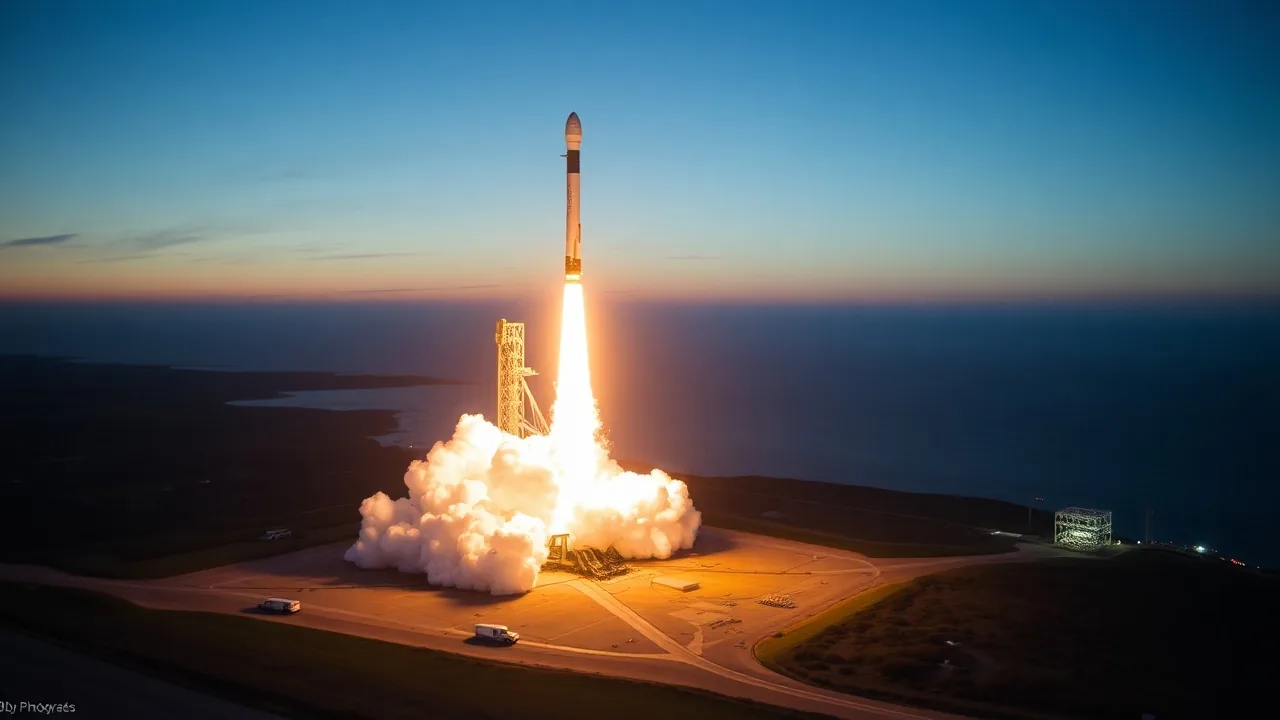
Elon Musk owns and controls SpaceX as the company's largest shareholder and chief engineer, retaining voting power over the firm's strategic direction even as external investors have taken stakes over the past two decades. SpaceX has never gone public, remaining a privately held corporation since its 2002 founding, which allows Musk to pursue long-term space exploration goals without quarterly earnings pressure.
The current ownership breakdown reflects SpaceX's evolution from a startup to a valuation leader in private space companies. Musk's stake has been diluted through successive funding rounds, but he maintains majority control and the board seats necessary to veto major decisions. As of 2026, the company has raised approximately $7.7 billion across multiple funding tranches.
"SpaceX's private structure allows us to make decisions based on technical merit and long-term vision rather than short-term stock performance," a company spokesperson stated in May 2026, underscoring how the ownership model directly influences operational priorities.
Investment Rounds and Shareholder Base
SpaceX's funding history reveals how ownership has shifted while Musk retained control. Early investors included Founders Fund, Draper Fisher Jurvetson, and other venture capital firms that backed the company when rockets routinely failed on the launchpad. The 2008 financial crisis nearly bankrupted the firm, but a NASA contract for cargo delivery to the International Space Station saved it.
More recent funding rounds brought in investors seeking exposure to the space economy without the risk of building their own rockets. In 2023, a Series J round valued SpaceX at $180 billion, making it the world's most valuable startup. By 2025, a follow-on round pushed valuations toward $210 billion.
Key shareholder groups currently include:
- Elon Musk (majority holder and voting control)
- Founders Fund and early venture investors
- Google and Fidelity (took significant stakes in previous rounds)
- Employees (through restricted stock units and option pools)
- Other institutional investors and family offices
Employee ownership has grown substantially as SpaceX expanded its workforce to over 9,800 people globally. Many engineers and technicians hold vested stock options, giving them direct financial stakes in the company's long-term success.
Why Private Ownership Matters for Aerospace Strategy
SpaceX's private status fundamentally shapes its competitive approach to aerospace and space exploration. Unlike publicly traded aerospace contractors such as Lockheed Martin or Boeing, SpaceX faces no mandate to announce quarterly earnings or justify short-term profit margins to Wall Street analysts.
This structure enabled Musk to pursue Starship, a fully reusable super-heavy lift vehicle designed for missions to Mars and the Moon. The development program has cost billions and produced spectacular test failures, but a private company can absorb these setbacks without investor panic. A public company might face shareholder lawsuits for such losses.
SpaceX's relationship with NASA as a government contractor adds complexity. While SpaceX holds NASA contracts for cargo resupply and soon human crew transport, it operates as an independent corporation rather than a defense prime contractor. This independence allows SpaceX to pursue commercial ventures like Starlink (a satellite internet network) and commercial launch services alongside government work.
"Private ownership gives us the flexibility to invest in breakthrough technologies that might take a decade to mature," Gwynne Shotwell, SpaceX's president and CEO, told industry analysts in February 2026. Shotwell manages day-to-day operations while Musk focuses on engineering and long-term vision.
Musk's Control and Corporate Governance
Musk's ownership stake gives him veto power over any proposed sale, merger, or major strategic shift. Board minutes and shareholder agreements are not publicly disclosed, but industry observers estimate his voting power exceeds 50 percent when including allies on the board.
This concentrated control is unusual in venture-backed tech companies. Most venture capitalists push for board representation and protective provisions that limit founder power. SpaceX's investors appear willing to accept Musk's dominance because of his proven ability to execute on SpaceX's mission, demonstrated by successful launches and real revenue from Starlink.
The company generated approximately $5.3 billion in revenue during 2025, making it operationally profitable on its commercial launch business. Starlink subscription revenue has grown to roughly $1.5 billion annually as of mid-2026, with over 3 million active subscribers globally.
Musk has ruled out an initial public offering repeatedly, stating that taking SpaceX public would invite short-term thinking and regulatory constraints he views as counterproductive to Mars exploration. In April 2026, he reiterated this stance during a company all-hands meeting, saying the long-term nature of space technology development requires patient capital and sustained vision.
The ownership structure also influences SpaceX's organizational culture. Engineers and managers know that decisions are made by a technical founder with deep understanding of rocket science, not financial analysts optimizing for quarterly results. This can accelerate decision-making but also concentrates risk if strategic choices prove incorrect.
As SpaceX continues launching increasingly complex missions including the Starship orbital integration tests and preparation for human lunar missions, its private ownership model remains a defining feature separating it from traditional aerospace firms. The structure allows rapid iteration, long-term investment, and a organizational mission aligned directly with Musk's vision of multi-planetary civilization.