
SpaceX Deploys 29 Starlink Satellites After Blue Origin Test Incident
SpaceX successfully launched 29 Starlink internet satellites from Florida on May 29, 2026. This mission proceeded hours after a Blue Origin rocket exploded during a static fire test at a nearby launch site.

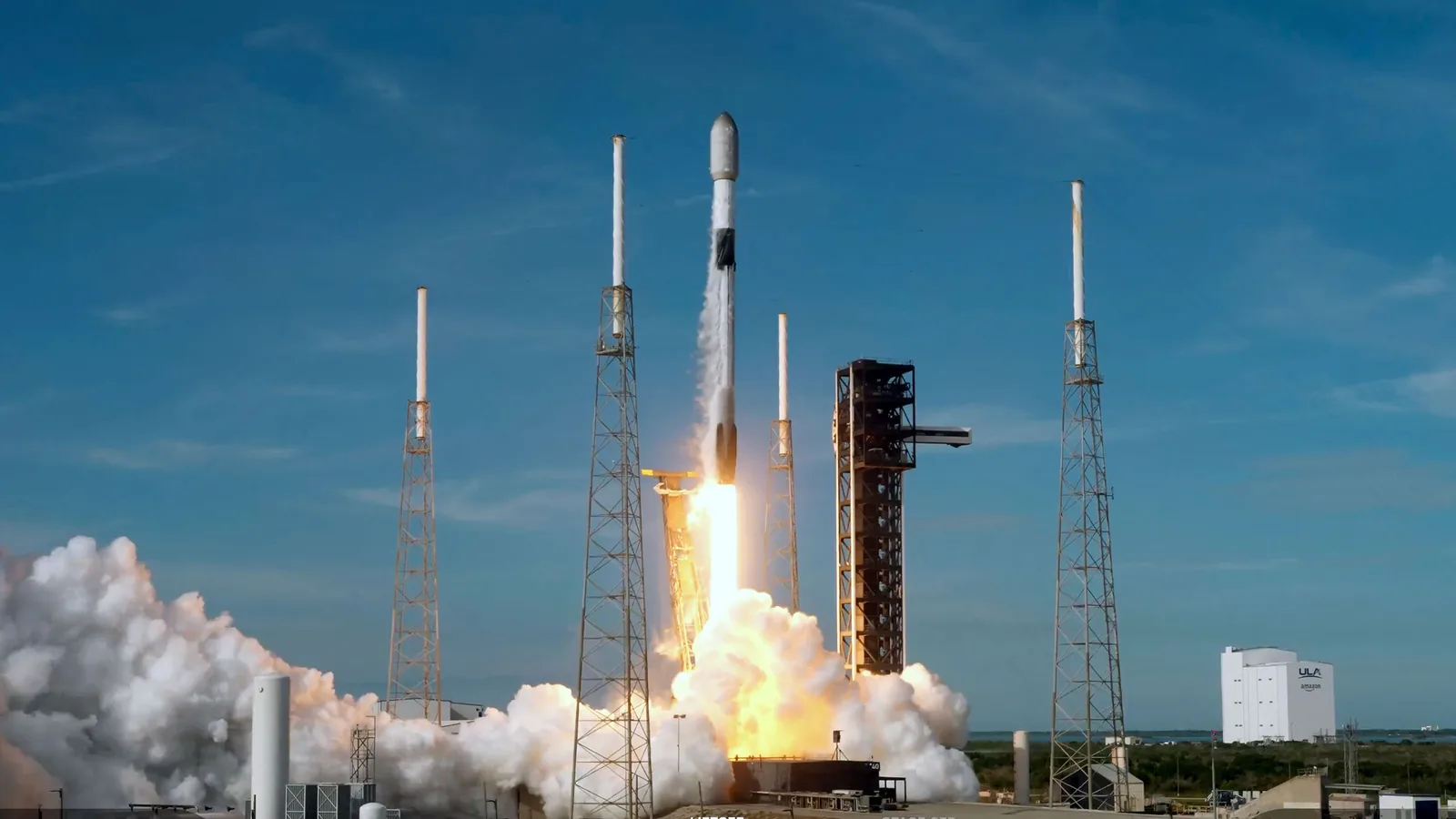
SpaceX successfully delivered 29 Starlink satellites to low Earth orbit on May 29, 2026, following a launch from Cape Canaveral Space Force Station in Florida. The Falcon 9 rocket carrying the broadband internet constellation took flight at 8:57 a.m. EDT from Space Launch Complex 40. Approximately one hour after liftoff, SpaceX confirmed the successful deployment of the Starlink satellites, designated Group 10-53.
This launch occurred less than 12 hours after a significant incident involving competitor Blue Origin. On the evening of May 28, the company's New Glenn rocket suffered an uncontrolled detonation during a static fire test at Launch Complex 36. The resulting fireball was reportedly visible for over 100 miles. The cause of the Blue Origin incident is currently under investigation.
Starlink Expansion Continues Amidst Industry Developments
The reusable Falcon 9 first stage, identified as Booster 1085, marked its 16th mission by performing a propulsive landing on the autonomous droneship "A Shortfall of Gravitas" stationed in the Atlantic Ocean. This booster will be recovered and returned to SpaceX facilities for refurbishment and future flights. The addition of these 29 satellites increases the total number of active Starlink satellites to over 10,400, according to independent satellite tracker Jonathan McDowell. The Starlink network aims to provide internet access to underserved regions globally, and also supports in-flight WiFi services and direct-to-cell capabilities with select mobile carriers.
Friday's mission represented the 61st launch for the Falcon 9 rocket in 2026 and its 644th flight overall since its debut in 2010. The workhorse rocket has become a cornerstone for SpaceX's launch operations, enabling rapid deployment of its satellite constellations and facilitating commercial and government payloads. The contrasting events of a successful SpaceX launch and a dramatic Blue Origin test failure highlight the dynamic and competitive nature of the current space industry.
The ongoing expansion of satellite internet constellations like Starlink is transforming global connectivity. These networks are crucial for bridging the digital divide, offering high-speed internet to rural and remote areas where traditional infrastructure is impractical or cost-prohibitive. Beyond consumer services, the capabilities are being leveraged by governments for national security purposes and by commercial operators for various applications, including maritime and aviation connectivity.
While SpaceX continues to rapidly build out its Starlink constellation, the space sector is also closely watching developments from other major players. The successful demonstration of reusable rocket technology, pioneered by SpaceX, has driven down launch costs significantly, making ambitious projects more feasible. The competition and innovation within this field are expected to accelerate advancements in space-based services and exploration in the coming years. The SpaceX launch underscores its consistent execution in deploying its internet service, while the Blue Origin incident serves as a stark reminder of the inherent risks and complexities involved in rocket development and testing.