
SpaceX Achieves Orbit with Starship Rocket's First Ever Flight
SpaceX successfully launched its Starship rocket into orbit for the first time on September 30, 2026. The mission was cut short as the vehicle performed a planned deorbit burn.

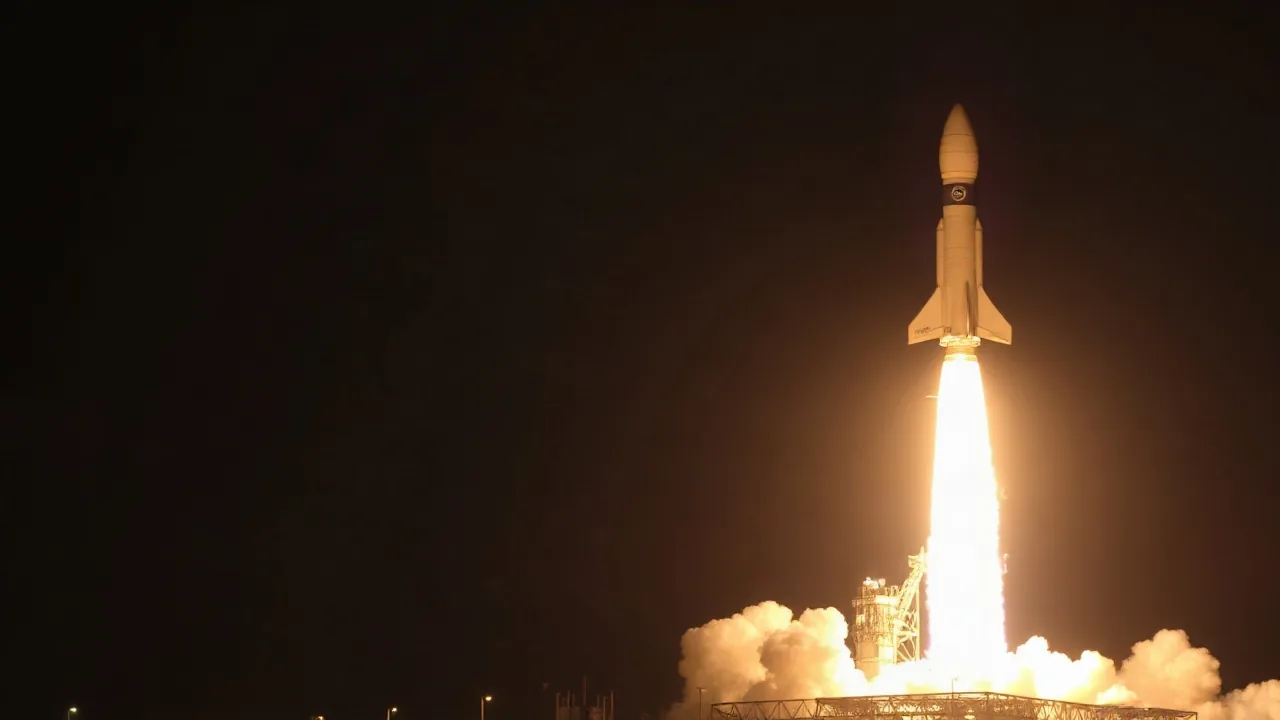
SpaceX successfully propelled its massive Starship rocket to orbit for the first time on September 30, 2026, marking a significant milestone for the company's ambitious space program. The uncrewed test flight, launched from Starbase in Boca Chica, Texas, achieved orbital velocity before executing a planned deorbit burn. While the mission aimed to gather crucial data on Starship's performance throughout its ascent and potential reentry, the vehicle was lost during its descent, cutting the flight short. This historic achievement nonetheless represents a major step forward in SpaceX's development of a fully reusable super heavy-lift launch vehicle.
The Starship program, spearheaded by billionaire entrepreneur Elon Musk, is designed to eventually carry humans and cargo to the Moon, Mars, and beyond. The successful launch, though ultimately ending prematurely, validates years of intensive development and numerous preceding test flights. Engineers at SpaceX will now meticulously analyze the data collected from the flight, particularly focusing on the ascent phase and the performance of the rocket's 33 Raptor engines. The insights gained are vital for refining the design and operational procedures for future missions.
Starship's Orbital Ambitions and Future Implications
Achieving orbit is a critical prerequisite for Starship's intended applications, including deep-space exploration and potential lunar missions under NASA's Artemis program. While this particular flight did not complete a full reentry sequence, reaching orbital speed is a substantial feat that engineers have been striving for. The data from the flight will be instrumental in preparing for subsequent tests, with the ultimate goal of demonstrating full reusability of both the Starship upper stage and its Super Heavy booster. The company has indicated that subsequent flights will aim for longer durations and more comprehensive testing of reentry and landing procedures.
Previous test flights of Starship have focused on suborbital hops and atmospheric ascent, with varying degrees of success. This orbital attempt represents a significant escalation in the complexity and risk of the test program. The rocket is the tallest ever built, standing at 397 feet (121 meters) tall, and is powered by the formidable Super Heavy booster. SpaceX has been transparent about the iterative nature of its development process, often referring to rapid prototyping and learning from failures. This approach has allowed the company to accelerate progress, a strategy that has yielded significant results in its Falcon 9 and Falcon Heavy programs.
The implications of a fully operational Starship extend beyond SpaceX's own mission objectives. It has the potential to revolutionize space logistics, making access to space more affordable and routine. This could pave the way for large-scale space-based solar power, orbital manufacturing, and ambitious scientific endeavors that require significant payload capacity. For NASA, Starship is a key component of its plan to return astronauts to the Moon, with the agency selecting it as the lunar lander for the Artemis III mission. A functional Starship is therefore critical for the future of human exploration of the solar system. The SpaceX team will now focus on integrating the lessons learned from this orbital test into their next iteration of the vehicle and booster, with expectations for continued rapid progress in the coming months.