
SpaceX Launch Update: Starship Reaches New Altitude
SpaceX conducted its latest Starship test flight in October 2026, pushing the vehicle to higher altitudes and advancing reusable rocket technology. The mission marks progress toward NASA partnerships and deep space exploration goals.

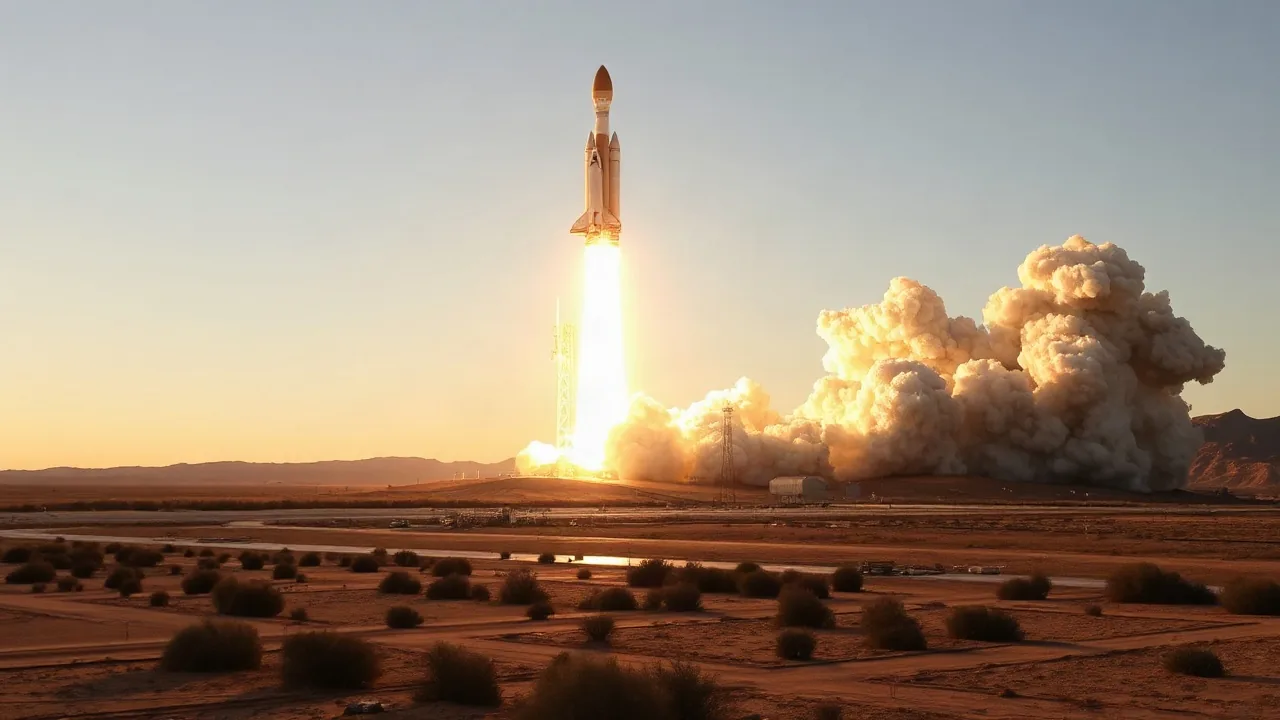
SpaceX conducted a high-altitude test flight of its Starship vehicle on October 1, 2026, demonstrating continued progress in the company's push to develop a fully reusable super heavy-lift launch system. The test included controlled reentry procedures and precision landing attempts, bringing the program closer to operational crewed missions.
The flight tested multiple systems critical to future deep space missions. Thermal protection tiles, propellant transfer mechanisms, and autonomous flight software all underwent evaluation during the test window. Engineers monitored real-time telemetry from ground stations in Texas and across the Pacific tracking network.
"This test cycle validates our latest generation of avionics and demonstrates the vehicle's capability to handle higher energy reentry scenarios," said a SpaceX mission director in a statement released after the flight. The company has accelerated its testing cadence throughout 2026, with five integrated flight tests completed prior to this mission.
Progress Toward NASA Missions
NASA has selected Starship as the primary lunar lander for its Artemis program, cementing SpaceX's role in government space exploration objectives. The agency requires the vehicle to achieve multiple technical milestones before human landings resume on the Moon in 2027-2028.
Key NASA requirements include propellant transfer demonstrations in orbit, abort system validation, and extended duration missions lasting more than 24 hours. SpaceX has been running parallel test tracks to satisfy these requirements while continuing commercial payload delivery planning.
The Artemis contract values exceed $4 billion, reflecting the scale of investment in rocket technology needed to support sustained lunar operations. SpaceX must deliver a cargo variant before the crewed descent module becomes available.
Private Spaceflight and Commercial Demand
Beyond government contracts, SpaceX launch operations now support a diverse manifest of commercial satellites, space station resupply missions, and private space tourism flights. The company has conducted 47 orbital launches through September 2026, maintaining a cadence that dominates global launch volume.
Starship's design philosophy prioritizes rapid reusability, a departure from expendable rocket economics. Each booster and upper stage is engineered for multiple flights within weeks of recovery. This operational model underpins SpaceX's competitive pricing in the commercial satellite market.
Private spaceflight operators increasingly rely on Starship for heavy-lift missions that traditional vehicles cannot accommodate. Constellation operators cite the vehicle's high payload capacity to geostationary orbit as a market differentiator.
Technical Evolution and Future Plans
Each Starship iteration incorporates modifications based on previous flight data. The current generation features upgraded Raptor 3 engines, improved grid fin designs, and enhanced autonomous guidance algorithms. Engine thrust has increased approximately 5 percent compared to earlier variants.
SpaceX's roadmap includes:
- Full booster catch attempts using launch tower arms in fourth quarter 2026
- Orbital propellant transfer demonstrations supporting Starship refueling procedures
- Extended space duration missions exceeding 72 hours in vacuum
- Commercial payload deployment from Starship's cargo bay
- Evaluation of point-to-point Earth transportation feasibility
The next scheduled Starship test flight targets mid-October 2026, with successive flights planned at intervals of two to three weeks. SpaceX aims to demonstrate booster recovery consistency and orbital operations by year-end.
Industry analysts view these near-term milestones as critical validation points for both government partnerships and commercial viability. Achievement of full operational capability would fundamentally alter launch economics and enable missions previously considered infeasible at reasonable cost.
The broader aerospace industry is watching Starship development closely, as the vehicle's operational success would establish new performance baselines for reusable heavy-lift systems. Competitors including Blue Origin and emerging launch providers are accelerating development timelines in response.
SpaceX has invested an estimated $10 billion in Starship development since project inception in 2012. The company views this investment as foundational infrastructure for Mars missions, lunar commerce, and expanded Earth orbit operations across the coming decade.