
NASA Space Flight Missions Expand Deep Space Exploration
NASA is advancing multiple deep space missions in 2026, including extended lunar operations and Mars preparation initiatives. Recent announcements reveal significant progress in astronomical discovery and crew safety systems.

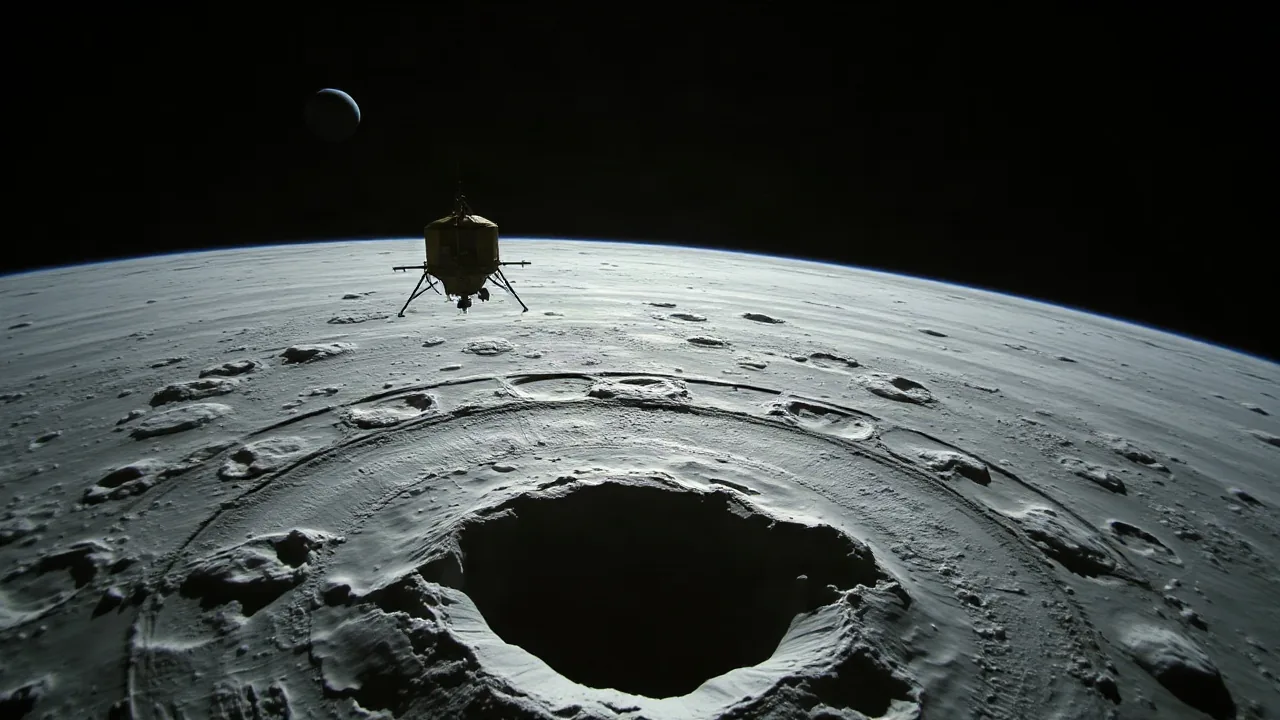
NASA's latest cadre of space flight missions reflects the agency's commitment to sustained exploration beyond Earth orbit. In October 2026, the space agency continues operating the Artemis program, which aims to return humans to the Moon and establish a sustainable presence for future Mars missions. The James Webb Space Telescope, now in its fourth year of operation, has transmitted unprecedented data on distant galaxies and exoplanet atmospheres, reshaping our understanding of the cosmos.
The Artemis II crewed flight, initially scheduled for 2025, now targets mid-2026 as engineers completed rigorous testing of the Orion spacecraft and Space Launch System. "We're focused on landing humans on the lunar south pole, where water ice resources could support long-term exploration," said Jim Free, NASA's Artemis campaign director, in a statement to reporters in September 2026.
Space exploration efforts extend beyond the Moon. The Perseverance rover continues operational activities in Jezero Crater on Mars, where it has collected samples for future return missions. Ingenuity, the small helicopter drone, has completed more than 70 flights, providing critical data on atmospheric conditions and terrain mapping for eventual human landing sites.
New Missions and Technology Advances
NASA's 2026 portfolio includes several landmark initiatives designed to push the boundaries of deep space operations. The Space Launch System, now proven through earlier test flights, enables heavier payloads and faster transit times to distant destinations compared to traditional rockets. This capability directly supports plans for establishing lunar gateways and eventual crewed Mars missions.
Recent achievements in NASA's mission portfolio include:
- Lucy spacecraft encountering its first main-belt asteroid in November 2026, studying diverse asteroid types
- Juno orbiter's extended mission around Jupiter, gathering magnetosphere data through 2025 and beyond
- Parker Solar Probe reaching record-breaking speeds near the Sun's corona, measuring solar wind dynamics
- James Webb observations of high-redshift galaxies forming in the early universe
- International Space Station continuity with crew rotations and new research modules
The Parker Solar Probe, now in its final mission phases, has withstood temperatures exceeding 1,377 degrees Celsius while studying solar phenomena that directly affect space weather forecasting. These findings help protect satellites and power grids on Earth.
Astronomy has benefited tremendously from NASA's multi-telescope strategy. The Hubble Space Telescope, despite being older hardware, complements Webb's infrared observations by capturing ultraviolet and visible-light data. Combined observations create a comprehensive picture of stellar evolution and cosmic discoveries across different wavelengths.
Why These Missions Matter to Earth and Beyond
NASA's sustained commitment to space missions generates tangible benefits for science, technology, and economic development. Studying lunar geology informs theories about planetary formation and the Moon's role in Earth's history. Mars exploration data helps scientists understand planetary climates and search for signs of past microbial life.
The agency's focus on long-duration human spaceflight requires innovations in life support, radiation protection, and crew psychology. These technologies often find applications in terrestrial medicine and environmental monitoring. For instance, water purification systems developed for spacecraft now serve remote communities on Earth.
Budget allocations for NASA's fiscal year 2026 reached approximately 25.4 billion dollars, with significant funding directed toward Artemis infrastructure, commercial crew programs, and science missions. This investment supports thousands of aerospace jobs across multiple states and drives innovation in robotics, artificial intelligence, and materials science.
Looking ahead, NASA anticipates returning samples from Mars in 2033, following successful collection by Perseverance and sample caching operations. These rocks and soil samples will be analyzed in Earth laboratories to determine whether microbial life ever existed on Mars, answering one of humanity's most profound questions.
The agency also continues advancing the Artemis program's broader objectives: establishing a lunar Gateway station in orbit around the Moon, deploying advanced rovers and habitat modules, and using the Moon as a testing ground for technologies needed for human Mars missions. Success in these endeavors positions humanity for sustained presence across the solar system.