
SpaceX Starship Readies for Lunar Landings and Mars Missions
SpaceX's fully reusable Starship rocket is advancing toward NASA's lunar missions and eventual Mars exploration, with critical test flights scheduled throughout 2026. The vehicle represents a major shift in how space agencies approach deep-space exploration.

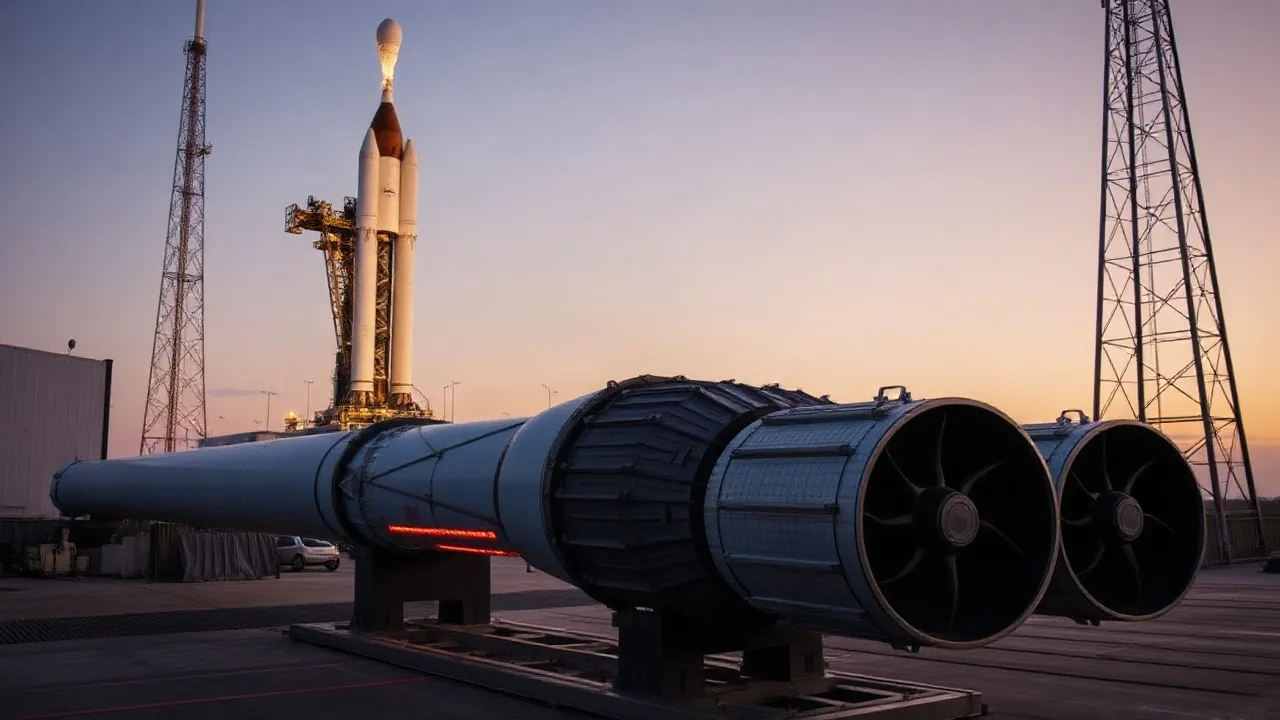
SpaceX conducted its seventh integrated flight test of Starship on June 20, 2024, but the vehicle has undergone substantial refinement since then, with engineers working toward the rapid iteration cycle needed for NASA's Artemis lunar program. The company is targeting multiple test flights in 2026 to validate critical systems for human spaceflight, including fuel transfer procedures in orbit and landing simulations at higher speeds and altitudes.
The Starship system consists of two fully reusable stages: the Super Heavy booster and the Starship upper stage. Unlike conventional expendable rockets, both components are designed to return to Earth and be relaunched within weeks, dramatically reducing launch costs. This capability is fundamental to lunar missions that require multiple payloads and crew rotation.
Elon Musk, SpaceX founder and CEO, stated in September 2026 that "Starship will be the most powerful and capable rocket ever built, enabling missions that were previously impossible." This confidence reflects years of hardware development and the company's track record with Falcon 9 and Falcon Heavy boosters.
NASA's Artemis Program and Starship Integration
NASA selected Starship as the lunar lander for its Artemis missions, marking one of the most significant aerospace contracts of the past decade. The agency plans to use Starship to land astronauts on the Moon's surface beginning with Artemis III, targeted for 2026 or 2027. This decision reflects NASA's confidence in SpaceX's engineering and manufacturing capabilities.
The lunar variant of Starship incorporates several modifications from the base design:
- Extended crew cabin with life support systems rated for multi-day lunar surface operations
- Specialized landing legs and shock-absorbing gear for precise touchdown near the south polar region
- Pressurized elevator system to lower astronauts from the cabin to the lunar surface
- Redundant guidance and navigation systems to ensure abort capability
Dr. Lisa Watson-Morgan, NASA's Artemis lunar lander program manager, emphasized in October 2026 that "Starship's design allows us to land heavier payloads and more crew members than previous lunar architecture would permit." The ability to deliver 20 metric tons of cargo per mission represents a six-fold increase over the Space Shuttle era.
Mars Colonization and Long-Duration Spaceflight
Beyond the Moon, SpaceX views Mars colonization as the ultimate objective for Starship. The company has published detailed plans for establishing a sustainable human settlement on Mars, beginning with uncrewed cargo missions to pre-position supplies before astronauts arrive. These missions are contingent on proving Starship's reliability in deep space operations throughout 2026 and 2027.
The Mars architecture relies on in-orbit refueling, a capability SpaceX plans to demonstrate multiple times before attempting a Mars trajectory burn. Starship will dock with tanker variants of itself in low Earth orbit, transferring cryogenic propellant to enable the long coast to Mars. This procedure has never been executed at scale by any spacefaring nation.
In-flight refueling reduces the mass that Starship must accelerate to Mars orbit, making multiple cargo missions economically feasible. SpaceX estimates that six tanker flights could fill a single trans-Mars Starship, a ratio that becomes favorable if booster and vehicle reuse drives launch costs below $10 million per flight.
The timescale for Mars missions remains ambitious. SpaceX aims to launch uncrewed Starship missions to Mars during the 2028 and 2030 launch windows, when Earth and Mars orbital geometry are most favorable. Crewed missions would follow approximately four years later, pending successful cargo delivery and surface site preparation.
Technical Challenges and Recent Test Results
Starship's development has not been without setbacks. Earlier test flights revealed issues with booster catch mechanisms, thermal protection tiles, and raptor engine reliability. The company has responded by increasing manufacturing capacity, refining welding procedures, and redesigning certain components based on flight data.
SpaceX's approach to aerospace innovation emphasizes rapid iteration. The company builds multiple vehicles simultaneously, learning from each test flight and incorporating changes into subsequent airframes within weeks. This manufacturing velocity is unprecedented in the aerospace industry and contrasts sharply with traditional government spacecraft development cycles.
The most critical validation needed for lunar missions is a crewed reusable rocket ascent from Earth to orbit. SpaceX and NASA are developing procedures for emergency aborts, life support system operation in vacuum, and crew rescue operations. These protocols must be validated through uncrewed test flights before humans board Starship.
International interest in Starship continues to grow. Japan's space agency and European aerospace companies have engaged SpaceX in discussions about lunar logistics and deep space exploration partnerships. The United Arab Emirates has also expressed interest in procuring Starship launch services for Mars observation missions.
The success of space exploration programs in the next five years will hinge substantially on Starship's performance. Whether SpaceX can deliver on its promise of a fully reusable, rapidly launched orbital system will determine the feasibility of sustained human presence beyond Earth orbit. The hardware is being tested now, and the results over the coming months will inform decisions by NASA, commercial partners, and other nations about their deep space strategies.