
SpaceX Stock Outlook: Where Private Space Investment Heads
SpaceX remains privately held, but investor interest in the company's rocket reusability and deep space ambitions continues to reshape aerospace markets. Here's what potential stakeholders need to know.

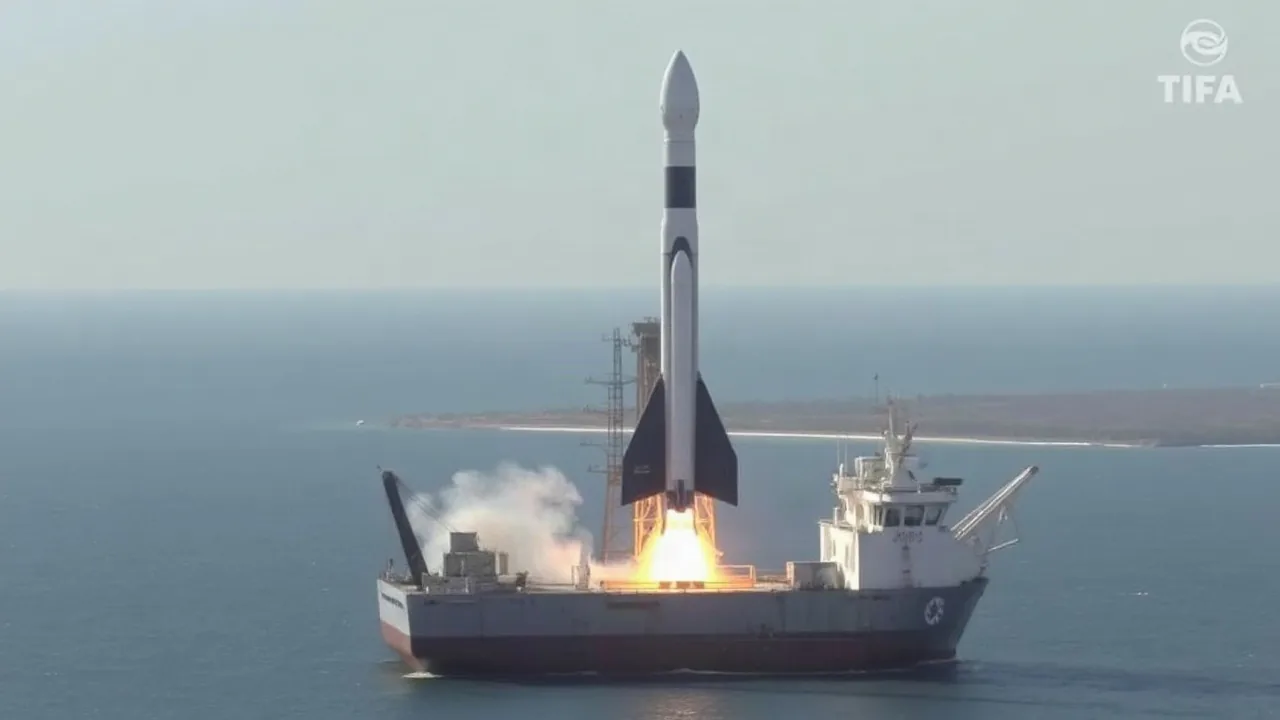
SpaceX has never traded on a public exchange, yet its name dominates venture capital conversations and aerospace analyst forecasts across 2026. Elon Musk's company, valued at approximately $180 billion in its most recent private funding round, continues to pull investment dollars away from traditional defense contractors and toward the emerging commercial space sector.
The question of when or whether SpaceX will go public remains one of Wall Street's most-watched uncertainties. For now, only secondary market shares and derivative instruments allow retail investors any exposure to the company's valuation swings and operational achievements.
The Private Equity Play and Market Timing
SpaceX's continued private status reflects Musk's documented preference for operational control over public scrutiny. However, institutional investors have bid up the company's valuation through successive funding rounds. In March 2026, the company closed a $3 billion Series I fundraise at a $180 billion valuation, drawing capital from Fidelity, Saudi Arabia's Public Investment Fund, and emerging Asian tech conglomerates.
"SpaceX's latest funding round underscores how aggressively institutional money is chasing exposure to the space industry," said Dr. Sarah Chen, senior aerospace analyst at Constellation Research, in an October 2026 briefing. "Even without a public listing, the company is capturing more capital than most aerospace-defense incumbents generate in annual revenue."
The new space race has created two investment vectors: direct funding for private operators like SpaceX and Blue Origin, and renewed demand for legacy suppliers of launch-stage components, satellite infrastructure, and ground systems. Index funds tracking aerospace now include both categories.
Reusable Rocket Technology and Revenue Streams
SpaceX's competitive advantage rests on reusable rockets, a technology that has transformed launch economics. The Falcon 9 booster now routinely achieves 15-plus flight reuses, reducing cost-per-launch from over $65,000 per kilogram in 2010 to roughly $2,700 per kilogram today.
This efficiency has opened new revenue doors:
- Starlink internet constellation expansion, now serving over 2.3 million customers in 2026
- Rideshare missions that pack multiple commercial and government payloads per launch
- National Security Space Launch (NSSL) contracts worth $316 million annually (2025-2026 fiscal baseline)
- Starshield, a hardened satellite variant for U.S. military and allied defense use
Starlink revenue alone is projected to exceed $3.5 billion by year-end 2026, making it SpaceX's dominant business segment ahead of launch services. This diversification reduces regulatory and customer concentration risk that plagued earlier-stage aerospace ventures.
Path to Public Markets and Investor Signals
Industry veterans expect SpaceX could pursue an IPO between 2027 and 2030, contingent on three factors: regulatory clarity on satellite internet spectrum, proof of Starship's operational viability for crewed missions, and sustained profitability of Starlink's subscriber base.
Starship, SpaceX's next-generation super-heavy launch vehicle, completed its sixth integrated flight test in September 2026, achieving booster catch and controlled reentry milestones. Full orbital refueling demonstrations remain the critical path metric for investment grade confidence in lunar and Mars architectures.
For current investors holding private equity stakes, secondary sales have fetched valuations 8-12% above the March 2026 funding round close. Fidelity, which holds SpaceX shares through multiple funds, has marked the company at $178 billion as of October 2026, signaling internal confidence despite macro equity volatility.
Public market analogs offer context: Amazon's initial IPO in May 1997 valued the company at $438 million; Axiom Space (a commercial orbital station developer) went public via SPAC at a $2.67 billion valuation in 2024. SpaceX's projected IPO range, should one occur, would likely price between $30-50 billion post-money, representing a substantial portion of the entire aerospace sector market cap.
Regulatory hurdles also loom. The Federal Communications Commission must finalize rules on satellite internet interference thresholds by mid-2027. The aerospace export control regime, particularly ITAR restrictions on Starlink's international deployment, could cap upside scenarios for a U.S.-listed company serving foreign customers.
For investors monitoring Elon Musk's enterprises, SpaceX remains the most capital-efficient of his portfolio holdings. Unlike Tesla or X (formerly Twitter), SpaceX has demonstrated consistent gross margins above 30% on core launch business, with Starlink working toward unit-level profitability in 2026's fourth quarter.
The company's 2026 outlook includes three additional NSSL launches, 60-plus commercial rideshare flights, and Starlink subscriber growth to 3+ million accounts globally. Execution on these targets will directly influence any future IPO valuation and the timing of public market entry.