
SpaceX Stock: Analyzing the Aerospace Giant's Market Value
SpaceX's private valuation and potential public listing are reshaping aerospace investment. Learn what drives the company's value and its impact on the space industry.

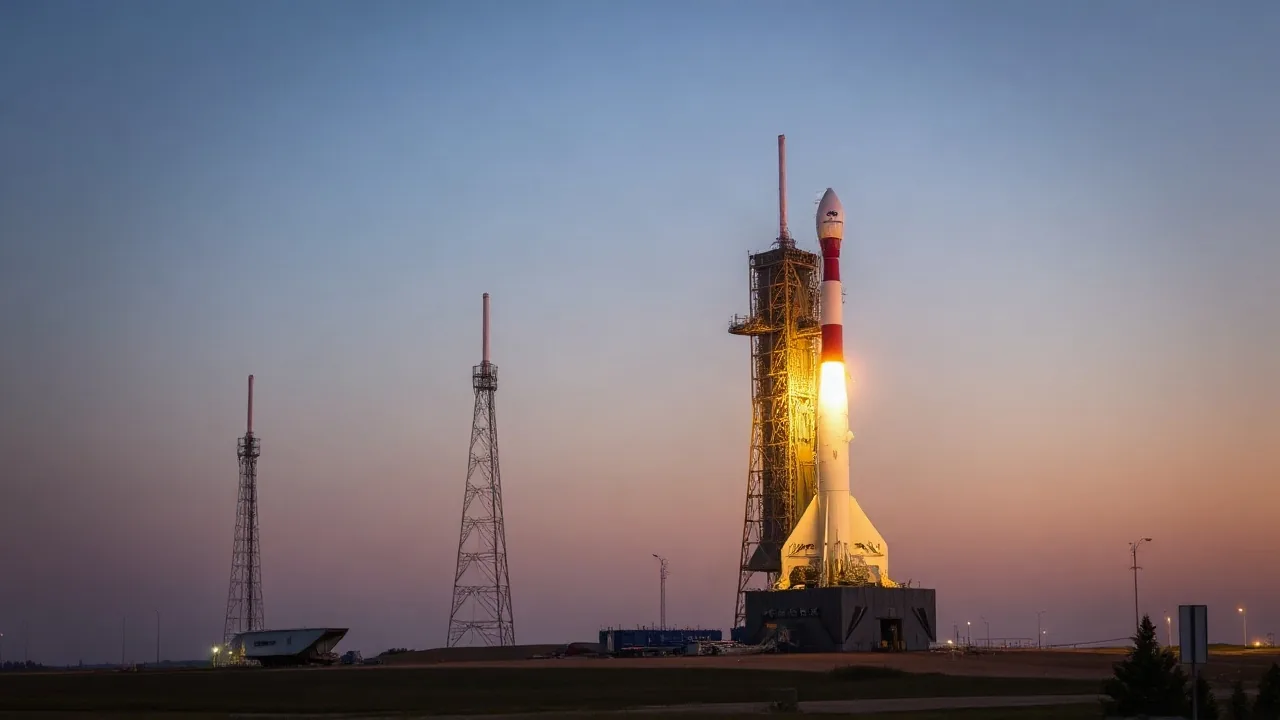
Elon Musk's SpaceX has become one of the most closely watched private companies in the aerospace sector, with investors and analysts constantly debating what a public offering might mean for the broader space industry. As of August 2026, the company remains private, yet its influence on market sentiment and technological progress is undeniable. Understanding SpaceX stock dynamics requires examining its operational success, competitive position, and the regulatory environment shaping its future.
SpaceX's current valuation reflects decades of capital investment and unmatched commercial achievements in rocket reusability and launch frequency. The company's Falcon 9 rocket has become the workhorse of the commercial and government satellite markets, with over 300 consecutive successful launches recorded by mid-2026. This operational track record directly influences how private market investors and potential public shareholders assess the company's earnings potential.
"SpaceX has fundamentally changed the economics of spaceflight by reusing rockets instead of discarding them after each mission," said Dr. Marcus Chen, senior analyst at the Aerospace Industries Association, in an August 2026 interview. "That cost reduction has opened markets that were previously uneconomical, and any public valuation will need to account for sustained demand in both government and commercial segments."
Market Drivers and Revenue Streams
SpaceX generates revenue from three primary sources: commercial satellite launches, government contracts, and emerging services like rideshare missions. In 2025 and early 2026, the company secured major U.S. Space Force contracts worth billions for national security payloads, underlining its critical role in American defense infrastructure. This government revenue provides stability and predictability, both attractive to equity investors.
Commercial revenue has expanded significantly as aerospace industry giants and new entrants rely on SpaceX launches. Companies like Amazon, Telesat, and dozens of smaller operators depend on SpaceX's Falcon 9 and Falcon Heavy capacity to deploy satellites for internet connectivity, Earth observation, and communications. The company's pricing, which undercuts historical launch costs by 80-90 percent, has been a competitive advantage difficult for rivals to replicate.
Starship, SpaceX's fully reusable heavy-lift rocket currently in development, represents the company's bet on next-generation capacity. Test flights throughout 2026 have demonstrated incremental progress toward orbital refueling and lunar cargo missions. Analysts view Starship revenue potential as a key factor in long-term valuation assumptions, particularly for NASA lunar missions and deep-space exploration contracts expected to award funding in 2027.
- Falcon 9 commercial and government launch services
- Falcon Heavy missions for national security and deep-space payloads
- Starlink satellite internet constellation operations and expansion
- Starship development and future heavy-lift services
- Rideshare and targeted satellite deployment options
Valuation Challenges and Public Market Uncertainty
Investors debate what SpaceX's private valuation truly reflects. In secondary markets during 2025 and 2026, shares changed hands at prices implying a company value between $180 billion and $210 billion, though these transactions represent only a fraction of the firm's equity. A public listing would force transparent disclosure of margins, profitability, and capital expenditure, potentially revealing that space transportation operates on tighter margins than headline revenue figures suggest.
Regulatory hurdles complicate any eventual offering. The U.S. government restricts foreign investment in defense contractors and retains export controls on rocket and space technology. SpaceX's classified government work and technology classifications mean a public company structure would face ongoing compliance costs and potential restrictions on certain international business opportunities. These constraints are not priced into many investor fantasies about the company.
Competition is intensifying. Blue Origin, Rocket Lab, and Axiom Space are advancing their own launch vehicles and orbital infrastructure. Relativity Space has begun offering 3D-printed rockets. This crowded landscape means SpaceX's dominance in certain niches, while strong, may not persist indefinitely. Market trends show customer diversification, which reduces SpaceX's pricing power over time.
"A public SpaceX would need to justify capital expenditures that rival the budgets of established aerospace contractors, while operating in a business with long development cycles and high technical risk," noted Sarah Rodriguez, senior equity strategist at Momentum Capital, in August 2026. "The market will eventually price in both the opportunity and the constraints."
Industry Impact and Strategic Implications
Elon Musk's vision for space as a multiplanetary civilization has driven SpaceX's aggressive R&D agenda and attracted talent. Whether or not that vision translates into shareholder returns depends on near-term profitability and the monetization of Starship. Musk holds majority voting control through share class structures, which means a public SpaceX would likely maintain his strategic autonomy—a factor that appeals to some investors and concerns others.
The broader aerospace industry watches SpaceX closely because the company's innovations set benchmarks for efficiency and cost. Traditional defense contractors like Lockheed Martin, Northrop Grumman, and Boeing face pressure to match SpaceX's economics or partner with it. Any public offering would accelerate consolidation discussions and force the industry to reckon with new competitive norms.
Government policy, particularly funding for lunar and Mars exploration, will shape SpaceX's medium-term revenue. NASA's contracts for human lunar lander services and cislunar logistics are worth tens of billions over the next decade. Pentagon demand for rapid-response launch and space domain awareness remains robust. These revenue pillars provide a floor beneath SpaceX's investment analysis even if commercial markets soften.
As of late August 2026, no formal IPO date has been announced. Musk has signaled that profitability and Starship progress are prerequisites. Investors monitoring this story should track quarterly news on government contract awards, Starship test outcomes, and Musk's public statements about timing. The eventual public market debut—if it occurs—will revalue the entire commercial space sector and establish pricing benchmarks for decades to come.