
SpaceX Stock Investment Outlook for 2026 and Beyond
SpaceX remains a closely watched private aerospace company as investors evaluate its commercial satellite, launch, and deep space ambitions. Valuation pressures and competition shape 2026 forecasts.

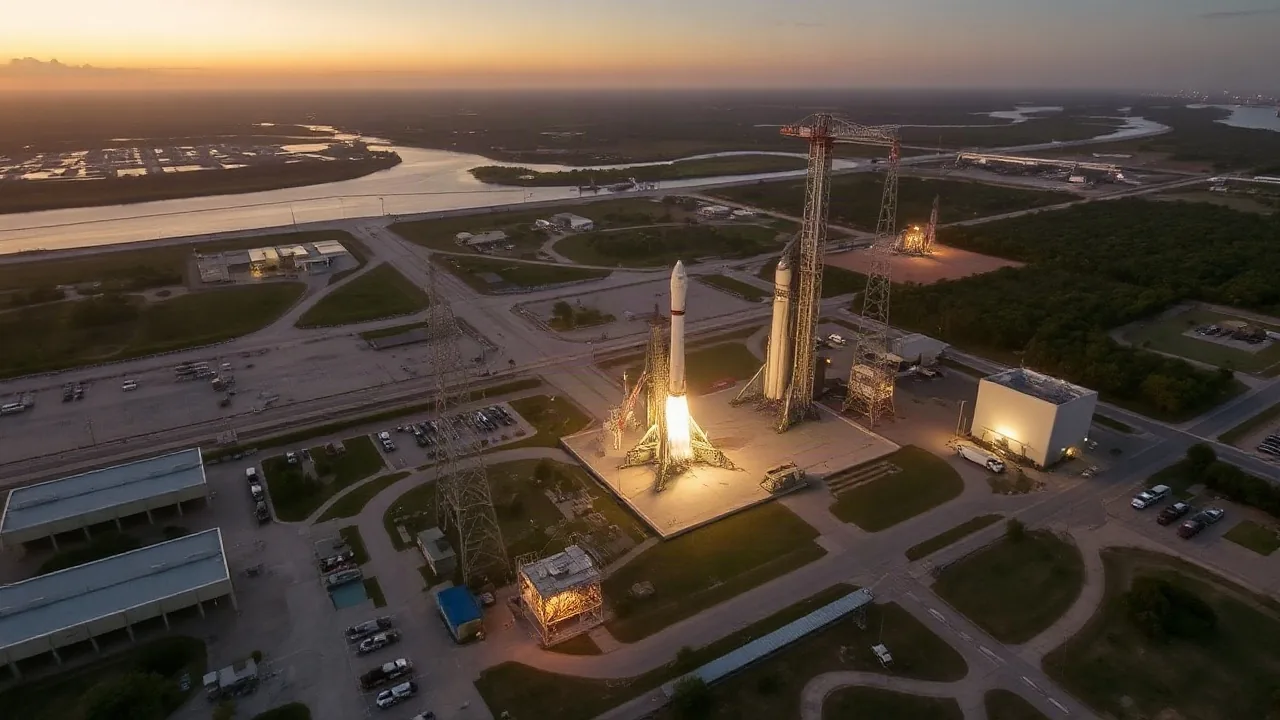
Elon Musk's SpaceX has never been a publicly traded company, yet investor interest in the private aerospace firm remains intense as of September 2026. The private spaceflight pioneer commands an estimated valuation exceeding $180 billion based on recent secondary market transactions, making it one of the most valuable private enterprises in the world. Institutional and individual investors track SpaceX closely through private equity shares and venture capital funds holding stakes in the company, seeking exposure to what many view as a cornerstone of future space commerce.
The absence of public SpaceX stock on major exchanges like Nasdaq or NYSE has not dampened investor appetite. Private investors access the company through secondary markets, employee equity compensation, and funds that specialize in late-stage private technology companies. SpaceX's current valuation reflects confidence in its core business lines: Starlink satellite internet, national security contracts with the U.S. Space Force and Space Command, and planned missions to orbit and beyond.
Industry analyst Maria Chen from aerospace research firm Orbital Insights stated in August 2026: "SpaceX's revenue trajectory and profitability metrics place it among the highest-valued private industrial companies globally. Investor demand for private shares significantly exceeds available supply, signaling strong confidence in the company's long-term runway." That supply shortage has pushed secondary share valuations upward, particularly as SpaceX narrowed its net cash burn in 2025 and achieved operational profitability in its launch services division.
Starlink and Commercial Revenue Streams
Starlink, SpaceX's satellite internet constellation, is expected to become the company's primary revenue engine by 2027. As of mid-2026, the service operates in over 100 countries with more than 3.8 million active subscribers paying $120 to $500 monthly for broadband access. That recurring revenue model contrasts sharply with SpaceX's historical reliance on one-time launch contracts, making the company a hybrid aerospace-telecom play.
Starlink's path to profitability depends on subscriber growth and cost management. Competition from Amazon's Project Kuiper, which began limited service launches in early 2026, and OneWeb's European expansion adds pressure. SpaceX maintains manufacturing scale advantages in Raptor engine production and Starship assembly, enabling aggressive satellite deployment rates. By December 2026, SpaceX plans to field approximately 12,000 operational Starlink satellites, up from 7,200 at the start of the year.
National security partnerships represent the second major revenue pillar. The U.S. Space Force National Security Launch Partnership awarded SpaceX contracts exceeding $5.5 billion across 2024 through 2026, cementing its role as the primary U.S. military and intelligence launch provider. These long-term agreements provide revenue visibility and support operations at SpaceX's facilities in Boca Chica, Texas; Cape Canaveral, Florida; and Vandenberg Space Force Base in California.
Valuation Drivers and Market Outlook for 2026
Several factors explain why investors view SpaceX stock and private equity stakes favorably heading into late 2026. First, Starship's rapid development cycle has exceeded industry timelines. The fully integrated super-heavy vehicle completed its fifth integrated test flight in June 2026, achieving booster catch and controlled ocean splashdown of the upper stage. Private space companies and institutional investors see Starship as transformational for Mars missions, lunar delivery, and eventual point-to-point Earth transport.
Second, cash flow inflection appears imminent. SpaceX achieved positive free cash flow in launch services during 2025 and expects Starlink to reach cash flow breakeven by Q4 2026. This transition from venture-stage burn rate to operational profitability reshapes investor risk assessments. Venture capital funds and secondary market investors have traditionally accepted negative cash flow in exchange for growth potential; profitability removes that risk discount.
Third, regulatory tailwinds support expansion. The Federal Aviation Administration streamlined licensing procedures for commercial space launch and reentry in 2025, and both major U.S. political parties favor robust commercial space support. This bipartisan backing reduces policy risk relative to smaller competitors dependent on government funding cycles.
Challenges persist. Launch cadence pressure and manufacturing bottlenecks in Raptor engine production could delay revenue targets. Competition from traditional aerospace firms like Rocket Lab and Blue Origin, along with private space companies in Asia and Europe, fragments the commercial launch market. International tensions also influence SpaceX's export licensing requirements and customer base access.
How to Gain Investment Exposure
Investors seeking aerospace investment exposure to SpaceX face limited direct options. The company has resisted going public, citing operational flexibility and long-term focus over quarterly earnings pressures. However, several pathways exist:
- Secondary market platforms like Forge, Equity Zen, and Forge facilitate trades of private SpaceX shares among accredited investors, though valuations fluctuate based on available supply.
- Venture capital and growth equity funds holding SpaceX stakes, such as Sequoia Capital, Threshold Ventures, and Founders Fund, remain active in late-stage fundraising and offer limited partner interest in the company's trajectory.
- Exchange-traded funds focused on future of space technologies hold indirect exposure through suppliers like Lockheed Martin, Axiom Space, and other aerospace subcontractors that benefit from SpaceX's ecosystem.
- Public companies with commercial agreements, including telecommunications and internet service providers integrating Starlink, provide indirect valuation capture.
For accredited investors, secondary share purchases remain the most direct method to gain ownership stakes. Valuations in late 2026 trading rounds have stabilized near $180 billion, a modest increase from 2025 closings. Illiquidity remains a significant risk; secondary shares may take months to sell, and exit opportunities are limited until SpaceX pursues an initial public offering or acquisition, neither of which appears imminent.
The broader stock market exposure to commercial spaceflight increasingly flows through publicly traded partners and suppliers. Established aerospace contractors like Northrop Grumman and Lockheed Martin offer traditional equity exposure alongside space divisions that collaborate with SpaceX on government contracts. These firms carry larger balance sheets and dividend policies, appealing to conservative investors.
SpaceX's 2026 outlook remains constructive for long-term investors comfortable with illiquidity and execution risk. Starlink's rapid subscriber growth, Starship's technical progress, and government demand for reliable launch services position the company for sustained valuation appreciation. However, the lack of public trading limits accessibility for most retail investors, and profitability targets depend on continued operational excellence and market expansion through 2027 and beyond.