
SpaceX Stock: Evaluating Private Spaceflight Investment Potential
SpaceX remains privately held, but investors monitor its valuation through secondary markets and track its expanding commercial revenue streams from launches, satellite broadband, and government contracts.

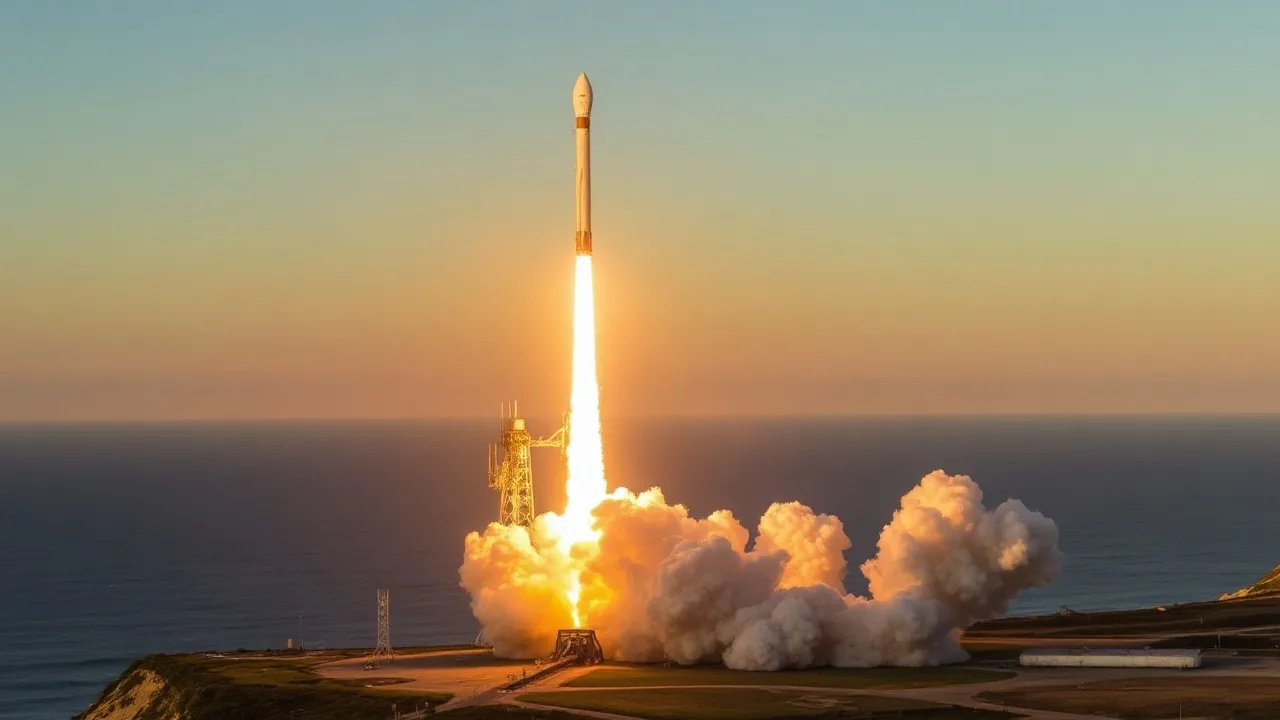
Elon Musk's SpaceX has never listed shares on public exchanges, yet investor interest in the company remains intense as its valuation has climbed past $180 billion in recent private funding rounds. The company's dual revenue model, combining government contracts with commercial ventures, has made it one of the most sought-after private investment opportunities in aerospace and technology sectors.
For those tracking SpaceX's financial trajectory, the company's growth story centers on three pillars: reusable rocket technology that has slashed launch costs, an expanding commercial satellite network called Starlink, and ambitious long-term projects like Mars colonization. Understanding SpaceX's investment potential requires examining how these segments perform and where industry analysts see the company heading through 2026 and beyond.
The Private Market Reality and Secondary Trading
Unlike Tesla or other Musk-led public companies, SpaceX stock does not trade on NASDAQ or NYSE. Instead, employees and early investors hold shares that occasionally exchange hands through secondary markets such as Forge Global, EquityZen, and SharesPost. These transactions reveal investor sentiment but lack the transparency and liquidity of public markets.
Secondary market valuations have surged dramatically. In 2022, SpaceX raised capital at a $127 billion valuation. By August 2026, newer funding rounds value the company at approximately $180 billion, reflecting confidence in its operational achievements and revenue growth. Each funding round is closely watched by aerospace analysts and venture capital firms seeking exposure to the private spaceflight industry.
Morgan Stanley analyst Adam Jonas remarked in July 2026, "SpaceX's path to profitability and its control of launch costs give it a competitive moat that few aerospace companies can match. The secondary market pricing reflects genuine operational progress, not just hype." This assessment underscores why institutional investors continue bidding for shares despite the lack of public liquidity.
Revenue Drivers: Launches, Starlink, and Government Work
SpaceX generates revenue through multiple channels, each contributing to its valuation narrative. Commercial launch services dominate; the company conducted 47 orbital launches in 2025 alone, significantly outpacing competitors like Blue Origin and traditional aerospace firms. Payload customers include satellite operators, private companies, and government agencies.
Starlink, the satellite broadband network, represents explosive growth potential. As of August 2026, Starlink serves over 2 million subscribers globally, with roughly 7,000 satellites in orbit. Monthly subscription revenue averages $120 per user in North America. Expanding to underserved regions in Africa, Latin America, and rural North America could multiply the subscriber base significantly, driving profit margins that dwarf traditional launch revenue.
Government contracts form the third pillar. SpaceX holds major agreements with NASA for cargo and crew missions to the International Space Station, with total awarded contracts exceeding $5 billion through 2028. The U.S. Space Force and National Reconnaissance Office also contract SpaceX for national security launches. These stable, long-term agreements reduce revenue volatility and support predictable cash flow.
The Mars and Long-Term Growth Narrative
SpaceX's stated mission of enabling Mars colonization through the Starship vehicle is central to its investment thesis, even though profitability from Mars missions lies a decade or more away. Starship development has accelerated; the company completed 16 integrated flight tests between 2023 and August 2026, each advancing capabilities in booster recovery, raptor engine performance, and orbital refueling techniques.
Investors view Starship as a potential game-changer for lunar missions, space stations, and interplanetary transport. If development timelines hold, Starship could begin commercial satellite deployment and point-to-point Earth travel by 2027 or 2028. Such breakthroughs would open entirely new revenue categories and solidify SpaceX's competitive position within the aerospace industry.
However, Starship remains capital-intensive. Development costs continue climbing, and there is no guarantee that early commercial applications will emerge as quickly as executives project. Investors willing to hold shares long-term bet on Musk's track record and the engineering team's execution; those with shorter horizons face uncertainty.
Risks and Competitive Pressures
SpaceX faces mounting competition from established aerospace contractors like Lockheed Martin and Boeing, as well as emerging rivals such as Relativity Space and Axiom Space. Blue Origin, backed by Amazon founder Jeff Bezos, is also scaling launch operations and developing competing satellite broadband services.
Regulatory risks loom as well. The Federal Communications Commission has imposed stricter rules on Starlink deployment to address concerns about orbital debris and interference with astronomy. International regulatory environments, especially in Europe and Asia, remain fluid and could affect Starlink's expansion timeline.
Profitability at Starlink remains unproven at scale. While subscriber growth accelerates, competition from terrestrial broadband, 5G networks, and NASA-backed alternatives could compress margins. Launch market competition is also intensifying; Blue Origin's New Glenn rocket will enter service in 2027, and several other providers are developing reusable launch systems.
For prospective investors unable to purchase SpaceX shares directly, options are limited. Some invest in SpaceX-adjacent publicly traded companies such as Lockheed Martin, Axiom Space's backers, or companies supplying components to SpaceX. Others wait and speculate about a potential future initial public offering, though Musk has shown little urgency to pursue one.
The investment case for SpaceX rests on its proven launch dominance, expanding Starlink subscriber base, and credible long-term vision. Yet private ownership, execution risks on Starship, and intensifying competition mean that valuation multiples will fluctuate with operational milestones. For those tracking the opportunity, August 2026 represents a moment of considerable momentum, even as uncertainties persist about returns.