
SpaceX Stock: Valuation, Starship Progress, and Investor Outlook
As SpaceX advances Starship testing and expands commercial contracts, investors weigh the private aerospace company's path to profitability and public markets. Current valuation estimates and launch cadence offer clues to long-term returns.

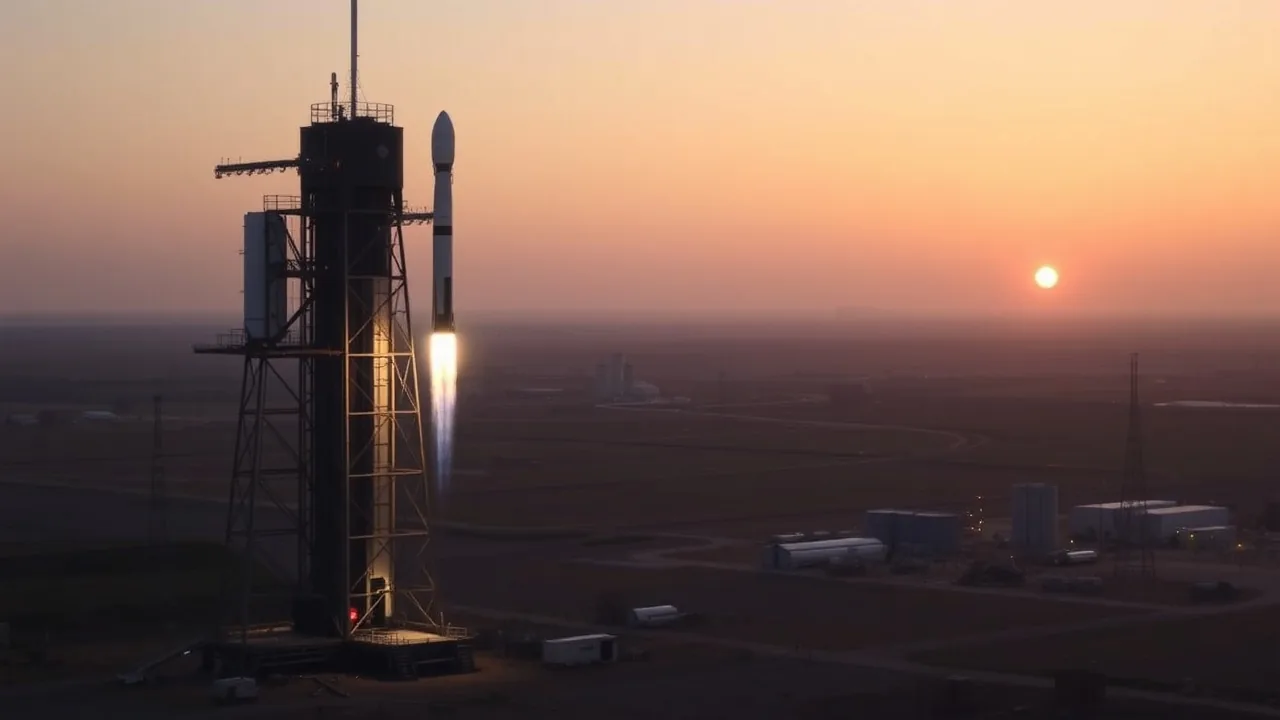
SpaceX conducted its fifth integrated flight test of Starship on June 6, 2026, achieving booster catch at the launch tower and bringing the world's largest operational rocket closer to full reusability. This milestone underscores why equity investors and Wall Street analysts have intensified scrutiny of the private aerospace firm's value and growth trajectory since its last funding round.
The company remains privately held, meaning direct stock investment is not available to retail investors through public exchanges. However, secondary markets, venture capital fund shares, and wealth management vehicles tied to SpaceX equity have created an informal market for exposure to the firm. Understanding SpaceX's business fundamentals, launch schedule, and path to eventual public markets is essential for anyone considering aerospace sector investment.
SpaceX's financial strength rests on three core revenue streams: commercial satellite launches, government contracts, and launch services for NASA and the Department of Defense. In 2026, the company has already executed 23 orbital launches and maintains a backlog exceeding $100 billion in contracted work over the next decade.
Market Position and Financial Drivers
SpaceX holds the dominant position in commercial rocket launches globally, controlling roughly 60% of orbital launch capacity as of mid-2026. Falcon 9 reusability and rapid turnaround have compressed launch costs to approximately $15 million per flight, a reduction that has undercut traditional aerospace competitors and expanded addressable markets.
Revenue forecasts compiled by financial analysts suggest SpaceX generated an estimated $7.5 billion in 2025 and is tracking toward $9.2 billion for 2026, driven by higher Falcon 9 launch cadence and ramp-up of Starlink terminal sales. Government contracts account for roughly 35% of near-term revenue, while commercial satellite launch and Starlink subscriptions split the remainder.
Morgan Stanley aerospace analyst Peter Arment stated in a July 2026 research note, "SpaceX's combination of launch cost leadership, a massive funded backlog, and emerging in-space manufacturing opportunities creates a durable competitive moat. The company's path to profitability appears sustainable even if Starship development faces delays."
Profitability metrics remain tightly guarded, but internal communications and supplier relationships suggest the firm achieved positive operating margin on Falcon 9 operations in 2024 and has maintained that discipline through 2026. Starship development remains capital-intensive, with estimated annual expenditure between $2 billion and $2.5 billion allocated to the program.
Starship, Lunar Missions, and Long-Term Optionality
Starship represents SpaceX's largest capital bet and the primary reason SpaceX stock appeals to growth-focused investors. The fully reusable vehicle is engineered to reduce cost per pound to orbit to roughly $100 to $200 for cargo, a 10-fold improvement over current Falcon 9 economics. At scale, Starship enables markets previously considered unviable, including lunar base construction, Mars missions, and point-to-point Earth transport.
NASA selected Starship as the primary lunar lander for its Artemis missions, with payments through 2028 projected to exceed $4 billion. This contract validates the vehicle's trajectory and provides revenue certainty during the development phase. First crewed lunar landing with Starship is targeted for 2027 in the current program baseline.
Secondary applications expanding the space industry addressable market include:
- In-orbit refueling and propellant transfer for satellite constellation maintenance
- Space station modules and orbital manufacturing platforms
- Hypersonic point-to-point Earth transportation between continents
- Mars sample return missions and eventual crewed colonization
These use cases remain largely conceptual from a revenue perspective, yet their potential justifies investor allocation to aerospace firms with credible technology paths. SpaceX's track record of delivering on stated milestones, while frequently late, strengthens the bull case.
Valuation Concerns and IPO Timeline
Secondary market transactions valued SpaceX at approximately $210 billion as of June 2026, a figure that implies a price-to-sales multiple of roughly 22x, well above traditional aerospace defense contractors trading at 2x to 4x revenue. The premium reflects growth expectations and the option value of nascent markets.
Elon Musk has repeatedly suggested a public offering is unlikely before Starship reaches operational status and demonstrates profitability on lunar or Mars missions. No formal IPO timeline has been disclosed, and internal management has expressed preference for remaining private to avoid quarterly earnings pressure during Starship development.
For retail investors lacking venture access, exposure can be obtained through:
- Venture capital funds specializing in aerospace technology
- Wealth management platforms offering private company shares
- Positions in suppliers or partners, such as semiconductor manufacturers serving SpaceX avionics
- Diversified aerospace and defense ETFs that may hold SpaceX equity indirectly
The company's private status and lack of traditional earnings reporting make valuation subjective and subject to rapid repricing based on technical milestones or contract wins. Investors should monitor launch cadence, Starship test results, and government contract announcements as primary signals of fundamental health.
Investing in or through SpaceX equity carries concentration risk and illiquidity risk absent a public market. However, the company's market leadership, government backing, and optionality in emerging space markets position it as a core holding for aerospace-focused portfolios over a 10-year horizon.