
NASA Space Flight Missions Set for 2026: Key Launch Schedule
NASA has confirmed major space flight missions launching throughout 2026, including robotic lunar landers, deep-space probes, and International Space Station resupply flights. The lineup reflects continued commitment to lunar exploration and planetary science.

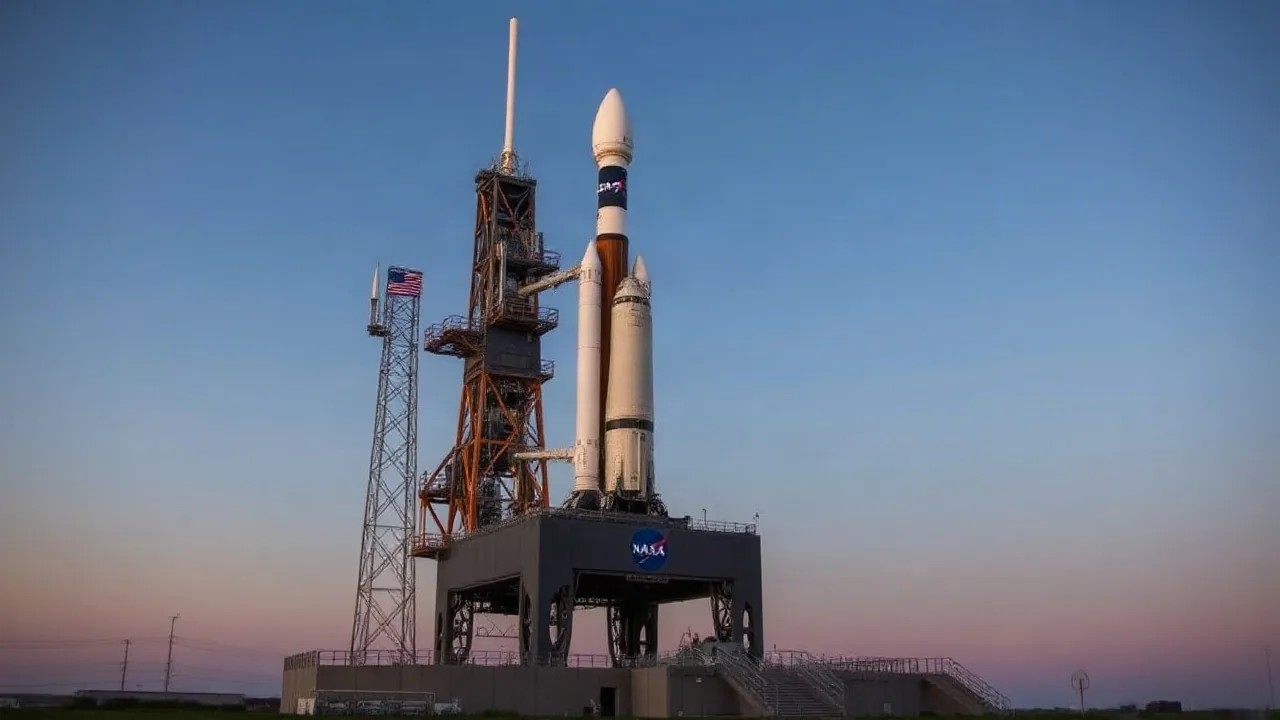
NASA's launch manifest for 2026 includes a diverse portfolio of missions designed to advance lunar exploration, study distant planets, and maintain critical infrastructure in Earth orbit. The agency has scheduled approximately 15 to 18 orbital launches across its programs, with several high-profile robotic missions targeting the Moon and beyond.
The year marks a pivotal moment for NASA space flight operations. After years of development and testing, multiple programs reach their deployment phase, signaling accelerated progress toward sustained human lunar presence and robotic science objectives.
Bill Nelson, NASA Administrator, stated in a September 2026 briefing: "Our 2026 mission slate demonstrates America's commitment to leading space exploration. From lunar landers to deep-space observatories, these missions will unlock new scientific discoveries and position us for long-term success beyond Earth orbit."
Major Missions and Launch Windows
NASA's 2026 schedule features several flagship initiatives spread across the calendar year. The agency plans to launch two additional Commercial Lunar Payload Service (CLPS) landers in the first half of 2026, each carrying scientific instruments and technology demonstrations for the Artemis program.
Key 2026 missions include:
- Griffin lander mission to the lunar south polar region (February launch window)
- Firefly Aerospace cargo delivery to Oceanus Procellarum (April)
- Parker Solar Probe extended mission operations in heliospheric space
- Multiple International Space Station resupply flights via SpaceX and Northrop Grumman
- Continued operations of the James Webb Space Telescope and Chandra X-ray Observatory
- Technology demonstration missions for in-situ resource utilization on the lunar surface
Each mission targets specific scientific or operational objectives aligned with the broader Artemis vision and deep-space exploration roadmap. The lunar missions emphasize mapping regolith composition, testing power systems, and identifying water ice deposits.
The commercial sector continues to play an expanded role in NASA's architecture. SpaceX's Dragon vehicle maintains its regular cadence of crew and cargo resupply flights to the ISS, while emerging providers test new platforms for automated logistics and scientific payloads.
Scientific Goals and Discoveries
Beyond logistics, 2026 brings refined focus on solving critical questions about lunar geology and planetary atmospheres. The CLPS missions will deploy spectrometers, seismic sensors, and thermal imaging systems to characterize subsurface conditions near the Moon's poles.
Dr. Sarah Chen, a lunar geologist at the U.S. Geological Survey, remarked in a recent interview: "The 2026 landers represent our most comprehensive survey to date of the permanently shadowed regions. The data we collect will directly inform site selection for human missions and long-term base construction."
Space exploration objectives in 2026 also include continued study of exoplanet atmospheres through ground-based telescope networks and space-based spectroscopy. The Transiting Exoplanet Survey Satellite (TESS) will release its latest data on potentially habitable worlds discovered over the past two years.
International partnerships amplify the scientific reach. NASA is coordinating with the European Space Agency and Japan Aerospace Exploration Agency on joint instrument operations and data analysis protocols established in 2025 and refined for deployment in 2026.
The agency anticipates formal announcements of new discoveries from these collaborative efforts by the fourth quarter of 2026, with peer-reviewed papers expected to enter circulation by early 2027.
Technical Readiness and Launch Infrastructure
Preparation for this ambitious slate reflects intensive ground-based testing and validation. NASA's Kennedy Space Center, Wallops Flight Facility, and commercial launch providers have upgraded launch infrastructure to support higher manifest density while maintaining safety margins.
The Space Launch System (SLS), NASA's heavy-lift vehicle, is scheduled for one operational mission in 2026 as part of the Artemis program sequence. This flight will position hardware and consumables for subsequent crewed lunar landing missions planned for 2027 and beyond.
Aerospace contractors including Boeing, Lockheed Martin, and emerging companies have completed critical design reviews for payloads and spacecraft. Flight hardware has entered final assembly and integration phases at multiple facilities across the United States.
NASA officials have emphasized that launch schedule adherence depends on continued stable funding and timely resolution of any technical anomalies uncovered during final integration testing. The agency maintains contingency dates for each mission, typically ranging from 30 to 90 days.
The 2026 NASA projects collectively represent an investment exceeding $8 billion in direct mission costs, with additional billions allocated to ground operations, data analysis, and technology development supporting long-term exploration objectives.
Success across this mission portfolio will substantially advance humanity's understanding of the Moon, the solar system, and the broader universe while establishing operational foundations for sustained presence beyond Earth orbit throughout the coming decade.