
Stephen Hawking's Father Worried About 'Lazy' Son's Study Habits
Newly revealed diaries from Stephen Hawking's father, Frank, show concern that the future astrophysicist was a "lazy kid" who "didn't study much" and "hangs round the house with little initiative."

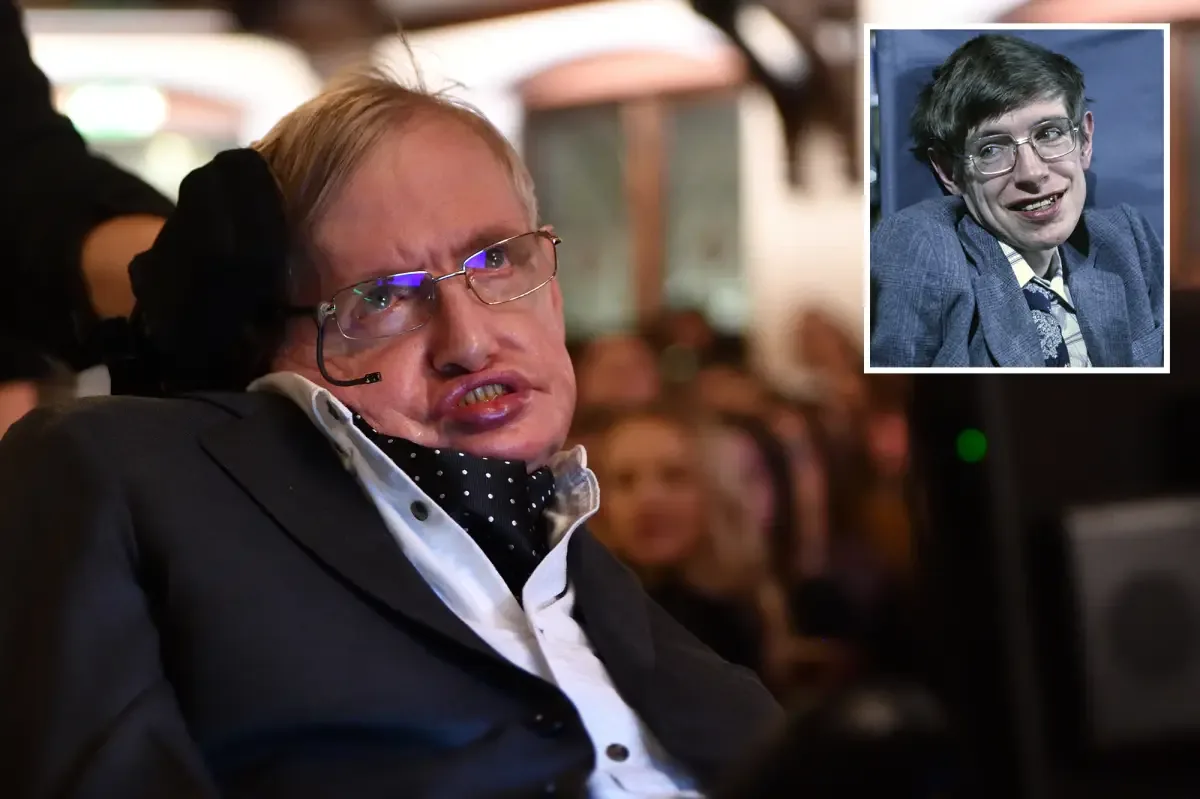
New revelations from the diaries of Frank Hawking, father of the renowned theoretical physicist Stephen Hawking, paint a picture of a concerned parent worried about his son's academic drive. In entries from 1961, Frank Hawking expressed dismay over Stephen's apparent lack of initiative and minimal study habits. "We are a little worried at the way Stephen is turning out. He hangs round the house with little initiative and does not study much," Frank wrote, according to excerpts from the upcoming biography "Stephen Hawking: His Life and Work." The elder Hawking also noted his wife Isobel's observation that Stephen felt an "inferiority complex" and had lost faith in physics at Oxford, considering it inferior to the arts.
These candid reflections, detailed in an excerpt shared by The Guardian, offer a humanizing glimpse into the early life of a scientific giant. At the time these entries were made, Stephen Hawking was a young man pursuing physics at Oxford University. Despite his father's concerns and a later diagnosis of Amyotrophic Lateral Sclerosis (ALS) at age 21, which gave him only two years to live, Hawking defied all expectations. He went on to become one of the most celebrated astrophysicists in history, fundamentally changing our understanding of the universe, particularly black holes and cosmology.
A Legacy of Curiosity and Resilience
Hawking's journey from a seemingly unmotivated student to a world-renowned scientist is a testament to his intellect and determination. His groundbreaking work, especially his theories on black holes and the nature of time, revolutionized the field of astrophysics. His 1988 book, "A Brief History of Time," became an international bestseller, selling over 25 million copies and making complex scientific concepts accessible to millions. The book's enduring popularity solidified Hawking's status as a cultural icon and a powerful communicator of scientific ideas.
Despite the debilitating effects of ALS, which progressively limited his physical abilities, Hawking's mind remained sharp and active. He continued his research and writing, becoming an influential figure in both scientific and public spheres. His famous quote, "Remember to look up at the stars and not down at your feet. Try to make sense of what you see and wonder about what makes the universe exist. Be curious," serves as a profound reminder of his lifelong pursuit of knowledge and his encouragement for others to explore the cosmos. These words, shared in the final paragraphs of his seminal work, encapsulate his philosophy of embracing life's challenges with a spirit of inquiry and perseverance.
The revelations from his father's diaries add a poignant layer to Hawking's life story, highlighting the contrast between early parental anxieties and his eventual monumental achievements. His ability to overcome profound personal adversity and intellectual doubts to leave an indelible mark on science demonstrates extraordinary resilience and a profound commitment to understanding the universe. His legacy continues to inspire scientists, students, and anyone who dares to question and explore.