
Arctic Icebergs Deliver Rocks, Boosting Deep-Sea Life
Melting Arctic icebergs are dropping more rocks than ever onto the seafloor, creating new habitats that are surprisingly helping deep-sea creatures thrive. This phenomenon is linked to increased glacial calving due to warming oceans.

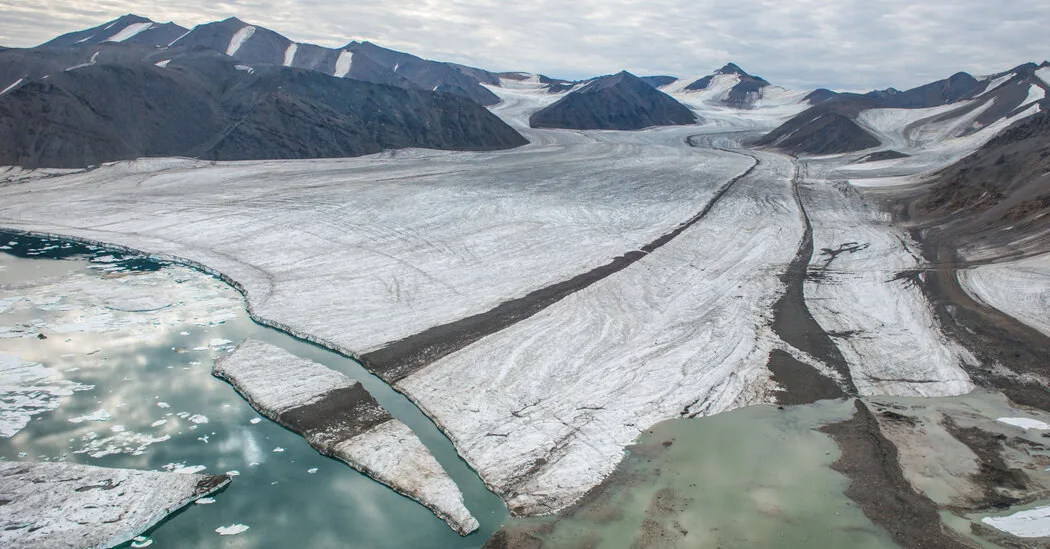
Scientists have discovered that a dramatic increase in icebergs calving in the Arctic's Fram Strait, driven by warming oceans, is inadvertently seeding the deep-sea floor with rocks. These 'dropstones' are creating new habitats that are fostering the growth of diverse marine life in areas previously devoid of such complexity. The findings, published in the journal Nature, highlight an unexpected consequence of climate change on Arctic ecosystems.
The research expedition aboard the Polarstern research vessel in 2021 encountered a striking iceberg in the Fram Strait, a crucial passage between Greenland and Svalbard. Unlike typical icebergs, this one was laden with dark rocks. This unusual sight prompted researchers, who were already conducting seafloor sampling, to investigate further. A helicopter deployed researchers onto the iceberg, an experience described as akin to landing on another planet.
"We had this collective lightbulb moment," stated Kirstin Meyer-Kaiser, a marine biologist at the Woods Hole Oceanographic Institution. "These are dropstones before they have dropped." Dropstones are glacial rocks released as icebergs melt, settling on the ocean floor. The Polarstern team's observations, combined with a new study analyzing decades of data, confirm a significant rise in iceberg calving into the Fram Strait since the early 2000s. This surge is attributed to accelerated melting and calving of glaciers, particularly those in northeast Greenland and the Russian Arctic.
Global Warming's Unforeseen Impact on Biodiversity
The study utilized 40 years of iceberg sighting data to quantify the change in iceberg numbers in the region. The analysis revealed a steep increase beginning around the year 2000, a trend researchers link to intensified glacial calving upstream. This influx of rocks is providing vital substrate for deep-sea organisms, offering attachment points and microhabitats in an environment that is otherwise largely soft sediment.
Previously, the deep Arctic seafloor in many areas consisted of fine mud and clay. Icebergs, by carrying and then depositing these rocks, are effectively creating islands of hard substrate. These new surfaces are colonized by a variety of organisms, including mussels, sponges, and sea anemones. This colonization, in turn, supports a wider food web, attracting larger species that feed on these sessile invertebrates. This process is fundamentally altering the biodiversity and ecological structure of the Arctic benthos.
The Fram Strait is a key area for studying these changes due to its role as a gateway for icebergs originating from major Arctic glaciers. The increasing frequency and size of these icebergs mean that more dropstones are reaching the seafloor, accelerating the rate at which these new habitats are formed. Researchers are now keen to understand the long-term implications of this phenomenon, including whether these newly formed communities are resilient and how they interact with existing benthic populations.
The work by Meyer-Kaiser and her colleagues provides crucial insights into the complex ecological responses to climate change. While warming oceans present numerous challenges to Arctic marine life, the dropstone phenomenon demonstrates that some species may find new opportunities. This nuanced picture underscores the need for continued monitoring and research into how the Arctic ecosystem is adapting to rapid environmental shifts.