
Deep Partial Lunar Eclipse: What to See Aug. 27-28
A rare, deep partial lunar eclipse will occur on August 27-28, with 96.2% of the moon entering Earth's umbra. It's the most significant partial lunar eclipse visible until 2028.

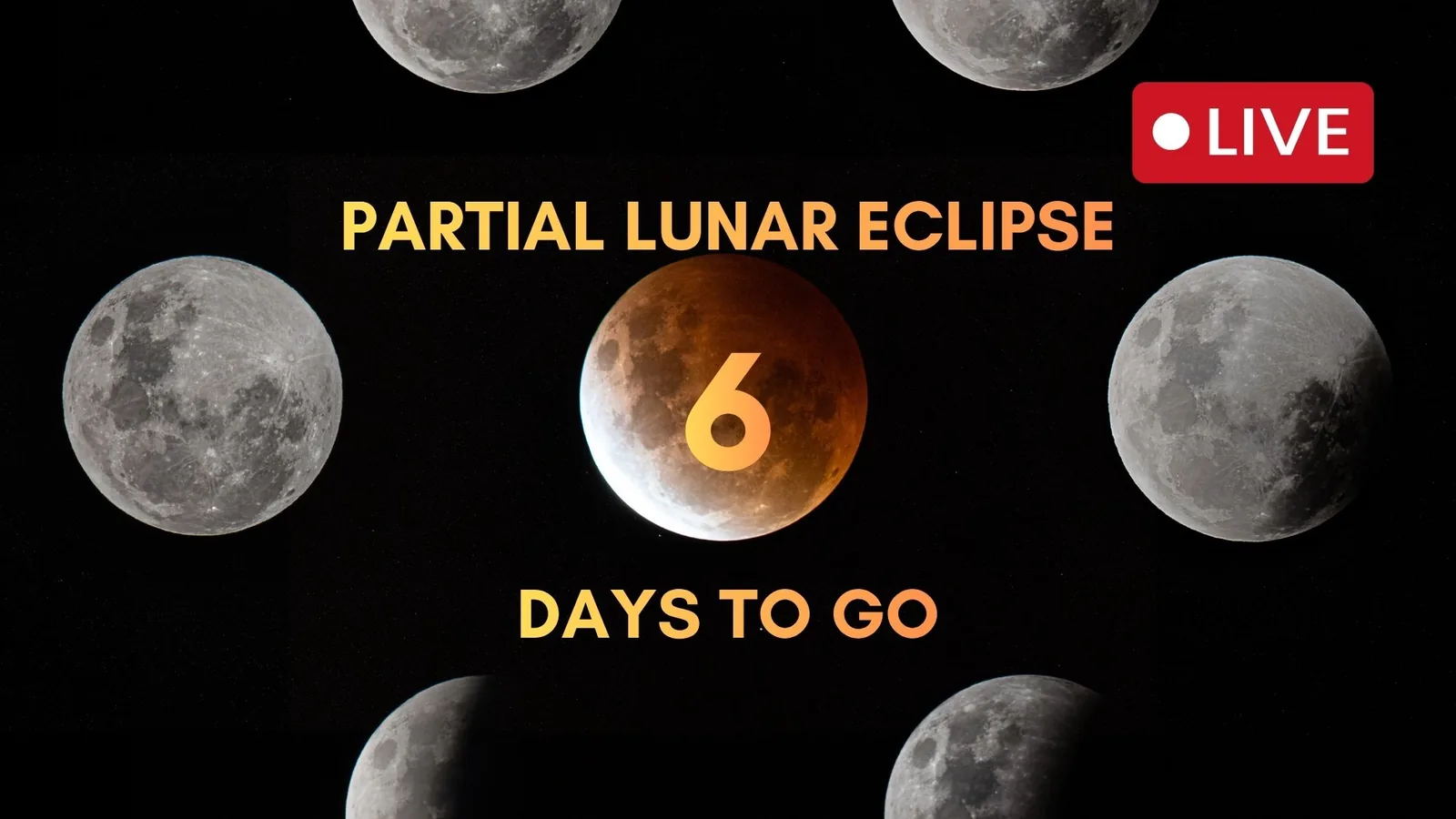
A spectacular deep partial lunar eclipse is set to captivate skywatchers on August 27 and 28, 2026. This celestial event will see an astonishing 96.2% of the moon plunge into Earth's dark central shadow, known as the umbra, creating a dramatic visual spectacle. The phenomenon is the most profound partial lunar eclipse observable anywhere on Earth until December 31, 2028, marking it as a must-see occasion for astronomy enthusiasts and casual observers alike.
At the peak of the eclipse, much of the lunar surface will likely glow with a deep, rusty red hue, a common characteristic when the moon passes through Earth's shadow. However, a thin sliver of the moon will remain brightly illuminated by the sun, creating a stark contrast. While not a total lunar eclipse, the extent to which the moon will be obscured means it will closely resemble one, offering an impressive display.
Skywatching Opportunities Worldwide
The eclipse presents a prime viewing opportunity for a vast geographical area, including North and South America, Europe, Africa, and parts of western Asia, weather conditions permitting. Observers in the Americas are particularly well-positioned to witness the entire event. For those in Europe, the eclipse will reach its zenith in the early hours of August 28, visible as the moon sets toward the western horizon just before sunrise. This timing makes it an ideal event for both those willing to stay up late in North America and early risers in Europe.
Skywatchers anticipating the event are advised to note the specific timing for their region. The eclipse's maximum phase, where 96.2% of the moon is within the umbra, is the highlight. This deep immersion into Earth's shadow is what distinguishes this event from typical partial eclipses, which often obscure a much smaller fraction of the moon. Astronomer Daisy Dobrijevic noted the significance, stating, "This isn't quite a total lunar eclipse, but it's pretty close!" The event is a rare chance to witness such an extensive partial obscuration.
Missing this lunar spectacle means a considerable wait for a comparable event. The next lunar eclipse that will rival this one in terms of the moon's immersion in the umbra is scheduled for December 31, 2028. This extended period between such significant partial lunar eclipses underscores the importance of catching the August 2026 event. For many, it will be the most significant skywatching event of the year, prompting many to plan their viewing locations and confirm optimal conditions.
The visual impact of a deep partial lunar eclipse is often underestimated. While a total lunar eclipse, where the moon is completely enveloped in the umbra, is a distinct phenomenon, an eclipse of this magnitude, at 96.2% coverage, offers a visually stunning experience that rivals totality for many. The way sunlight filters through Earth's atmosphere and casts a reddish glow on the obscured portion of the moon is a captivating sight. This event provides a fantastic opportunity for photography and for educational purposes, allowing people to observe and learn about celestial mechanics firsthand.