
Strawberry Moon Lights Up Summer Sky Starting Tonight
The first full moon of summer, known as the Strawberry Moon, begins its celestial display tonight, June 30, 2026. The event marks a beautiful start to the season and offers a unique viewing opportunity.

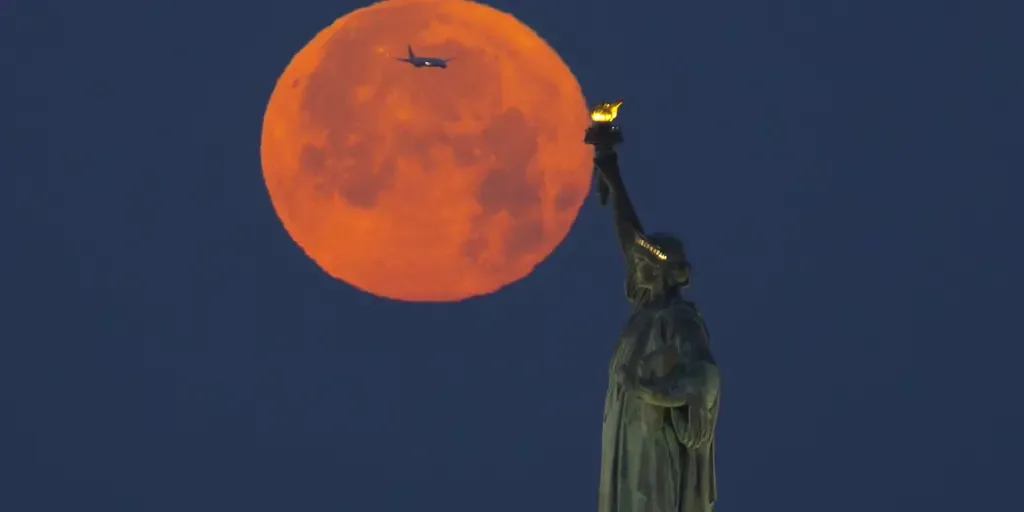
Millions of skygazers have the chance to witness the first full moon of summer, the aptly named Strawberry Moon, beginning Monday night, June 30, 2026. This celestial spectacle kicks off the season, following closely on the heels of the summer solstice, and will remain visible for approximately three days.
The moon officially reaches its peak fullness at 7:57 p.m. EDT on June 30, 2026. Notably, this full moon will be the lowest-hanging of the year, occurring when the moon is positioned directly opposite the Earth from the sun. This alignment ensures its face is fully illuminated, a phenomenon that will extend into the following night.
The moniker "Strawberry Moon" originates from the seasonal timing of berry ripening in North America, a tradition passed down from Native American Algonquin tribes of the Northeast United States. Contrary to any implication of color, the moon does not inherently turn red, though it may appear with a reddish hue when rising or setting near the horizon, according to NASA.
Historical and Cultural Significance
Throughout history, lunar events like the Strawberry Moon have played a significant role in shaping human calendars and understanding of time. Ancient civilizations, including the Romans and those who developed the modern Gregorian calendar, relied on lunar cycles for their reckoning of days, months, and years. This celestial event connects contemporary observers to ancient traditions and a shared human experience of observing the night sky.
For optimal viewing of this striking lunar display, experts recommend using binoculars or a telescope to enhance the details visible in the night sky. While the peak occurs on Monday evening, the full moon will grace the sky for several nights, offering ample opportunity for observation before it begins to wane.